

As solar installations grow in size and complexity, maintaining consistent energy output requires early fault detection, continuous site visibility, and accurate equipment monitoring. Manual inspections and fixed sensors often fail to provide the frequency, precision, and real-time insight needed for modern solar operations.
LiDAR enabled Autonomous Mobile Robots (AMRs) redefine condition monitoring by delivering high resolution 3D mapping, autonomous navigation, and continuous inspection capabilities across large solar fields. This approach increases reliability, reduces operational costs, and ensures that performance issues are identified before they impact energy production.
LiDAR technology captures dense point cloud data to produce detailed 3D maps of solar panels, mounting structures, cable trays, and inverter stations. These models are used to detect misalignment, deformation, shading risks, vegetation growth, and structural changes over time. Operators can compare new data with digital twin baselines to identify micro level deviations that affect efficiency.
AMRs equipped with LiDAR sensors perform routine inspections without interruption. They operate in challenging outdoor environments, follow predefined routes, and adapt to obstacles in real time. This creates a consistent inspection workflow that eliminates human error and allows large scale solar sites to be monitored with predictable accuracy.
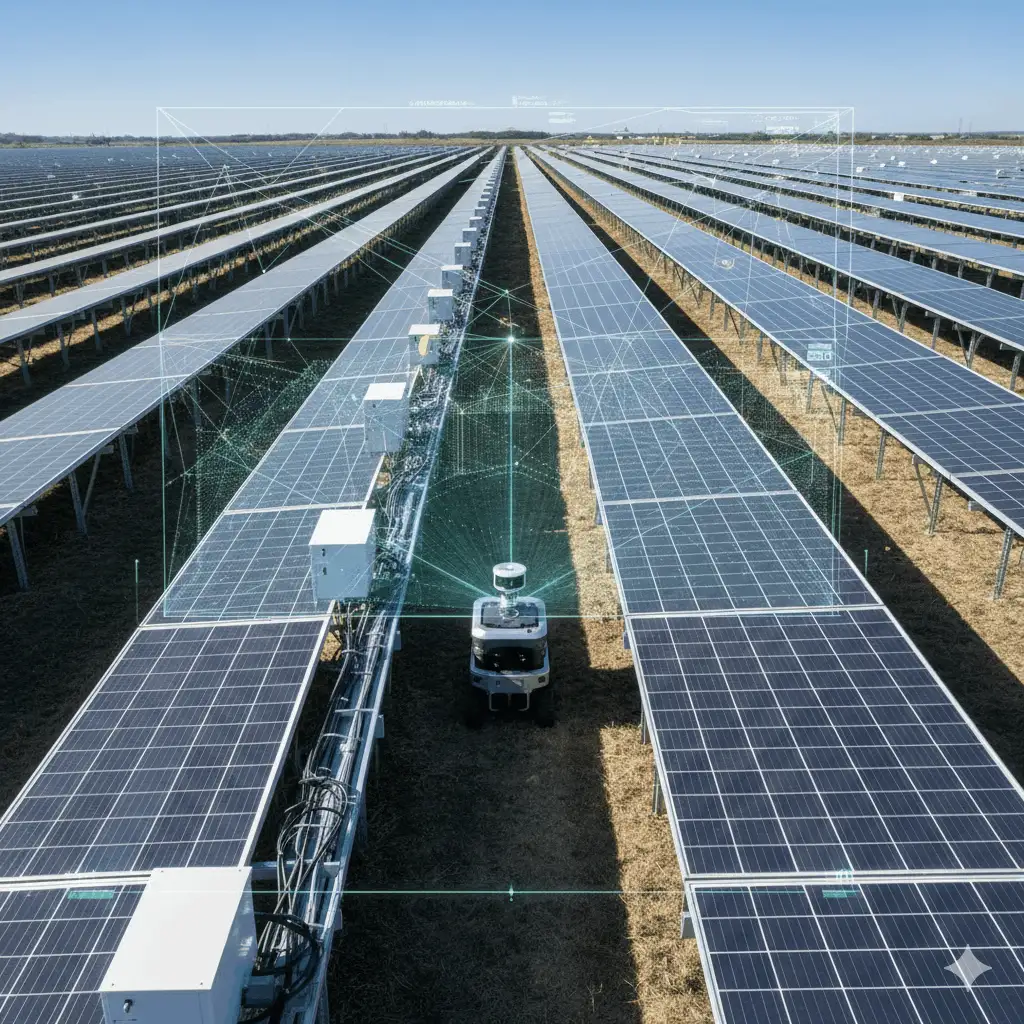
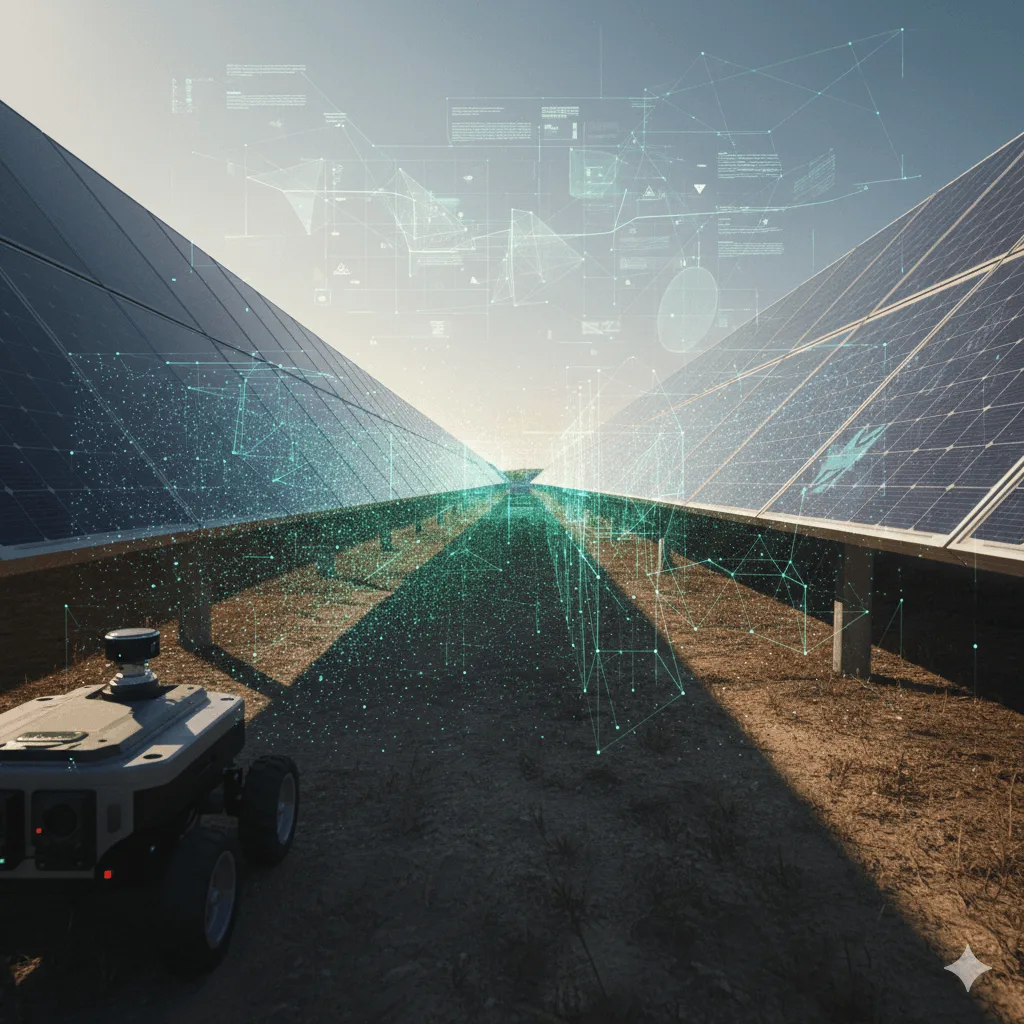
LiDAR systems are combined with thermal, RGB, and environmental sensors to detect critical issues such as hotspots, faulty cells, surface contamination, loose components, and cable deterioration. LiDAR provides precise spatial context while additional sensors deliver condition based insights, resulting in a complete fault identification system.
Each AMR scan updates a live digital twin of the solar installation. This model supports time series comparison, predictive maintenance, performance impact analysis, and automated reporting. Operators gain a comprehensive understanding of site conditions and can act on issues before they escalate.
Automated condition monitoring minimizes the need for manual field inspections and reduces risk exposure for personnel. Maintenance teams receive prioritized alerts and data driven insights that streamline workflows and prevent costly downtime. This leads to higher energy output, greater asset longevity, and improved overall site performance.
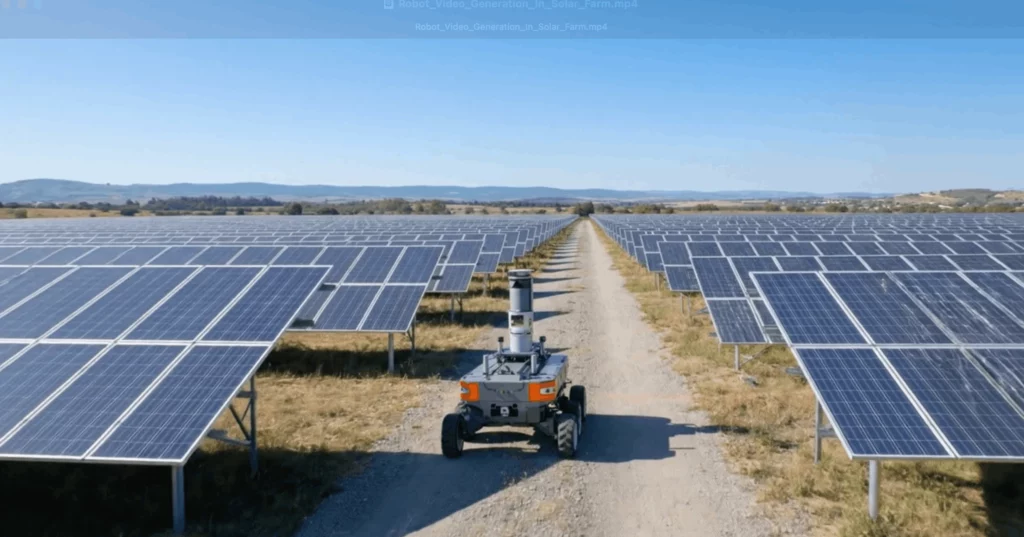
CRATUS brings together LiDAR perception, robotics engineering, energy systems knowledge, and integration capabilities to deliver reliable AMR based monitoring solutions. Our systems provide real time mapping, autonomous navigation, fleet coordination, digital twin synchronization, and seamless data reporting tailored to solar environments.
As renewable energy demand increases, solar operators need continuous insight into asset health and environmental conditions. LiDAR enabled AMRs provide the accuracy, automation, and intelligence required to ensure stable performance and maximize energy yield. CRATUS develops advanced LiDAR powered monitoring solutions that help solar facilities detect issues early, optimize operations, and maintain long term reliability.
We would be pleased to send you detailed information about our products or services.
Simply enter your details in the contact form below and we will get in touch with shortly.
CRATUS respects your personal information and keeps it safe. By sending this form, you consent to allow CRATUS to store and process your personal information as stated in our Privacy Policy.