

Measure
volume in motion.
Real-time, non-contact measurement of material on your conveyor belt: volume, flow rate, tonnage, and for aggregates, particle size distribution, captured by a fused LiDAR + camera sensor and delivered live to the systems that run your plant.
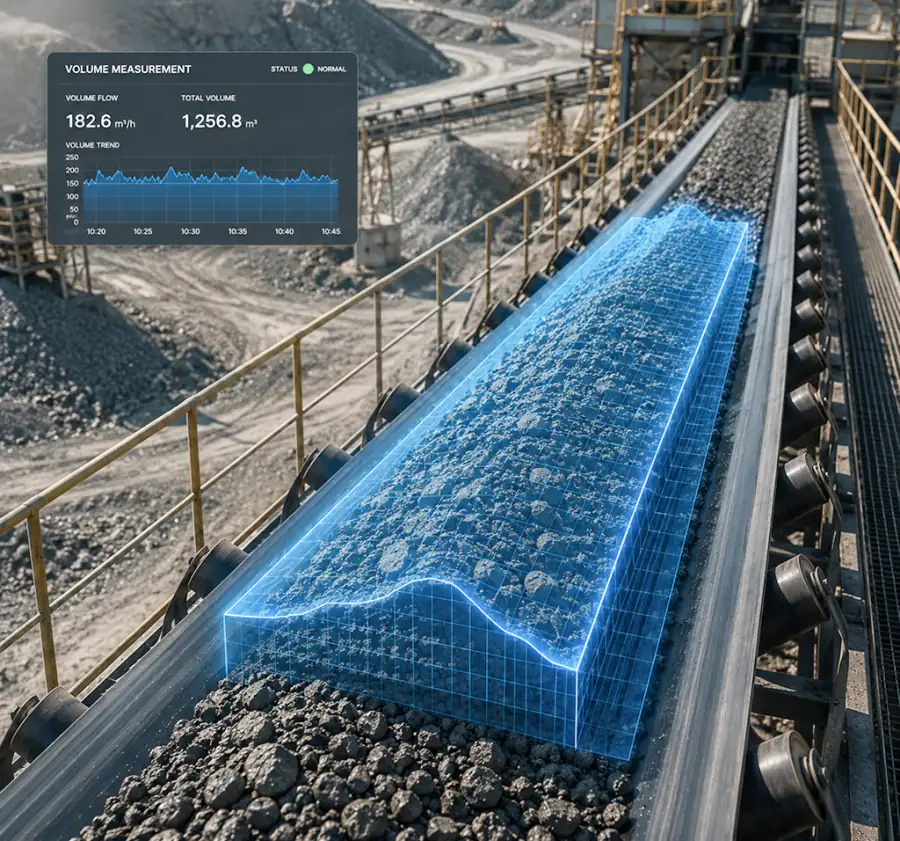
Your throughput is a guess
until it isn't.
Most bulk material operations still estimate what's moving across the belt. That gap between what you think you're producing and what you're actually producing shows up everywhere: in reconciliation, in maintenance costs, and in trust.
Sound familiar?
How CRATUS solves it
Three measurements, one pass.
Profile, Image & Speed
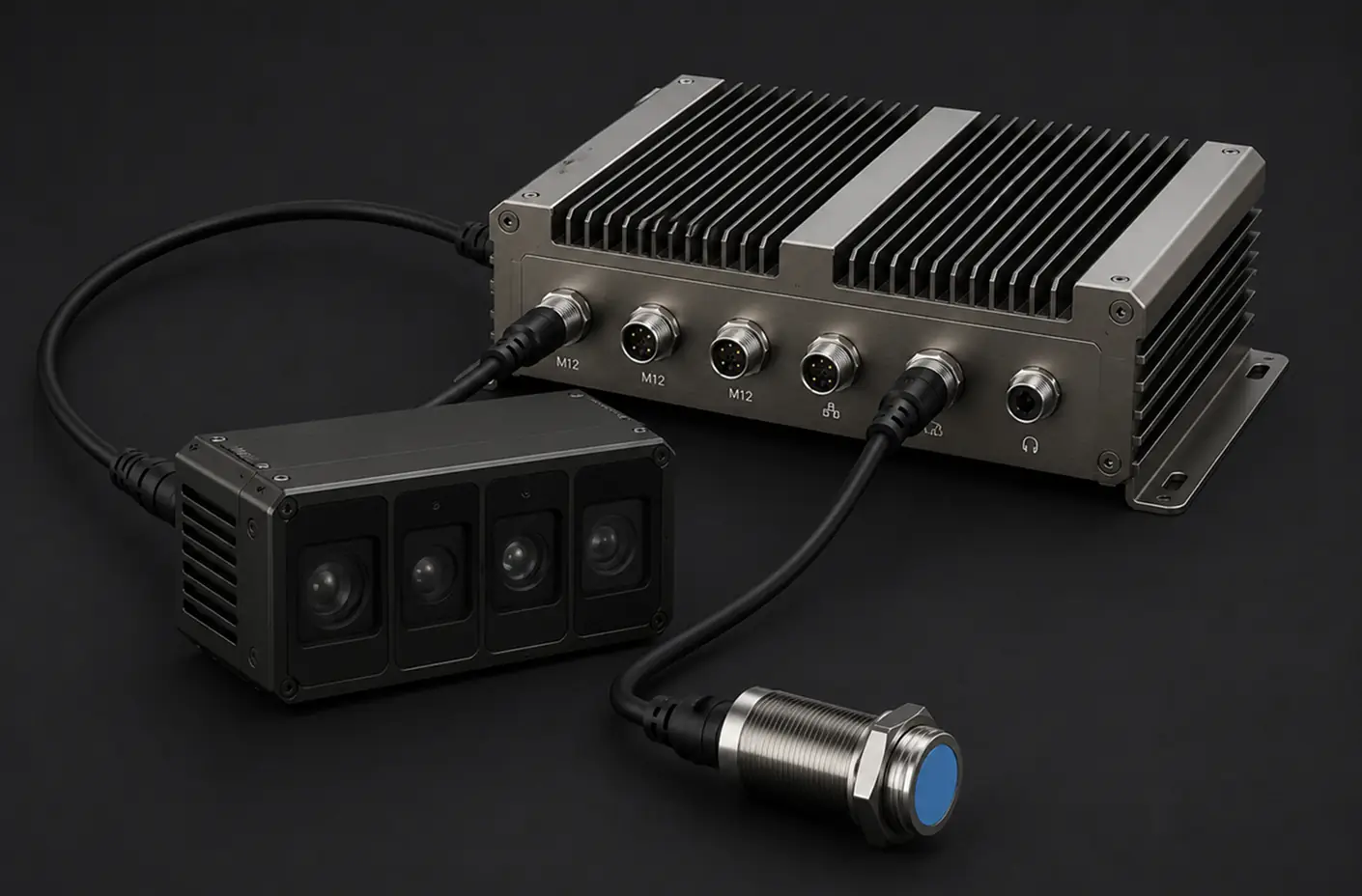
The fused LiDAR + camera node captures the cross-sectional profile and a visual image of the material simultaneously, while tracking belt speed continuously and accurately.
Volumetric Flow
Cross-sectional area is combined with real-time belt speed data to produce volumetric flow, updated continuously, not sampled.
Weight & Tonnage
Applying the material's density converts volumetric flow into estimated weight and mass flow, ready for reporting or reconciliation.
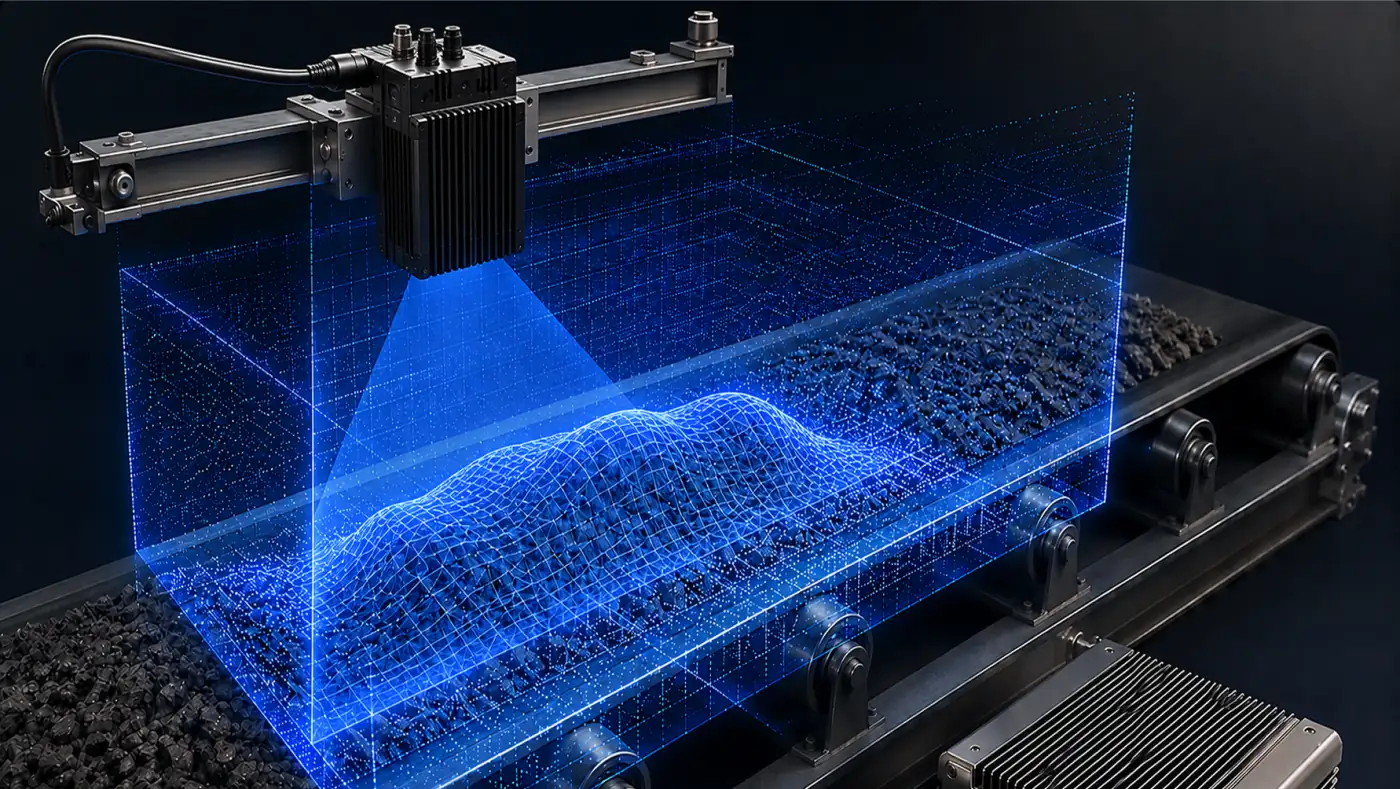
Six-dimensional sensing, not just a profile.
Every VMS Type 3 node carries a camera alongside the LiDAR. Together they capture the material's geometry and its appearance in the same pass: three spatial dimensions plus three visual channels, fused into one dataset.
Geometric: X, Y, Z
The LiDAR reconstructs the load's cross-sectional profile in three dimensions, the basis for volume, flow rate, and tonnage.
Visual: R, G, B
The camera captures a true image of the material on every pass: color, texture, and anything sitting on top of the load.
Fused: One Dataset
Geometry and imagery are stored together, so every volume reading has a matching picture of exactly what was measured.
Not just volume. Store the load profile and the images behind it.
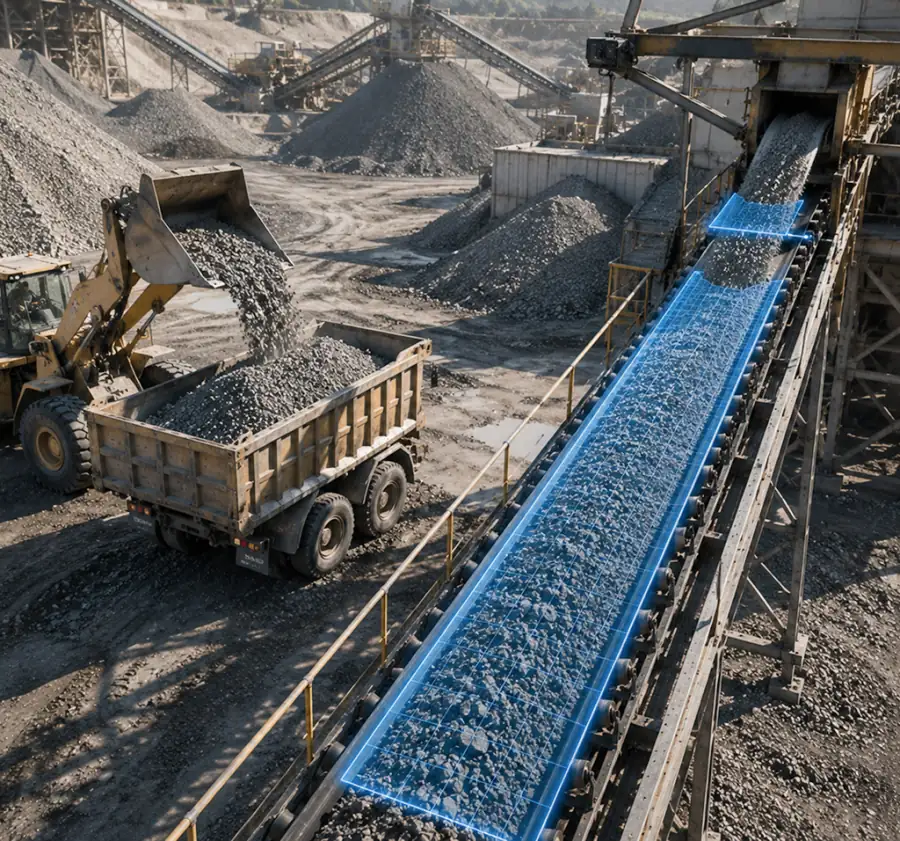
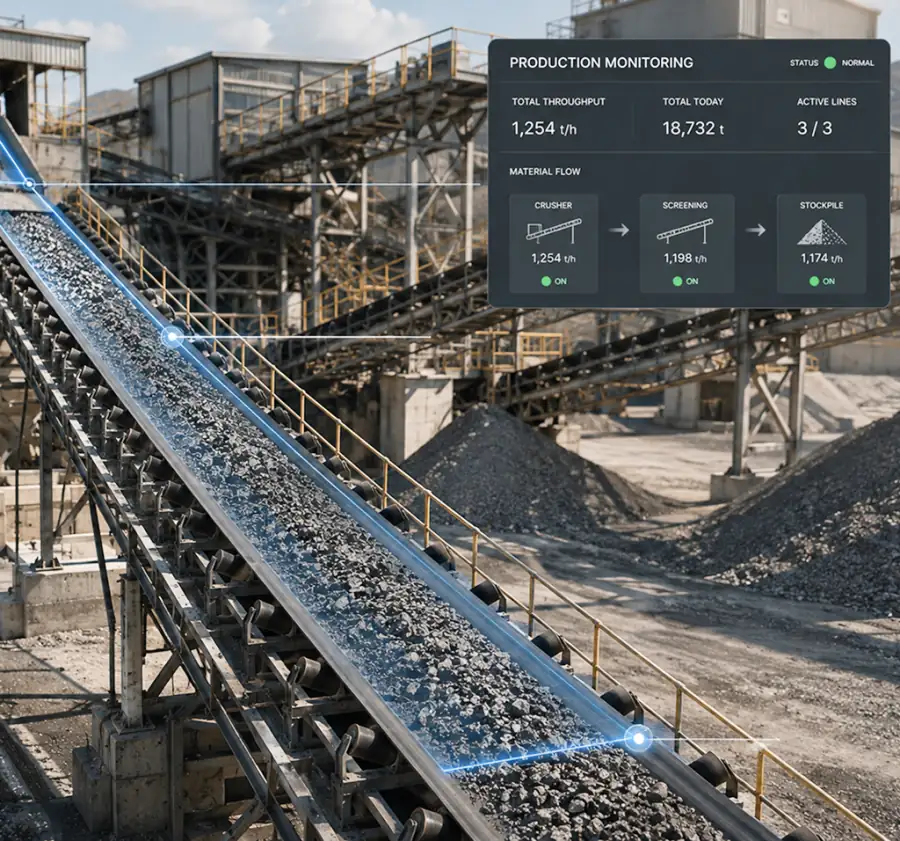
Aggregate applicationsEverything the belt is doing, live.
Every reading below is generated continuously and available the instant it's measured, with no polling, no end-of-shift reconciliation.
Fits the belt you already have, or the one you're designing.
We support integration into new conveyor designs and into retrofits of existing belts, on equal footing.
Retrofit
Installs on existing conveyor systems without redesigning the line. Mounts overhead, clear of the load path.
New Build
Specified directly into new conveyor projects, with mounting and integration confirmed at design stage.
OEM Integration
Built into conveyor manufacturers' own equipment lines as a standard or optional measurement package.
Missing volume or weight measurement? Add ours.
Request a QuoteThree ways to get belt speed, depending on your conveyor.
Volumetric flow depends on belt speed. We work with whatever's already on your conveyor, or provide it ourselves if nothing is.
A. Existing Encoder
If your conveyor already has an encoder output, it feeds directly into our system over MODBUS‑TCP, with no new speed hardware needed.
B. Tick-Counter Sensor
Where no encoder exists, we install a dedicated tick-counter based speed sensor, a simple and reliable retrofit option.
C. Visual Speed Sensing
The camera built into every VMS Type 3 node can measure belt speed directly, with no separate speed hardware to install or maintain at all.
No speed input available on site? Option C, the camera already in the sensor, covers it.
Built to fit into your system, not around it.
Specify by belt width, belt speed, mounting requirements, and conveyor type: the same information you'd give any equipment supplier.
For Manufacturers
OEM-ready hardware and a defined interface, so volume and weight measurement can ship as part of your own conveyor line.
For Retrofitting Owners
Add measurement to a belt that's already running, without shutting the line down for structural changes.
For Potential Buyers
A single spec, covering belt width, speed, and material, is enough to scope a system and return a quote.
Data available on the spot, accessible globally.
Wherever bulk material moves on a belt.
Mining
Aggregates
Cement
Recycling
Agriculture
Bulk Handling
Food & Beverage
Pharma Mfg.
Logistics
Common questions.
The LiDAR node mounts overhead, clear of the load path, at a fixed position above the belt. Installation does not require modifying the conveyor structure itself.
An overhead LiDAR node, a local processing unit, and mounting hardware. Output is served over standard industrial protocols, with no additional software licenses required to view live data on site.
Standard industrial power at the mounting location. Power requirements are confirmed during the application assessment.
Locally over standard industrial protocols (PLC / SCADA / MES / YMS / IMS / ERP), and remotely wherever network access is available. Data is on the spot and accessible globally.
Because measurement is non-contact and geometric, the system does not require the routine recalibration schedule that mechanical belt scales need.
Yes. For aggregate applications, the fused LiDAR + camera sensor also reports particle size distribution, alongside the standard volume, flow, and weight data.
Three ways, depending on what's already on your conveyor: an existing encoder output feeding in over MODBUS-TCP, a tick-counter based sensor we install, or, most commonly, the visual speed sensing built into the sensor's own camera, which requires no additional hardware at all.
Each node fuses LiDAR geometry (X, Y, Z) with camera imagery (R, G, B) into one dataset. That means every load profile has a matching image, useful for reviewing particle size, spotting contamination or foreign objects, and investigating irregular loading events after the fact.
Maintenance is minimal since nothing contacts the belt or material. In dusty environments, a recurring lens-cleaning schedule applies. An optional low-maintenance air purge accessory keeps the cover lens clear automatically.
Spare parts, including the air purge accessory, are available directly through CRATUSTECH. Contact support with your unit details.