


CRATUSTECH at Sensors Converge 2026: Wireless CAN Bus Bridges for Connected Industrial Systems
Last week, CRATUSTECH was at Sensors Converge, where we showcased how our Wireless CAN Bus Bridges support the next generation of connected industrial systems with moving parts and joints, where cabling is always a problem.
At the event, our team presented how wireless CAN Bus communication can simplify industrial system design by reducing wiring complexity, improving installation flexibility, and enabling more reliable communication across machines, vehicles, robotic systems, and distributed control networks.
In connected industrial environments, moving parts create one of the most common integration challenges. Wherever there are rotating joints, mobile platforms, articulated arms, cranes, vehicles, or equipment with repeated mechanical motion, traditional cabling can become a point of failure. Cables wear out, connectors loosen, routing becomes complicated, and maintenance teams often need to troubleshoot physical wiring before they can even address the system itself.
CRATUSTECH’s Wireless CAN Bus Bridge is designed to address this exact problem.
Why Wireless CAN Bus Matters
CAN Bus has long been used in demanding environments where reliable communication between sensors, controllers, actuators, and embedded systems is essential. However, as machines become more connected, modular, and data driven, engineers often need to extend CAN networks across areas where physical wiring is difficult, risky, or inefficient.
Wireless CAN Bus Bridges help bridge that gap by allowing CAN data to move between network segments without forcing every connection to depend on a physical cable.
This is especially valuable for systems with:
- Moving joints and rotating structures
- Mobile machines and robotic platforms
- Industrial equipment with distributed sensors
- Factory floor automation systems
- Vehicles, fleets, cranes, and heavy machinery
- Remote sensor aggregation and telemetry applications
Instead of building around cable limitations, engineers can design systems with greater freedom while still maintaining the benefits of CAN based communication.
Built for Real Industrial Integration
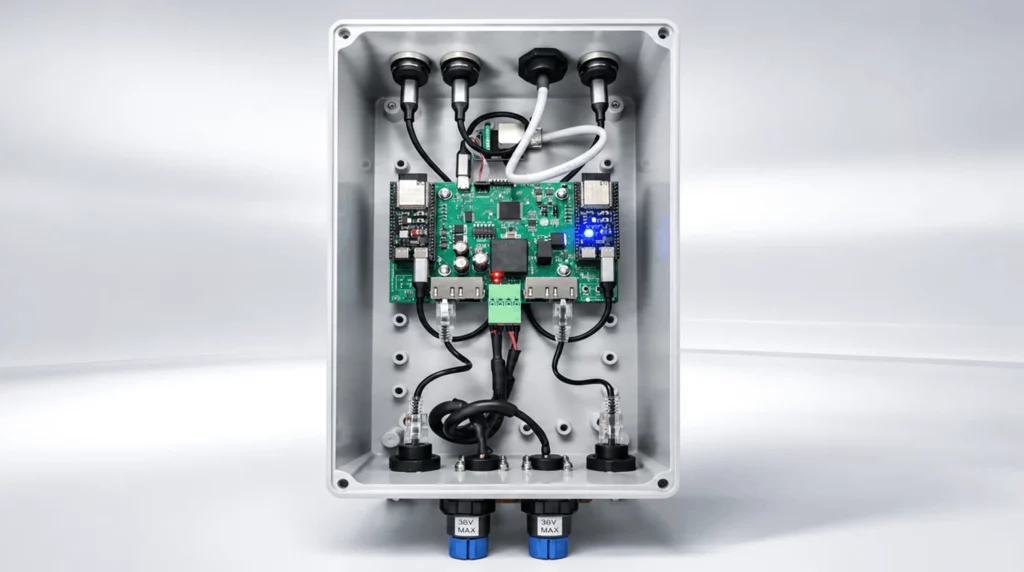
The CRATUSTECH Wireless Dual CANBUS Control Board, ICL8-WC182, brings CAN FD, wireless connectivity, power conditioning, and cloud connectivity into one integrated subsystem. It is designed to replace fragmented setups that often require separate CAN gateways, wireless radios, power supplies, and protocol bridges.
The board supports dual CAN FD channels, dual wireless links, wide range 9 to 36 V input, galvanic isolation, ESD protection, industrial temperature ratings, hardware node addressing, and over the air firmware updates. This makes it suitable for field deployments where reliability, serviceability, and fast integration matter.
By combining wired and wireless communication in one platform, CRATUSTECH helps reduce enclosure and system complexity, wiring effort, vendor dependency, integration time and simplifies troubleshooting and service procedures.
At the event, our team presented how wireless CAN Bus communication can simplify industrial system design by reducing wiring complexity, improving installation flexibility, and enabling more reliable communication across machines, vehicles, robotic systems, and distributed control networks.
In connected industrial environments, moving parts create one of the most common integration challenges. Wherever there are rotating joints, mobile platforms, articulated arms, cranes, vehicles, or equipment with repeated mechanical motion, traditional cabling can become a point of failure. Cables wear out, connectors loosen, routing becomes complicated, and maintenance teams often need to troubleshoot physical wiring before they can even address the system itself.
CRATUSTECH’s Wireless CAN Bus Bridge is designed to address this exact problem.
From the Show Floor to the Interview
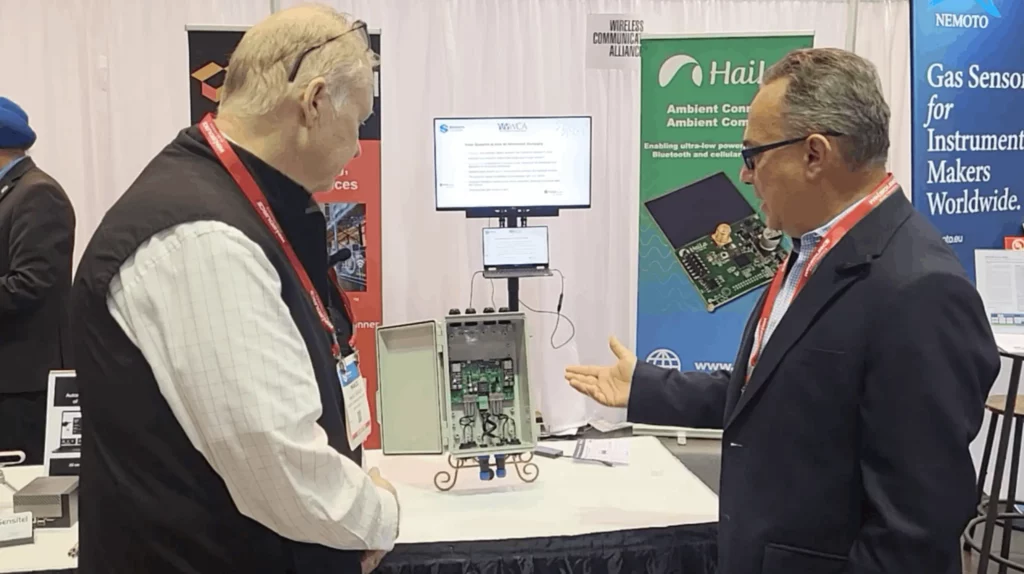
During our Sensors Converge interview, we discussed how this technology fits into the future of connected industrial systems. The focus was not only on replacing cables, but on enabling better system architecture.
Wireless CAN Bus Bridges can help engineers create cleaner, more flexible networks for applications where sensors, controllers, and moving components must communicate continuously. For industrial automation, robotics, heavy equipment, energy systems, fleet management, and remote monitoring, this opens the door to more scalable and maintainable designs.
The interview also highlights how CRATUSTECH approaches engineering challenges: by turning complex integration requirements into practical, field ready solutions.
Watch the Interview
Watch our Sensors Converge interview to learn more about what we presented at the event and how CRATUSTECH is supporting the next generation of connected industrial systems.

Written by
Founder and CEO, CRATUS Technology, Inc.
Zeki founded CRATUS in 2013 and leads the San Jose team building LiDAR volume measurement systems, IoT sensing platforms, and energy and industrial automation hardware.
Full profileLinkedIn


Interested ?
We would be pleased to send you detailed information about our products or services.
Simply enter your details in the contact form below and we will get in touch with shortly.
CRATUS respects your personal information and keeps it safe. By sending this form, you consent to allow CRATUS to store and process your personal information as stated in our Privacy Policy.