

The Most Dangerous Job in Your Plant Is Finding Out How Much Is in the Silo
Ask an operator how the plant knows what is in a storage silo and you tend to get the same answer. Somebody climbs on it or into it. They open a roof hatch, drop a weighted tape or lean over and look, then write a number on a clipboard and climb back down. Next shift, someone does it again. The material sitting in that silo is dangerous, everyone knows that, and the plant has rules about it. The part nobody writes a rule for is that the measurement itself is what keeps putting a person up there.
What the incident data says
Purdue’s agricultural safety program counts these incidents every year. Their 2025 summary, published this July, documented no fewer than 48 confined space incidents in the United States. 22 were fatal. 21 were grain entrapments. Purdue states those as minimums, because incidents on private farms often never get reported.
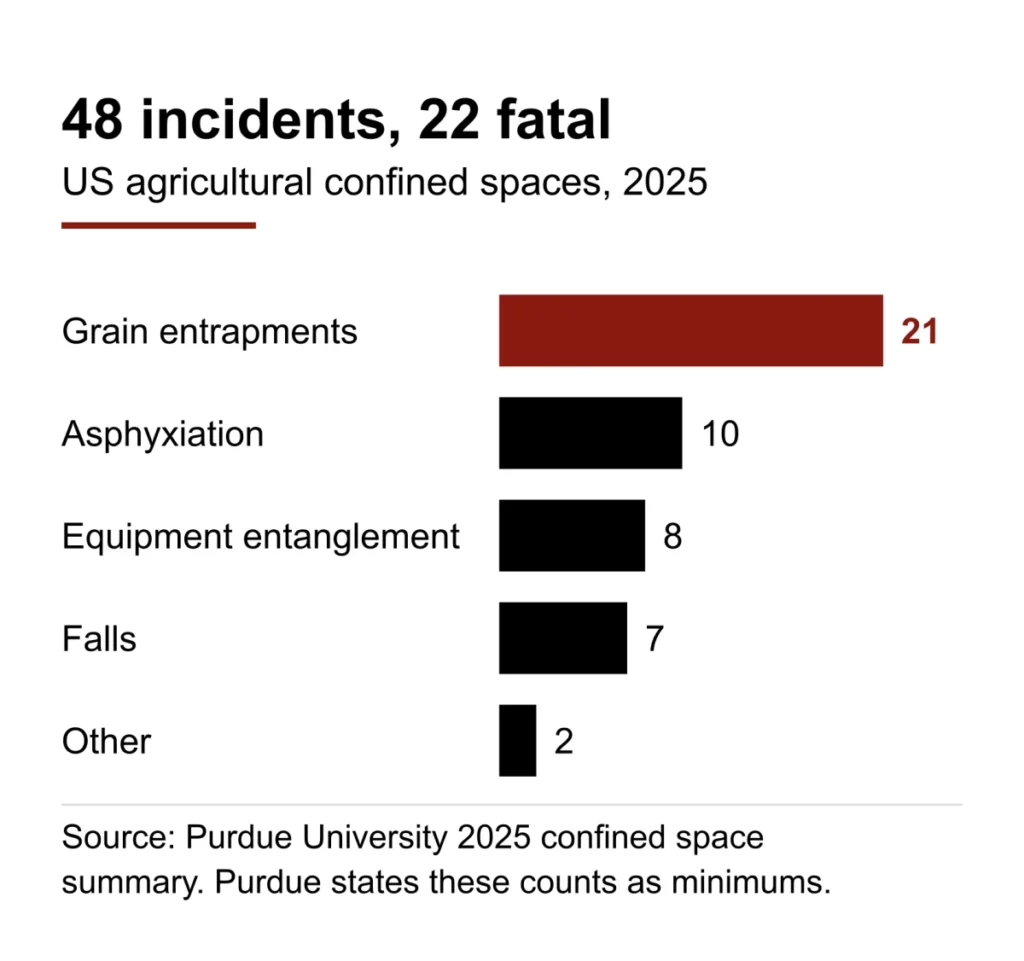
Worth knowing that this data covers agriculture, which OSHA exempts from 29 CFR 1910.146. Cement, sand, and minerals plants get no such exemption. A storage silo meets OSHA’s definition twice over: it holds material that can engulf someone, and its internal shape can trap someone who gets in. Every entry means a written permit, atmospheric testing, lockout of the discharge, an attendant posted outside, and rescue standby on call.
The cleanout is the larger half of the problem
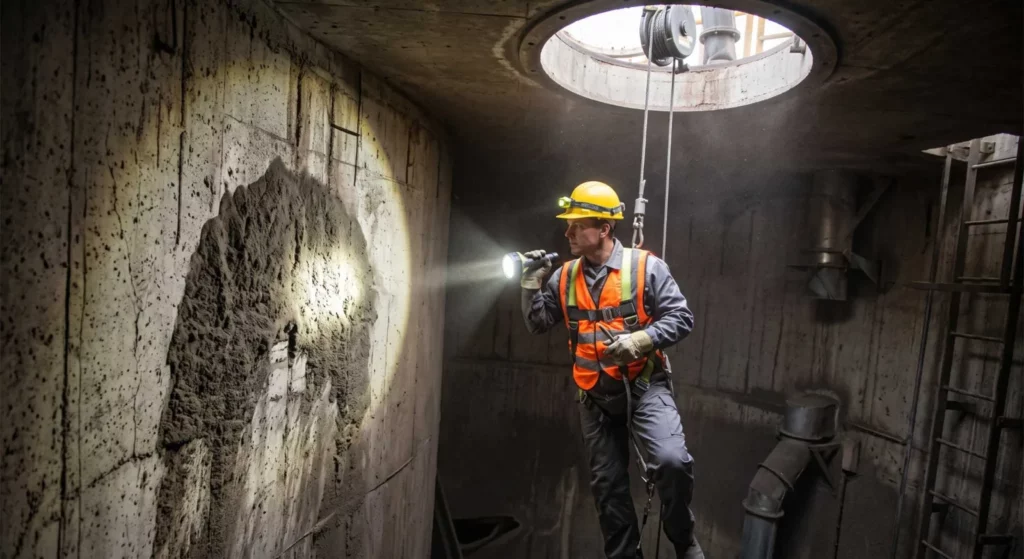
The routine climb to read a level is the smaller half of this. The larger half is the cleanout, when someone goes in with a pole to break down material that has bridged over the outlet or caked onto the wall. That entry gets scheduled blind. Nobody knows whether the silo actually needs it until a person is already inside looking at it.
One number cannot describe a shape
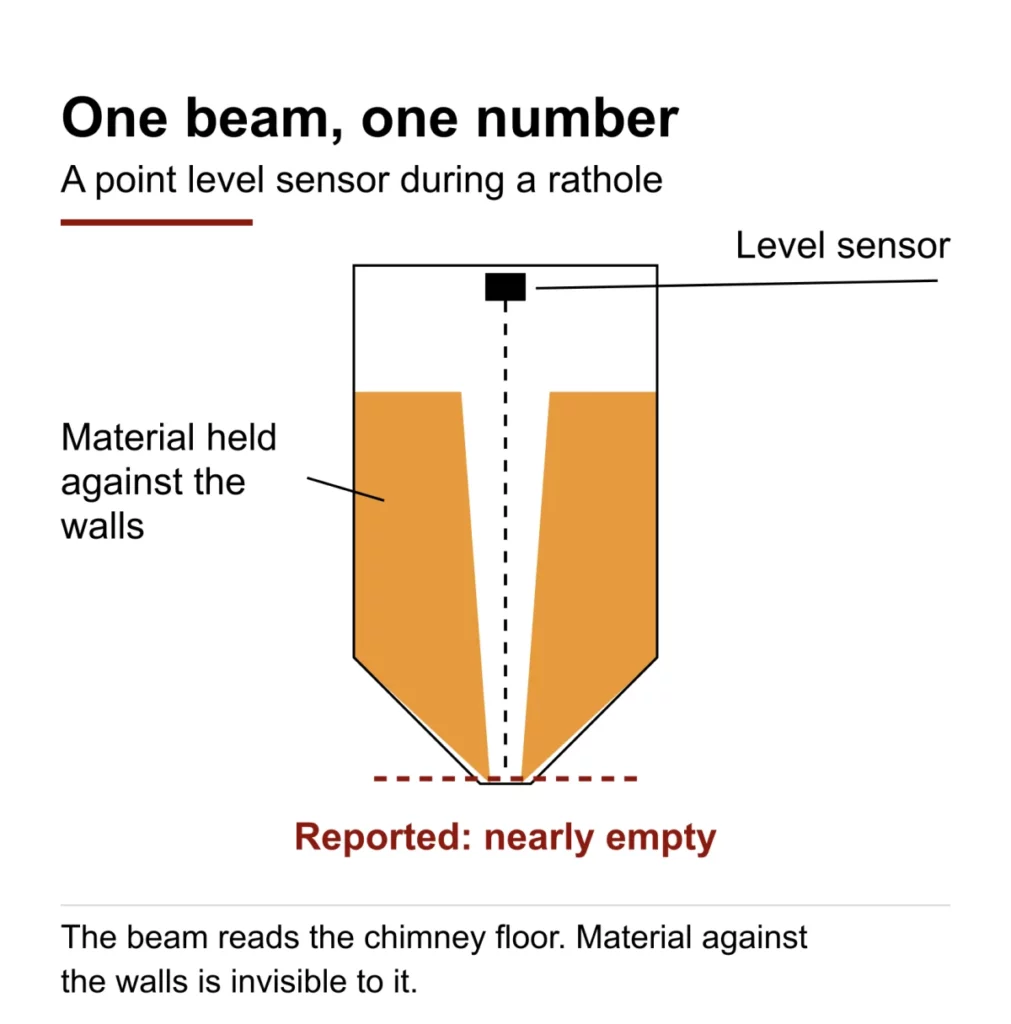
Radar and ultrasonic level sensors do not solve this, and the reason is worth stating precisely. Those instruments return a single number, and a hang up is a shape problem. One number cannot describe a shape. When material ratholes, the sensor reads down the chimney and reports the silo nearly empty while the rest of the contents sit welded to the walls.
What a 3D scanner changes
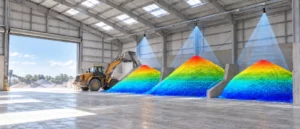
A 3D scanner fixed in the roof space changes both halves. It measures the whole surface on a schedule, so nobody opens a hatch to read a level again. It also shows where the material actually sits, which turns the cleanout from a calendar entry into a decision made from the control room with evidence on the screen.
The CRATUS VMS-HS128
If your success depends on quantifying the amount of Cement & Cement Clinker, Sand & Gravel, Fly Ash & Slag, Crushed Stone / Aggregate in your silo, that is what we built the CRATUS VMS-HS128 to do. A compute unit and one or two 128 channel LiDAR sensors mount high in the bunker, on the ceiling or the wall, and scan on the schedule you set or on demand when your SCADA asks for one. Volume, peak pile height, and a weight estimate arrive in the control system you already run, over Modbus TCP, so there is no new screen for an operator to learn.
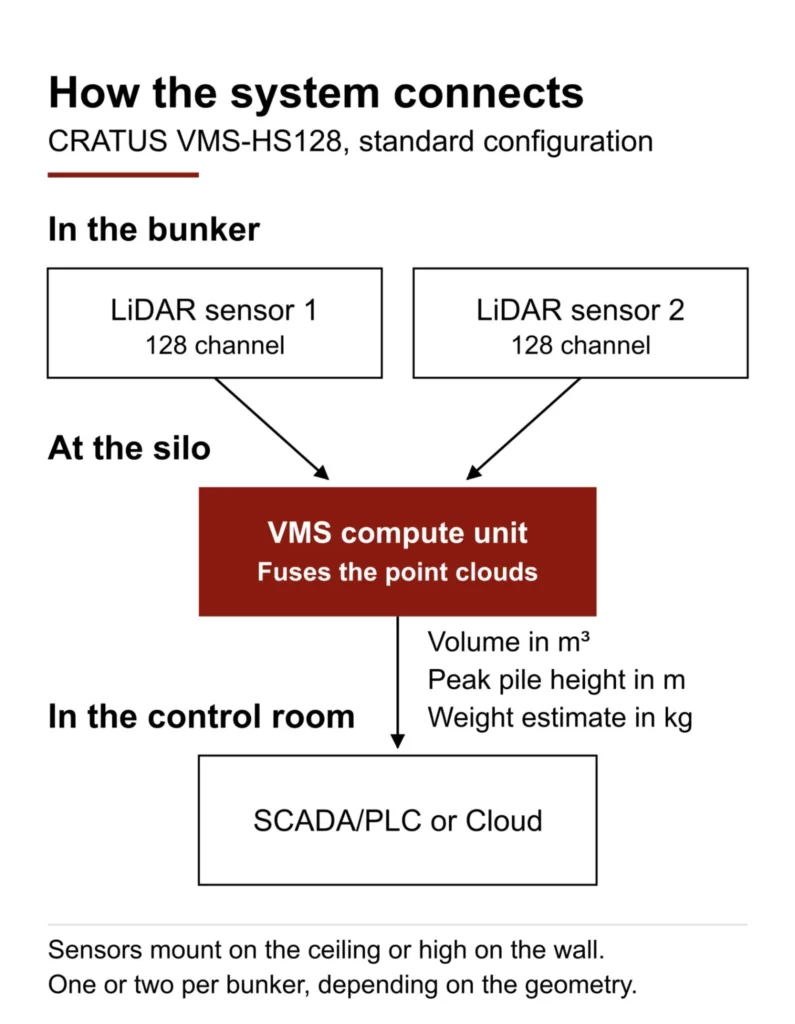
Two things about it matter more than the specification sheet. Because volume and peak height are reported as separate values, a bridge or a rathole shows up in how those two numbers move against each other, well before the discharge starves. And where a sensor cannot see, the system leaves that region out of the estimate instead of filling it in, so the number your team acts on is conservative by design.
Your weighbridge still tells you what moved. This tells you what is sitting in the silo right now, without anyone opening the hatch. The first place most plants notice the difference is the permit book.

Written by
Founder and CEO, CRATUS Technology, Inc.
Zeki founded CRATUS in 2013 and leads the San Jose team building LiDAR volume measurement systems, IoT sensing platforms, and energy and industrial automation hardware.
Full profileLinkedIn
Interested ?
We would be pleased to send you detailed information about our products or services.
Simply enter your details in the contact form below and we will get in touch with shortly.
CRATUS respects your personal information and keeps it safe. By sending this form, you consent to allow CRATUS to store and process your personal information as stated in our Privacy Policy.