

Written by
Founder and CEO, CRATUS Technology, Inc.
Zeki founded CRATUS in 2013 and leads the San Jose team building LiDAR volume measurement systems, IoT sensing platforms, and energy and industrial automation hardware.
Full profileLinkedInLiDAR has revolutionized how autonomous mobile robots (AMRs), automated guided vehicles (AGVs), and industrial cobots navigate complex operations. However, in busy facilities where heavy machinery works directly alongside human personnel, standard perception is not enough. When collision risks threaten worker health and safety, not all LiDARs are created equal.
Standard sensors actively scan surroundings to assist with basic navigation, but if an internal component glitches or factory dust obscures the lens, standard LiDAR can fail silently. Safety-rated LiDAR is engineered specifically to eliminate silent failures by guaranteeing a certified, fail-safe state upon fault detection.
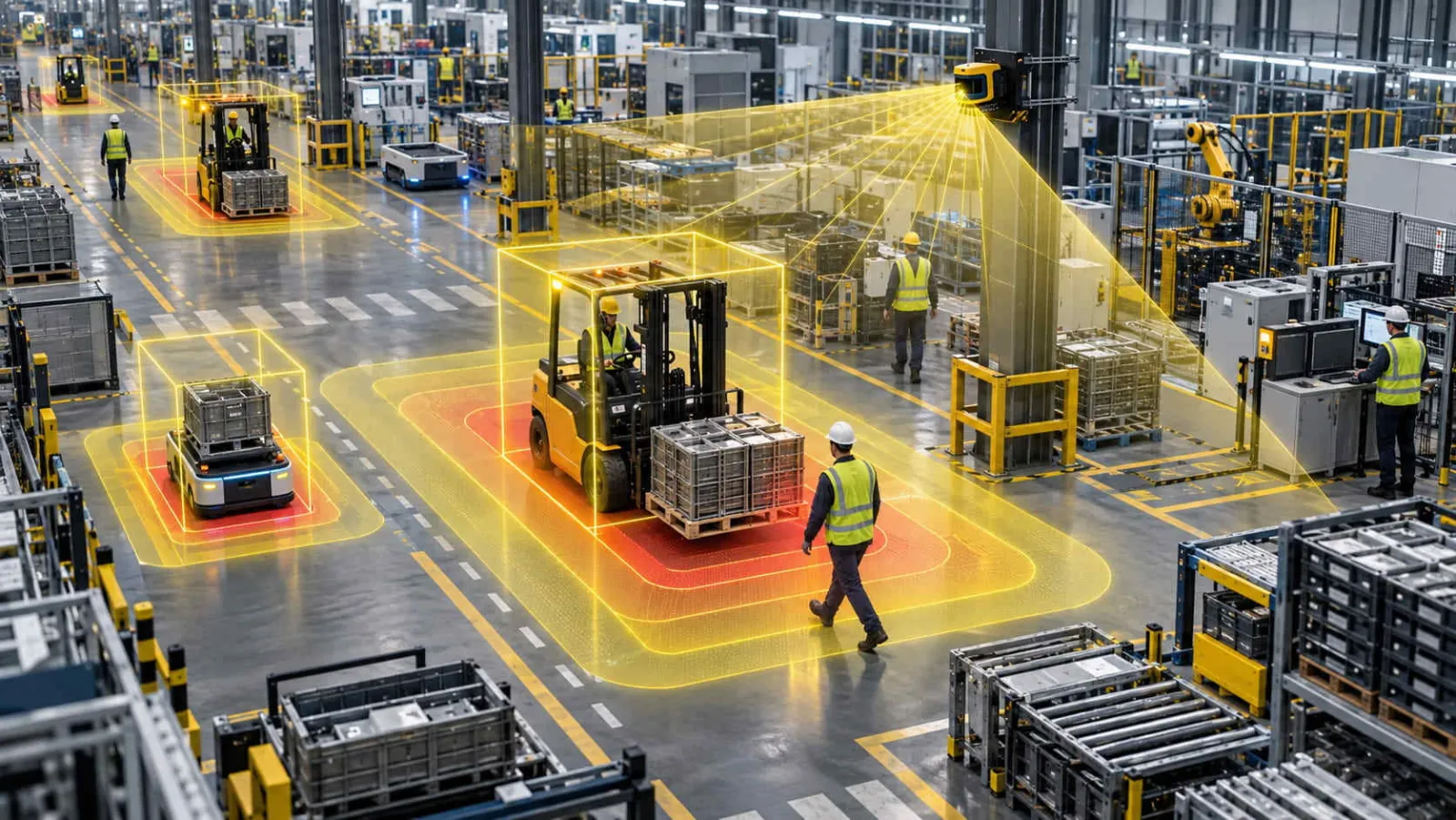
Safety-rated units enforce multi-layered, active protection zones that dynamically adapt based on machine speed, steering angle, and operational risk:
Achieving certified millisecond reaction times requires extreme internal circuit design. Specialized gate drivers, high-frequency switches (often utilizing GaN power transistors), and ultra-stable laser diodes must work in perfect synchronization. This hardware architecture delivers precise optical pulses and instant signal processing to guarantee reliable shutdown capabilities without false trips.
LiDAR remains the most computationally efficient technology for processing surrounding environments, delivering essential spatial data while requiring significantly less processing horsepower than heavy camera vision setups. As production costs decline and global adoption surges across autonomous platforms, LiDAR has firmly established itself as the leading sensor technology. However, deploying this efficiency on the factory floor hinges entirely on functional safety certification. Integrating safety-rated LiDAR transforms raw operational awareness into fail-safe protection—allowing high-speed industrial machinery and human teams to work side-by-side without sacrificing throughput or life safety.
Leave your information for your safety rated Lidar requests or discuss your use case that requires safety rated lidar with us.
Zeki founded CRATUS in 2013 and leads the San Jose team building LiDAR volume measurement systems, IoT sensing platforms, and energy and industrial automation hardware.
Full profileLinkedInShare
Interested?
Interested ?
We would be pleased to send you detailed information about our products or services.
Simply enter your details in the contact form below and we will get in touch with shortly.
CRATUS respects your personal information and keeps it safe. By sending this form, you consent to allow CRATUS to store and process your personal information as stated in our Privacy Policy.
GET IN TOUCH
One of our experts will be communicating with you shortly. We are committed to understanding your application and providing support, tailored to your specific requirements.