

You can't manage what you can't monitor
Physical AI for Industrial SCADA and ERP Integration
CRATUS connects sensors, LiDARs, camera vision, real-time location and volume measurement systems to your SCADA and ERP systems, creating a Physical AI layer for manufacturing, mining, aggregates, ports, recycling, agriculture and public works. We design the data flow, prove it on simulations and test benches, and deploy in phases while your operation keeps running.
One team for Hardware · Firmware · Software · AI
What is SCADA and ERP integration for Physical AI?
SCADA and ERP integration for Physical AI means moving measured, time-aligned site data (LiDAR volumes, locations, camera events and sensor readings) into the systems that already run the plant and the business. SCADA keeps real-time control of the process and the ERP keeps the business record. An on-site Physical AI layer sits between them: it normalizes the data, adds context and flags exceptions. CRATUS designs the data flow, proves it on a test bench, and deploys it in phases.
Last updated: October 27, 2026.
If your ERP can't see it, it didn't happen.
Why SCADA and ERP numbers do not match the physical site
Facilities already measure a lot. The problem is where the numbers stop: at the sensor, in a spreadsheet or in someone's head, instead of in the system of record.
Is your data stuck in silos?
Stockpile volumes, equipment locations and camera events live in separate tools. SCADA sees tags, the ERP sees transactions, and nobody sees both.
Is inventory by estimate good enough?
Month-end counts rely on visual checks, clipboards and truckload counts. In one CRATUS customer's bunkers, visual and manual inspection topped out around 70% accuracy.
AI needs the right data and the right context
AI tools work from what they are given. Without time-aligned, validated plant data mapped to business objects, they produce answers nobody can trace or trust.
How Physical AI integration works
Physical AI refers to AI that perceives and acts on the real world through sensors; the term became widely used after NVIDIA's CES 2025 announcements, building on decades of robotics and industrial automation. Today it is used in factories, mines, ports and logistics sites to measure, track and inspect continuously. For operators, the change is simple: decisions move from periodic estimates to continuous measurement, and the business record finally matches the physical site.
Two ways to start
From a single data source
One bunker, one conveyor, one danger zone. A VMS-FL180C sends volume, flow rate and tonnage to SCADA, or a VMS reading posts an inventory adjustment to the ERP. Quick to prove, easy to expand.
From a digital twin of the operation
Site-wide 2D and 3D facility maps in Workflow Studio carry live locations, measured volumes and workflow status. The twin becomes the shared model that SCADA, MES and the ERP read from.
What we execute
- Edge computers, LiDAR, cameras and sensor selection for each site
- ICL8-PC548: 1500V galvanic isolation, supports MODBUS, J1939, CAN Open, and Wireless CAN
- ICL8-WC182: Dual CAN FD with 2000VDC galvanic isolation and 200m RF range
- Protocol stacks for RS-485, CAN, Modbus and Ethernet field devices
- Time-aligned, validated readings before data leaves the device
- Local operation so detection continues if the cloud link is lost
- Connectors to SCADA (OPC UA, MQTT, Modbus, SQL) and ERP (vendor APIs)
- ISA-95 data model that maps sensors to sites, areas, assets and materials
- ASSET-Rx APIs: REST / MODBUS / J1939 / CAN / Wireless CAN
- Edge inference for worker, PPE and object detection, with custom models
- Prediction and anomaly flags: volume trends, utilization, maintenance triggers
- AI monitors, predicts and recommends; control and safety stay in PLC, SCADA and rated safety systems
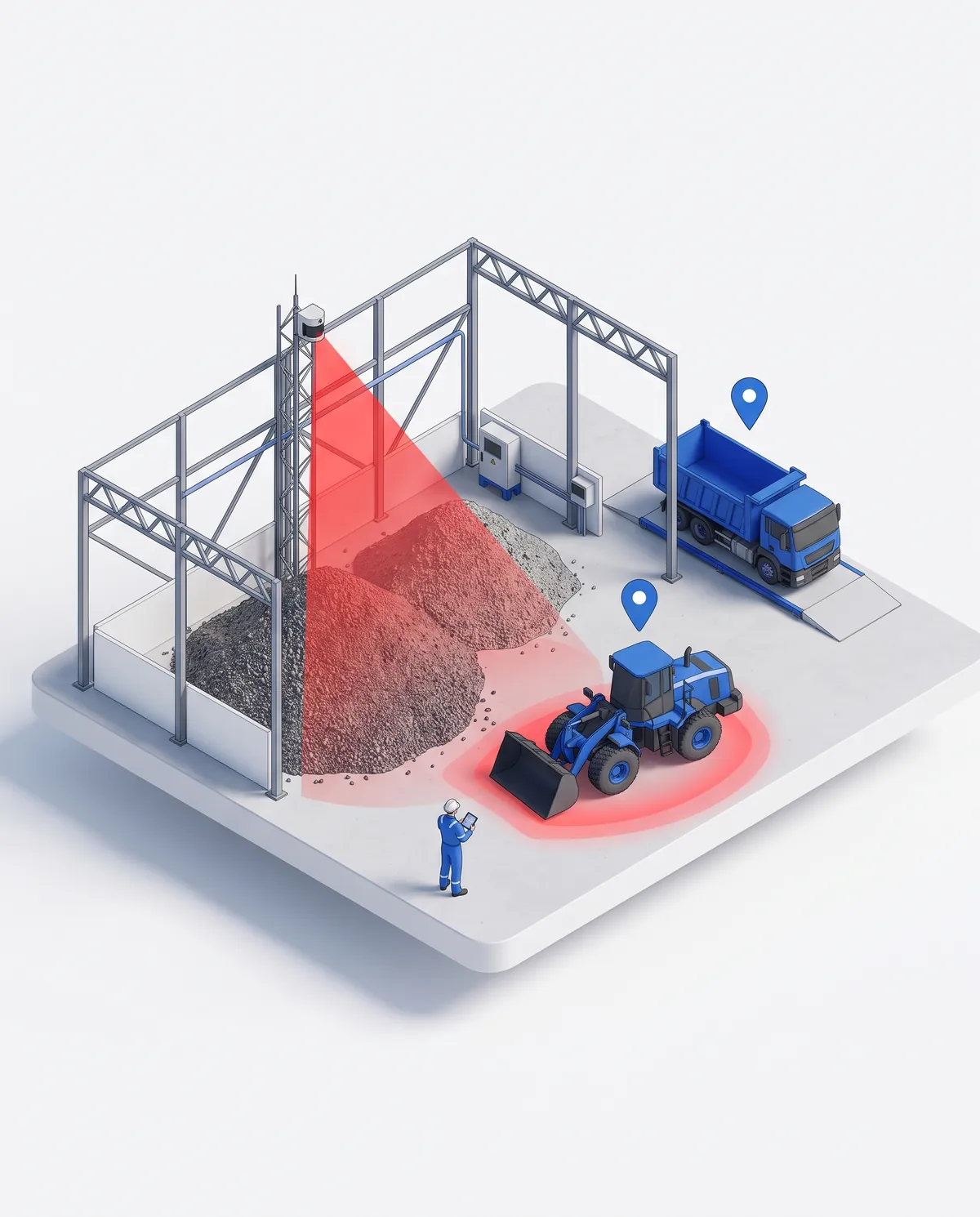
SCADA, MES and ERP: who owns which data?
ISA-95 (IEC 62264) describes how plant-floor systems and business systems exchange data. Each layer owns different data on a different time scale. Integration moves the right values between them. ISA-95 overview
| ISA-95 level | System | What it does | Typical update rate | What we move into it |
|---|---|---|---|---|
| Levels 0-1 | Sensors, PLCs, field devices | Measure and control the process | Milliseconds to seconds | Raw readings from LiDAR, location, camera and sensors |
| Level 2 | SCADA, HMI, historian | Supervise equipment, alarms and trends | Seconds | Tags and time series: volume, flow, tonnage, position, events |
| Level 3 | MES, workflow systems | Execute and track production and material movement | Minutes to shifts | Work progress, material custody, utilization |
| Level 4 | ERP | Keep the business record: inventory, orders, maintenance, cost | Hours to days | Inventory adjustments, asset records, work orders |
Levels follow the ISA-95 functional hierarchy. Real sites vary, and update rates are typical values, not guarantees.
Products that feed the Physical AI layer
Every CRATUS system is built to hand its data to other systems, not to become another silo.
- VMS LiDAR volume measurement: stockpiles, trucks in motion, conveyors, silos and domes
- ASSET-Rx: UWB and BLE location, chain of custody, utilization and maintenance intelligence
- ASSET-Rx EDGE: camera and LiDAR machine vision on GPU-enabled edge processors
- intercal8 Physical AI interfaces: RS-485, CAN, Modbus and Ethernet sensor and power data
SCADA platforms and protocols we connect to
We deliver data in the form each platform expects: OPC UA, MQTT, Modbus or SQL. The table lists the platforms and paths we design for. The ones that apply to your project are confirmed in the site assessment.
| Platform | Vendor | Common integration paths |
|---|---|---|
| Ignition | Inductive Automation | OPC UA, MQTT Sparkplug B, SQL bridge |
| System Platform, InTouch HMI | AVEVA | OPC UA, MQTT, AVEVA Historian and PI System |
| SIMATIC WinCC (Unified, OA) | Siemens | OPC UA, MQTT, TIA Portal tag mapping |
| FactoryTalk View SE, FactoryTalk Optix | Rockwell Automation | OPC UA, EtherNet/IP via controllers, MQTT |
| Proficy iFIX | GE Vernova | OPC UA, Proficy Historian, SQL |
| GENESIS64 | ICONICS (Mitsubishi Electric) | OPC UA, MQTT, BACnet |
| EcoStruxure Geo SCADA Expert | Schneider Electric | OPC UA, DNP3, Modbus |
| Movicon.NExT | Emerson | OPC UA, MQTT, Modbus |
| zenon | COPA-DATA | OPC UA, MQTT, Modbus |
70% → 99%+
A North American CPG manufacturer replaced visual bunker checks with a two-LiDAR-per-bunker VMS that CRATUS integrated directly with the customer's SCADA. Their system integrator queries the edge CPU from SCADA and stores timestamped volume readings in their own database. Up to 99.7% volumetric accuracy was demonstrated in that installation. Read the deployment
ERP systems we connect to
We connect measured site data to the business objects each ERP already uses, through its published APIs. The table lists the integration paths we design for. The ones that apply to your project are confirmed in the site assessment.
| ERP | Common integration paths | Typical data we post |
|---|---|---|
| SAP S/4HANA | OData and SOAP APIs, IDocs, SAP Integration Suite | Goods movements, plant maintenance notifications, quality results |
| Oracle Fusion Cloud ERP, NetSuite | Oracle REST APIs; NetSuite SuiteTalk REST and RESTlets | Inventory adjustments, asset records, work orders |
| Microsoft Dynamics 365 | Dataverse Web API, OData data entities, Business Central APIs | Inventory journals, production and maintenance orders |
| Infor CloudSuite (LN, M3, SyteLine) | Infor ION and ION API Gateway, BODs | Inventory balances, equipment usage, job costing |
| Epicor Kinetic | Epicor REST API v2, Epicor Functions | Material transactions, job and asset updates |
Other ERPs with a documented API connect the same way. Postings follow your ERP's approval rules. Product names are trademarks of their owners. A listed path is not a partnership.
Advisory and consulting: setting up operations and workflows
Integration succeeds when the workflow is designed first. We advise on what to measure, who acts on it and which system owns each record, then build it.
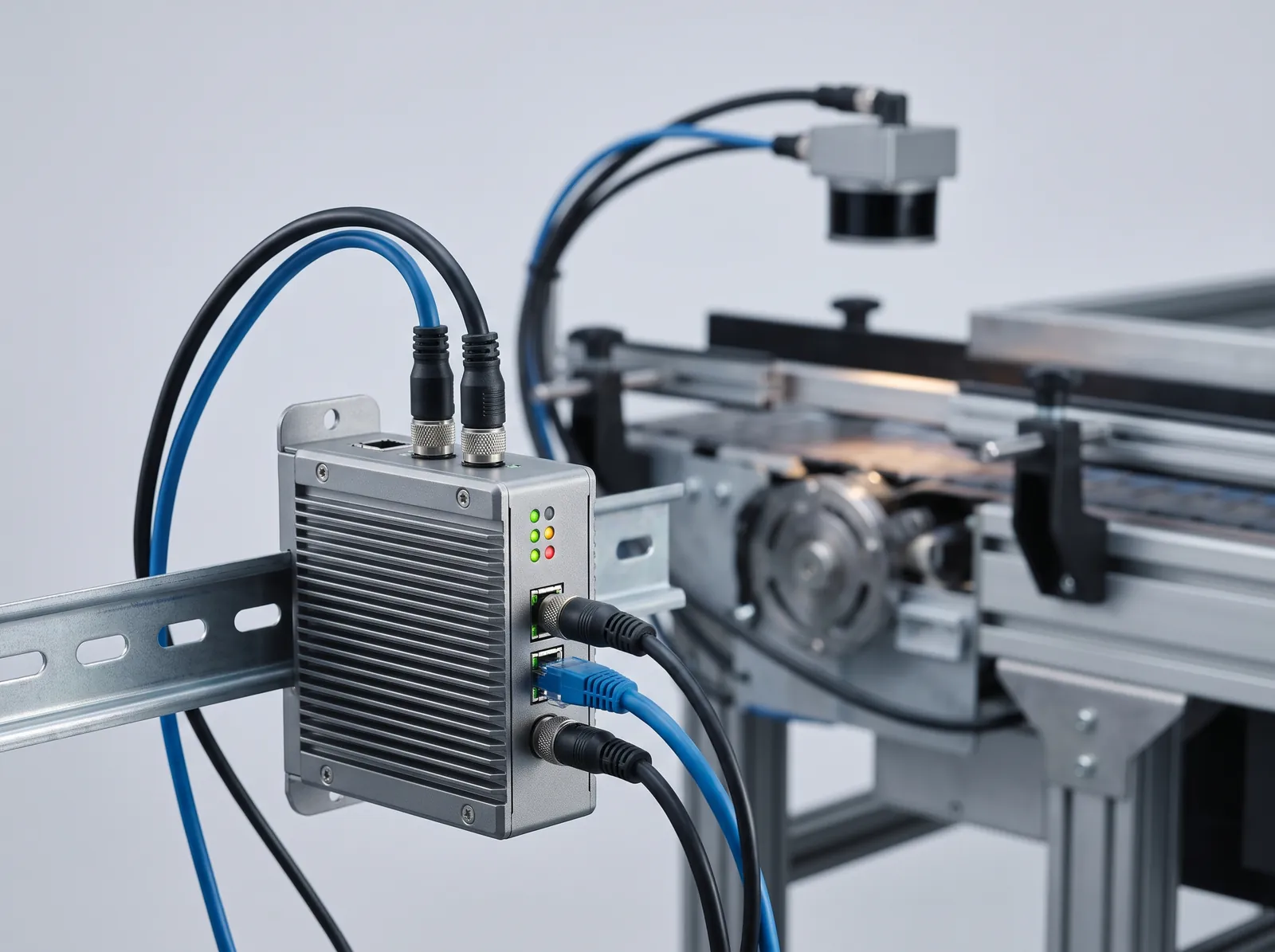
What the consulting covers
Data ownership between SCADA, MES and ERP; ISA-95 asset and material model; KPI and alert definitions; role-based workflows in Workflow Studio; network and security zoning; cutover from manual counts to measured data.
Discovery and site assessment
Map workflows, data sources and target systems. A CRATUS site assessment takes two to four weeks.
Architecture and data model
Sensor layout, edge design, interface choice and the ISA-95 model shared by every system.
Pilot on one use case
A single-use-case pilot typically runs four to eight weeks from assessment to live data.
Integration and validation
Connect SCADA and ERP, run new systems in parallel with existing data sources, test, switch data sources over, train operators and administrators.
Hyper-care and managed services
Remote monitoring, OTA updates, deviation reports and model updates as the operation evolves.
Standards and practices
We design, document and pre-test to the standards your automation and IT teams already use.
ISA-95 / IEC 62264
Shared model for exchanging data between ERP, MES, SCADA and control levels. A reference model, not a certification. Source: ISA
OPC UA / IEC 62541
Secure, vendor-neutral transport for SCADA and historian connections. Source: OPC Foundation
MQTT and Sparkplug B
Publish-subscribe messaging for unified namespace and multi-site architectures. Source: Eclipse Sparkplug
Modbus, CAN, J1939
Field protocols supported natively by ASSET-Rx and intercal8 interfaces.
ISA/IEC 62443
We design network zones and conduits to the industrial cybersecurity series and support your assessment. Source: ISA
Documentation
Interface control documents, tag and field maps, and test records handed over with every project.
Certification is issued by accredited third parties such as TÜV, UL or exida. CRATUS engineers, documents and pre-tests to the standard and supports your assessment; we don't self-certify.
Frequently asked questions
What is Physical AI in industrial operations?
Physical AI is AI that works from measurements of the real world, such as LiDAR scans, camera images, locations and sensor readings, and turns them into decisions about physical operations. In an industrial site it sits between the sensors and the business systems: it measures, predicts and flags, while SCADA keeps control of the process and the ERP keeps the business record.
What is the difference between SCADA, MES and ERP?
SCADA runs the process, MES runs production execution and ERP runs the business. SCADA collects real-time data from PLCs and field devices and lets operators supervise equipment. An MES tracks work in progress, material movement and quality on the shop floor. The ERP records inventory, orders, maintenance and costs. In ISA-95 terms they sit at levels 2, 3 and 4. Integration moves the right measured values between them, for example a measured volume that updates both a SCADA tag and an ERP inventory record, so every system works from the same number.
Can CRATUS send LiDAR volume measurement data into our SCADA system?
Yes. In a recent consumer packaged goods installation, CRATUS integrated its two-LiDAR-per-bunker volume measurement system directly with the customer's SCADA, and the system integrator queries the edge CPU from SCADA and stores timestamped volume readings in their own database.
Which ERP systems can CRATUS connect to?
CRATUS designs connections to SAP S/4HANA, Oracle Fusion Cloud ERP and Oracle NetSuite, Microsoft Dynamics 365, Infor CloudSuite and Epicor Kinetic, using each vendor's published APIs and integration services. Other ERPs with a documented API can be connected the same way. The paths that apply to your project are confirmed in the site assessment.
Which SCADA platforms can CRATUS connect to?
CRATUS designs connections to Ignition, AVEVA System Platform and InTouch, Siemens SIMATIC WinCC, Rockwell FactoryTalk, GE Vernova Proficy iFIX, ICONICS GENESIS64, Schneider Electric EcoStruxure Geo SCADA Expert, Emerson Movicon.NExT and COPA-DATA zenon, mainly through OPC UA, MQTT and Modbus. The paths that apply to your project are confirmed in the site assessment.
How do you get LiDAR stockpile data into SAP or another ERP?
The usual path has four steps. First, the LiDAR system measures the pile or bunker and calculates volume on an edge computer at your site. Second, the Physical AI layer converts volume to estimated weight with a density model for the material, time-stamps the result and checks it against limits you define. Third, a connector posts the value to the ERP through its published API, for example as an inventory adjustment or a stock level update, following your ERP's approval rules. Fourth, the same value goes to SCADA or a historian so operators see what the ERP sees. The exact objects and approval steps depend on your ERP and your inventory process, and are set in the site assessment.
When do you use OPC UA and when MQTT?
OPC UA is a vendor-neutral protocol with a built-in information model and security. Most SCADA platforms and historians can read it directly, so it is the usual choice for connecting to SCADA. MQTT is a lightweight publish-subscribe protocol that suits sending data from many edge devices to a broker, which is why it is common in multi-site and unified namespace designs. Sparkplug B adds a standard topic and payload format on top of MQTT. Many projects use both: OPC UA toward the SCADA at one site and MQTT between sites. We choose the interface your destination system already expects.
What is ISA-95 and why does it matter for integration?
ISA-95, published internationally as IEC 62264, is a standard that describes how business systems such as an ERP exchange information with manufacturing operations and control systems. It defines levels, from sensors and controllers at the bottom to the ERP at the top, and the objects that move between them, such as materials, equipment and work orders. For integration it gives every team the same vocabulary: a stockpile measurement becomes a material lot at a location, not just a number in a tag. CRATUS uses an ISA-95 style model to map sensors to sites, areas, assets and materials. ISA-95 is a reference model, not a certification.
Do we need a full digital twin before we start?
No. Most projects start from a single data source, such as one bunker, one conveyor or one danger zone, connected to one destination system. The same data model then extends to a site-wide digital twin built on 2D and 3D facility maps in ASSET-Rx Workflow Studio.
Which protocols and interfaces does CRATUS use?
CRATUS uses the interfaces the destination system already expects: OPC UA, MQTT and Sparkplug B, Modbus, REST APIs and SQL for SCADA and historians, and vendor APIs such as OData and REST for ERPs. On the device side, ASSET-Rx exposes REST, MODBUS, J1939, CAN and Wireless CAN.
Will the integration interrupt our operations?
It is designed not to. CRATUS designs simulations and test benches first, then deploys in phases while the operation continues. New systems are tested alongside the existing data sources, and each source is switched over only after the results match.
Does the AI control our process or our safety systems?
No. The AI in this layer monitors, predicts and recommends. Process control stays in your PLCs and SCADA, safety functions stay in your rated safety systems, and business transactions are posted for approval under your ERP's normal rules.
Is our data processed on site or in the cloud?
On site by default. CRATUS volume measurement and ASSET-Rx EDGE vision run on edge computers at your facility, and cloud services are optional. Your SCADA and ERP receive the results through your own network rules.
How long does an integration project take?
It depends on scope, which is set during the site assessment. A CRATUS site assessment takes two to four weeks, and a single-use-case pilot typically runs four to eight weeks from assessment to live data.
What drives the cost of a SCADA and ERP integration?
Cost follows scope, not the number of sensors alone. The main drivers are how many data sources and sites are included, which protocols and systems must be connected, how much data modeling and mapping to ERP objects is needed, whether your ERP approval rules need workflow changes, the network security zoning and review your IT team requires, and how much simulation and test-bench work is needed before cutover. A single-use-case pilot keeps all of these small, which is why many projects start there. The scope is set during the site assessment.
What do you need from us to start?
To scope a project we need the name and version of your SCADA platform and ERP, the data you want to move and the system it should arrive in, a list of the sensors or measurement systems involved, the ERP object types that should be updated (for example inventory or work orders), who approves postings, and the network rules for connecting an edge computer. A short call with your operations, automation and IT contacts is usually enough to start the site assessment.
Tell us which data and which system
Name the source and the destination. We will come back with an architecture and a plan.
Related pages
Product names are trademarks of their respective owners; references to third-party platforms describe integration paths, not partnerships.