

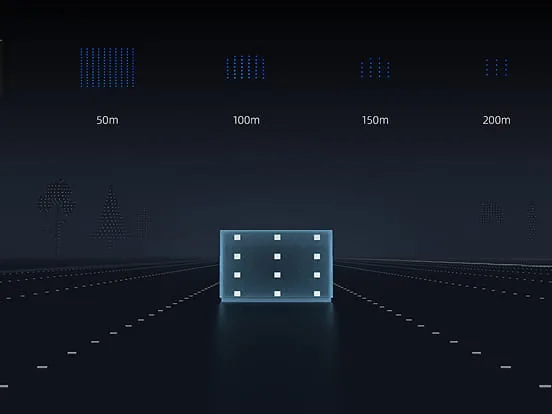
250 m
Black cardboard box, 40 × 25 cm — detected at speeds up to 181 km/h.
The world’s first “thousand-beam” long-range digital LiDAR, delivering 2K high-definition 3D perception with 2160 beams, a 600 meter detection range and 41.04 million points per second for L3 and above autonomy.
END MARKETS
$4,999.00 – $5,198.00Price range: $4,999.00 through $5,198.00
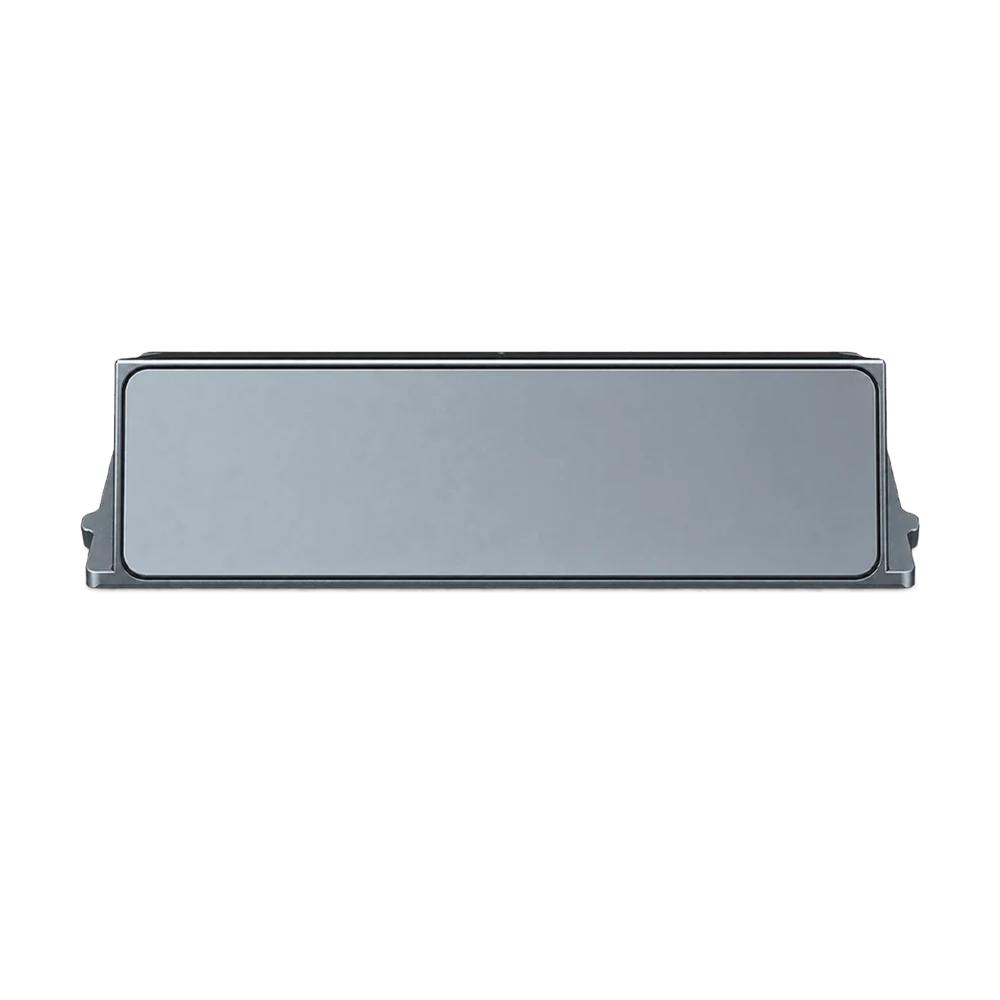
The EM4 is a long-range digital LiDAR built for autonomous driving. With 2160 beams, a 600 m detection range and 41.04 million points per second, it generates dense, high-definition point cloud data for precise 3D perception.
Designed for L3 and above autonomy, it delivers the range and reliability those systems depend on.
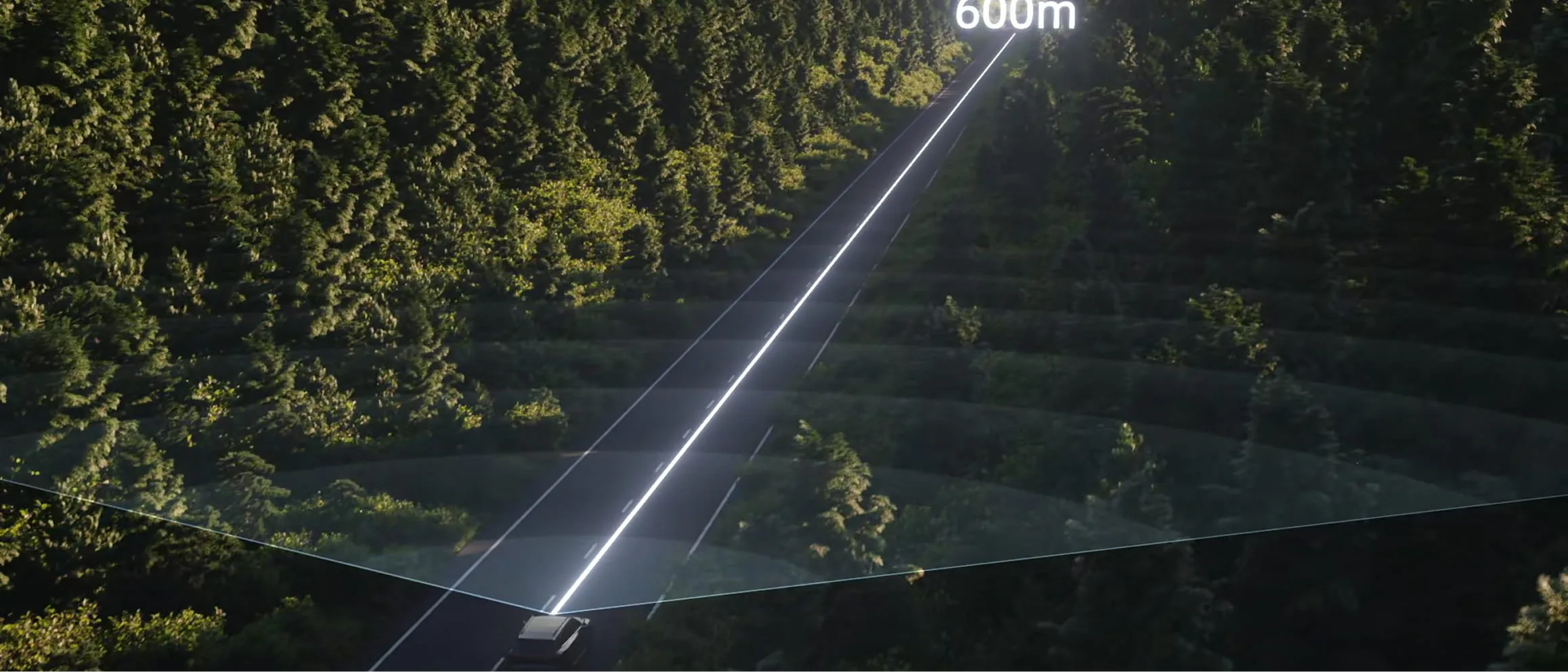
Two figures that define what an L3 planner can do with the data.
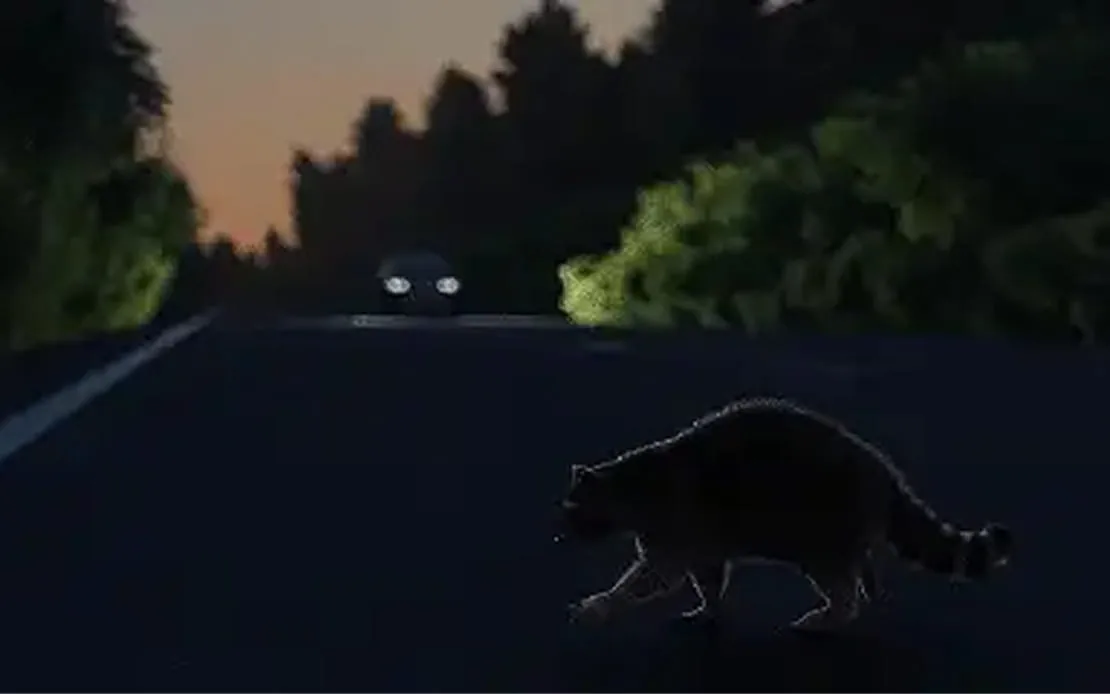
The EM4 offers 300 m ranging capability at 10% reflectivity and a maximum detection range of 600 m. Against a competitor limited to 200 m, that extends the vehicle's response window by up to 70%.
Extra seconds change the character of the decision. Instead of an emergency intervention computed at the last moment, the planner has room for a smooth, confident and precise manoeuvre — the difference between a system that reacts and one that anticipates.
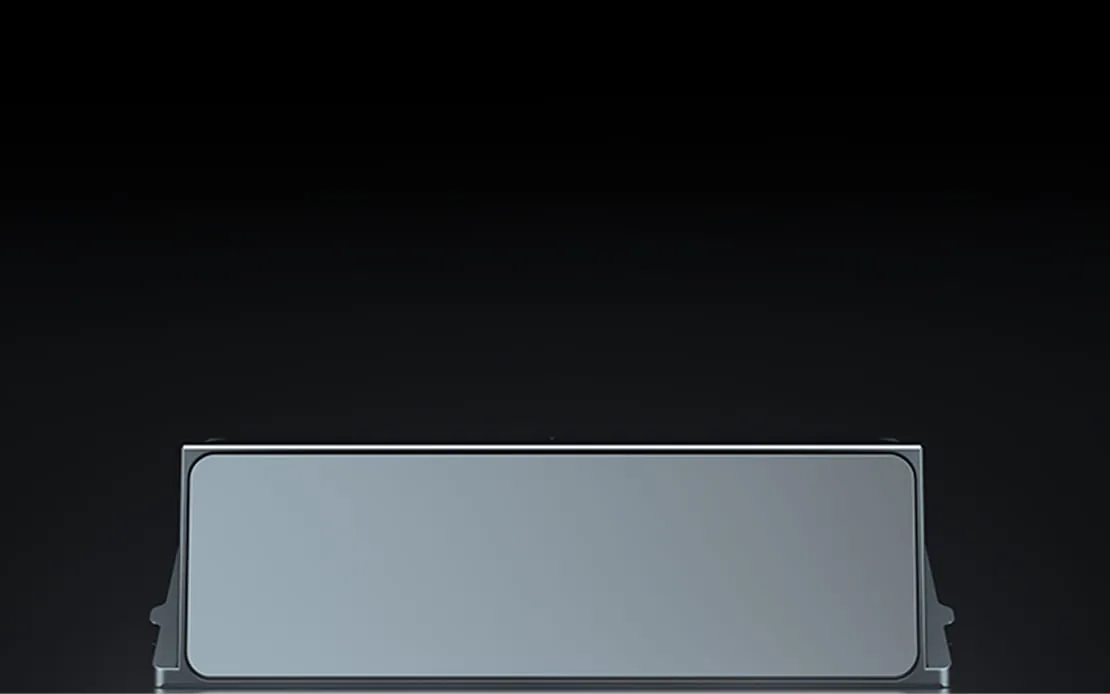
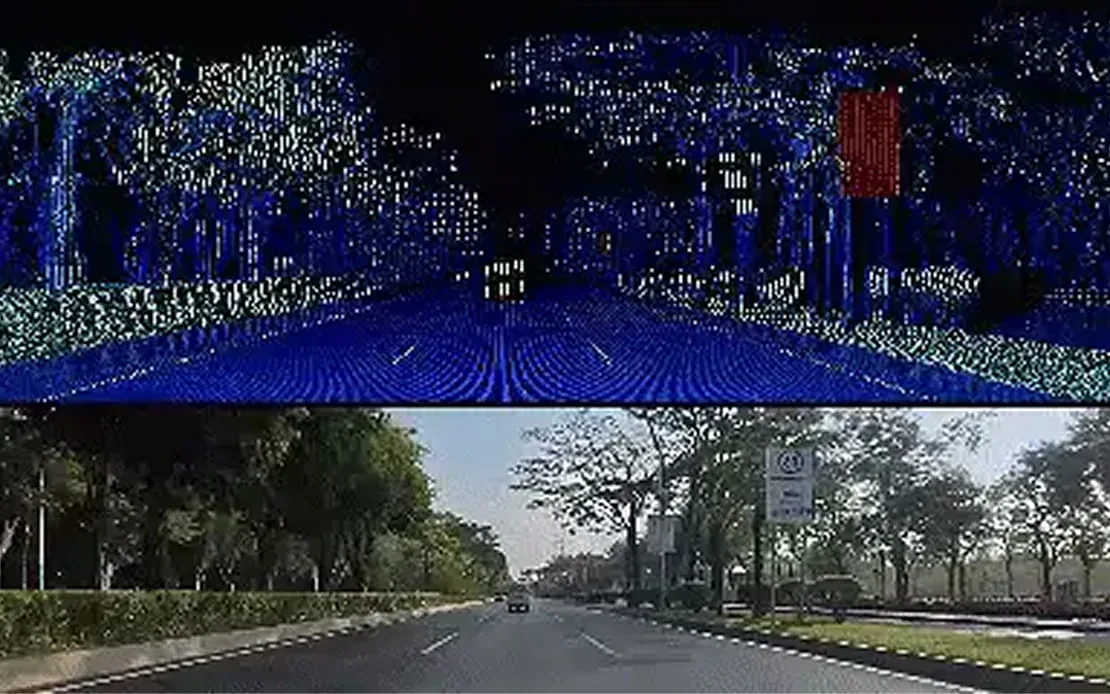
With 2160 × 1900 resolution, the EM4 produces what RoboSense calls 2K high-definition 3D perception. Beam density is what turns a distant return into a classifiable object.
The sensor identifies small objects at distance that defeat lower-resolution systems — stray tires, traffic cones, cardboard boxes — with performance that exceeds NHTSA active safety standards.
Each figure pairs a detection distance with the vehicle speed at which that distance still leaves room to act.
Black cardboard box, 40 × 25 cm — detected at speeds up to 181 km/h.
White car — detected at speeds up to 289 km/h.
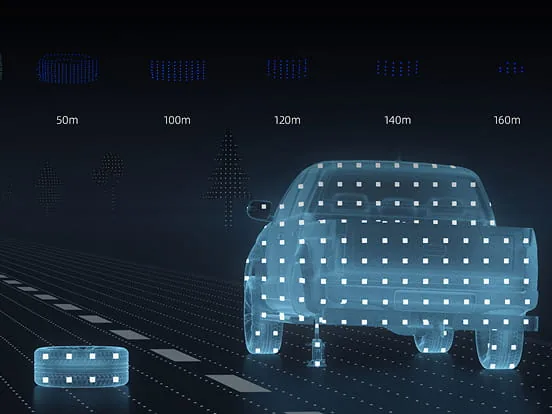
Black tire — detected at speeds up to 147 km/h.
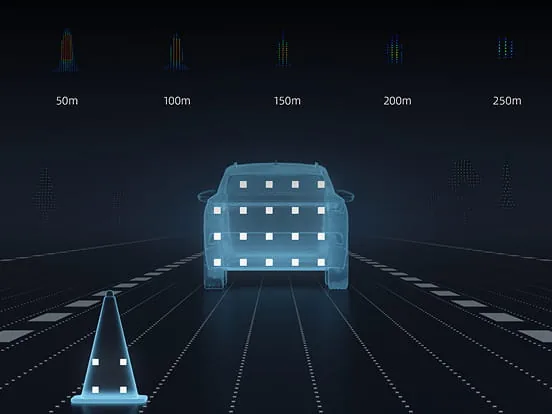
Traffic cones — detected at speeds up to 200 km/h.
Three failure modes that end most LiDAR deployments, each addressed in the optical and signal path.
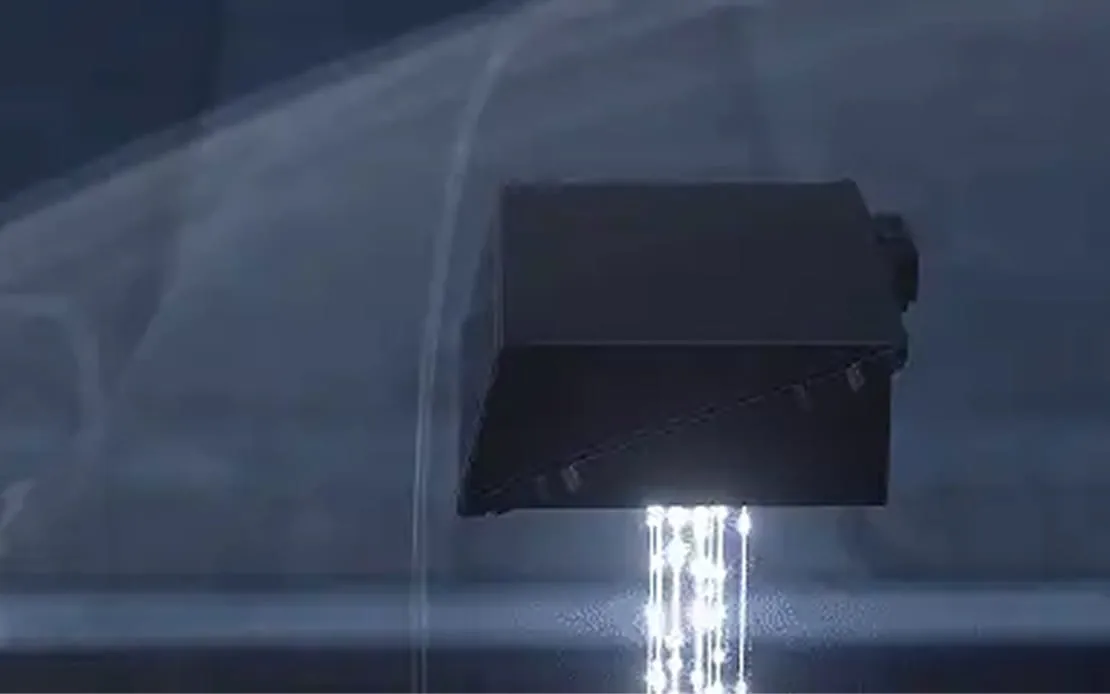
Retroreflective signs, licence plates and wet road markings return far more light than their surroundings, and conventional receivers smear that energy across neighbouring pixels — the object grows a halo and its true outline is lost. The EM4 applies spatiotemporal mixed encoding, a patented technique that separates genuine returns from bloom.
Airborne particles generate returns of their own. Filtering them with a fixed threshold also removes weak returns from real objects — the cure becomes the disease. The EM4 pairs its SPAD-SoC with a 1080-core LEP system and a proprietary Large Echo Processing Model; a Huiyan AI model trained on filter parameters decides what is noise and what is a genuine but attenuated return.
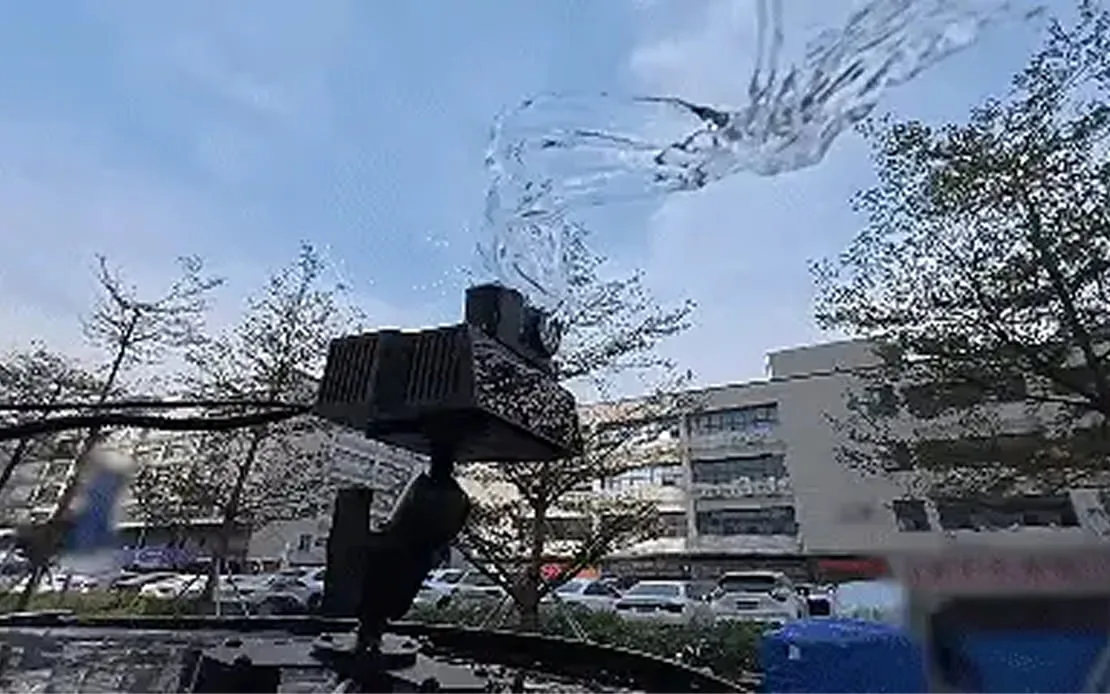
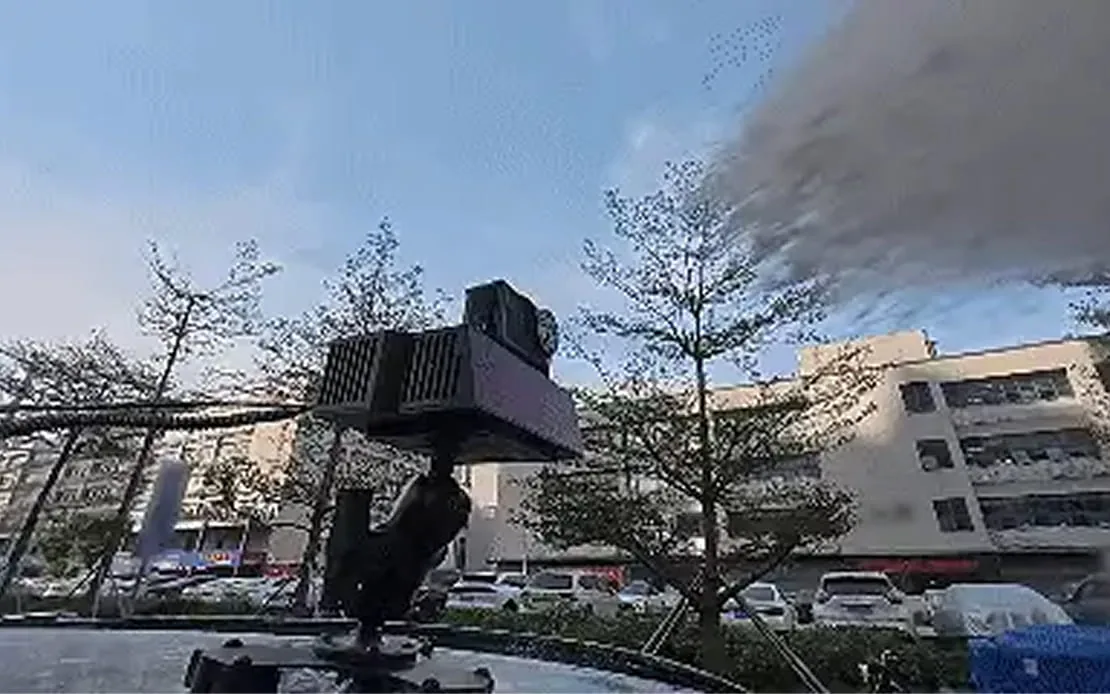
Road spray, mud, dust and overnight condensation accumulate on any forward-facing window. A proprietary optical design maintains ranging accuracy through that contamination rather than degrading toward blindness. For fleets, this is the difference between a sensor that needs a cleaning cycle and one that keeps working between services.
A fully digital architecture built on SPAD-SoC receivers and VCSEL emitters. Detection is high-sensitivity and digital from the first photon, giving a lossless information flow through the signal chain. Because each unit's emissions are digitally encoded, crosstalk between LiDARs is eliminated — a requirement once these sensors are on every vehicle in the lane.
2160 beams at 41 million points per second is a gigabit-class data problem. The EM4 applies advanced real-time lossless compression, cutting transmission to just a few hundred megabits — a 60% reduction. The result is compatibility with existing in-vehicle Ethernet: no new backbone, no re-architected E/E topology and, because the compression is lossless, no points sacrificed to fit the pipe.
Range, resolution and robustness together, at the reliability level that conditional and high automation demand from a forward-looking sensor.
As published by RoboSense. Parameters not disclosed publicly are marked “—”; contact us for the controlled datasheet under NDA.
The “up to 70% more response time” figure is stated by RoboSense relative to a LiDAR with a 200 m detection range.
Object detection figures are manufacturer test results under their stated conditions and will vary with reflectivity, weather, contamination and mounting geometry.
Specifications are subject to change. Please confirm against the current RoboSense datasheet before design-in.
GET IN TOUCH
One of our experts will be communicating with you shortly. We are committed to understanding your application and providing support, tailored to your specific requirements.
Receive Quote
One of our experts will be communicating with you shortly. We are committed to understanding your application and providing support, tailored to your specific requirements.