

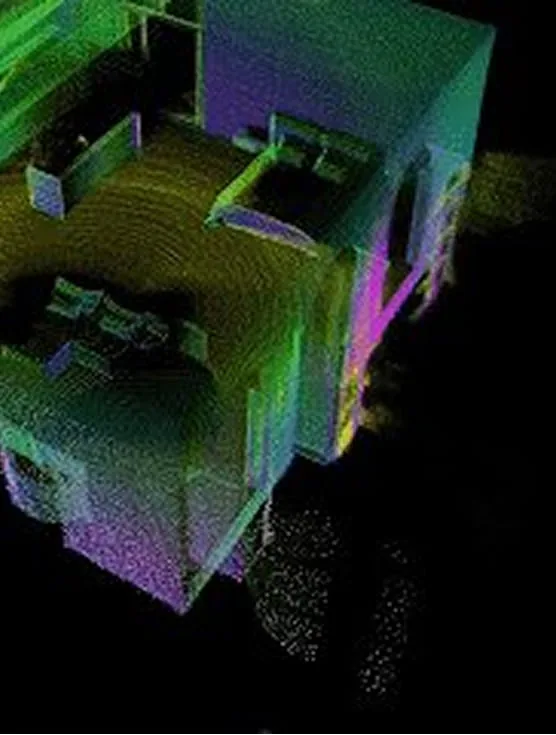
High-performance 3D SLAM
SLAM in large outdoor areas and confined indoor spaces alike, generating high-precision 3D models.
The automotive grade E platform, redesigned for robots: a 120° × 90° field of view, 75 m of reach and 144 structured beams from a flat, flush window with no moving parts.
END MARKETS
$999.00 – $1,118.00Price range: $999.00 through $1,118.00
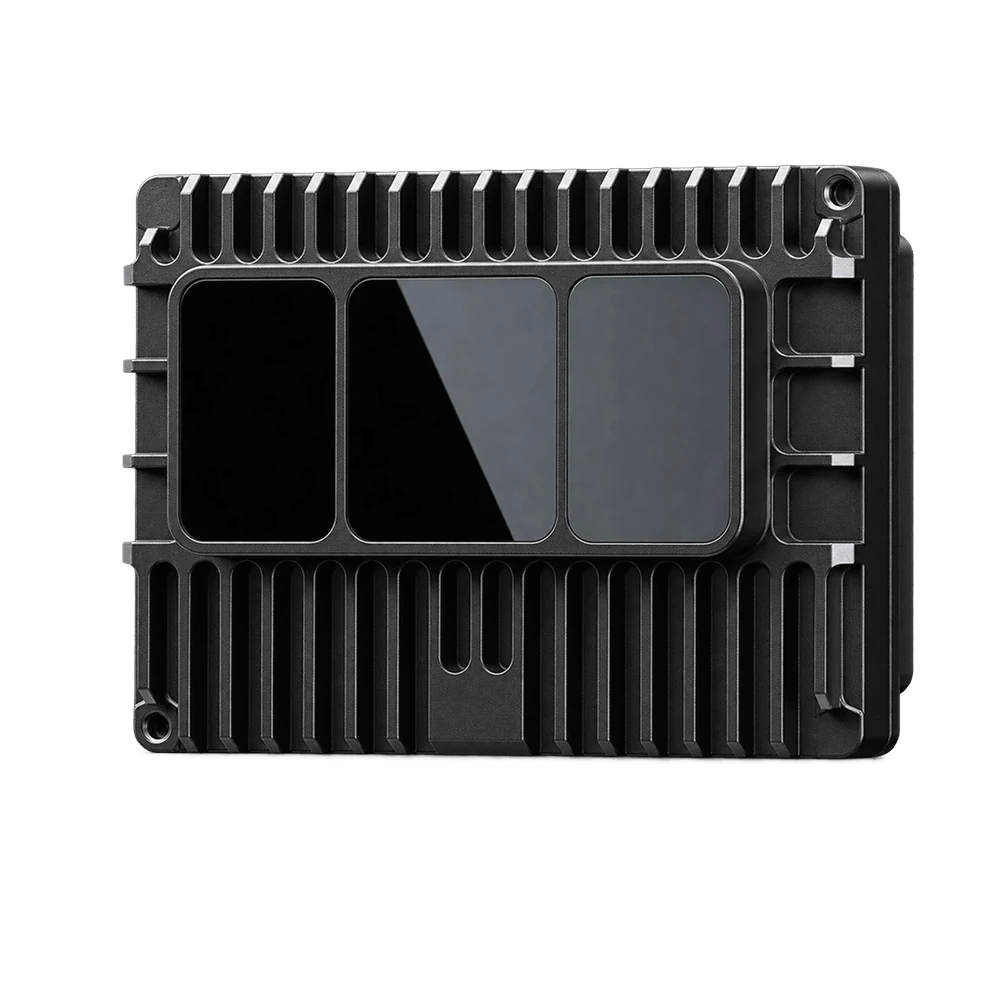
The E1R is a fully solid-state digital LiDAR designed for robotics, humanoids and autonomous systems. Its 120° × 90° field of view generates precise point cloud data for real-time 3D perception, supporting SLAM, navigation and obstacle detection.
Built on RoboSense's automotive-grade E platform, the E1R combines compact integration with reliable robotic perception.
Where the sensor sits, how far it sees, and how cleanly it reports.
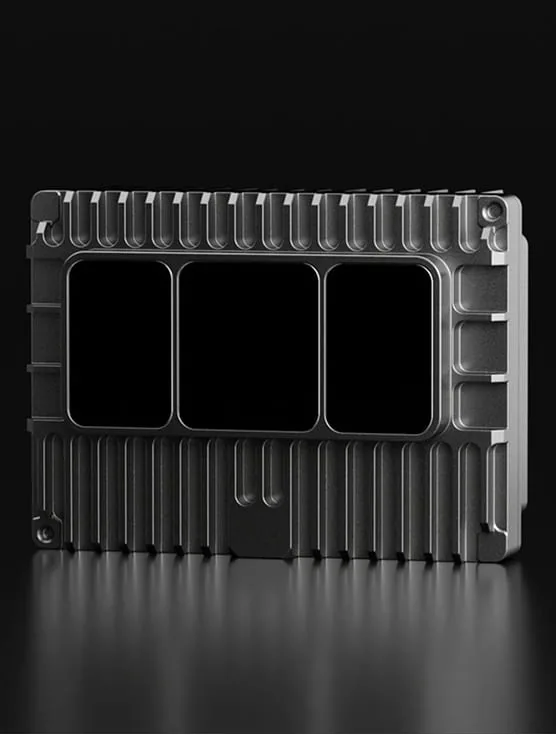
The E1R is compact and lightweight, but the detail that matters for integration is the window: small, flat and flush, with no protrusions. Published at 7 × 35 × 75 mm, it drops into a robot's own surface rather than sitting proud of it.
A protruding optical dome is the part that catches a doorframe, collects grime and gets knocked out of alignment. A flush window can be recessed behind a robot's own bodywork, which is what makes the sensor viable on cleaning robots, delivery robots and service platforms that spend their working life brushing past obstacles.
It also ships with a 1/4-inch threaded mount — the standard camera/tripod thread — so it clamps onto any photographic accessory during development and debugging instead of waiting on a custom bracket.

The E1R offers an ultra-wide 120° × 90° field of view, with a ranging capability of 30 m at 10% reflectivity and a maximum detection range of 75 m — over seven times that of a conventional depth camera.
That multiple is the argument for the sensor. A depth camera gives a robot a few metres of usable range and fails in strong light; at 75 m the E1R sees a distant object early enough for the robot to plan around it rather than brake for it. Ninety degrees of vertical coverage means the ground immediately ahead and the space overhead are both inside the same frame.
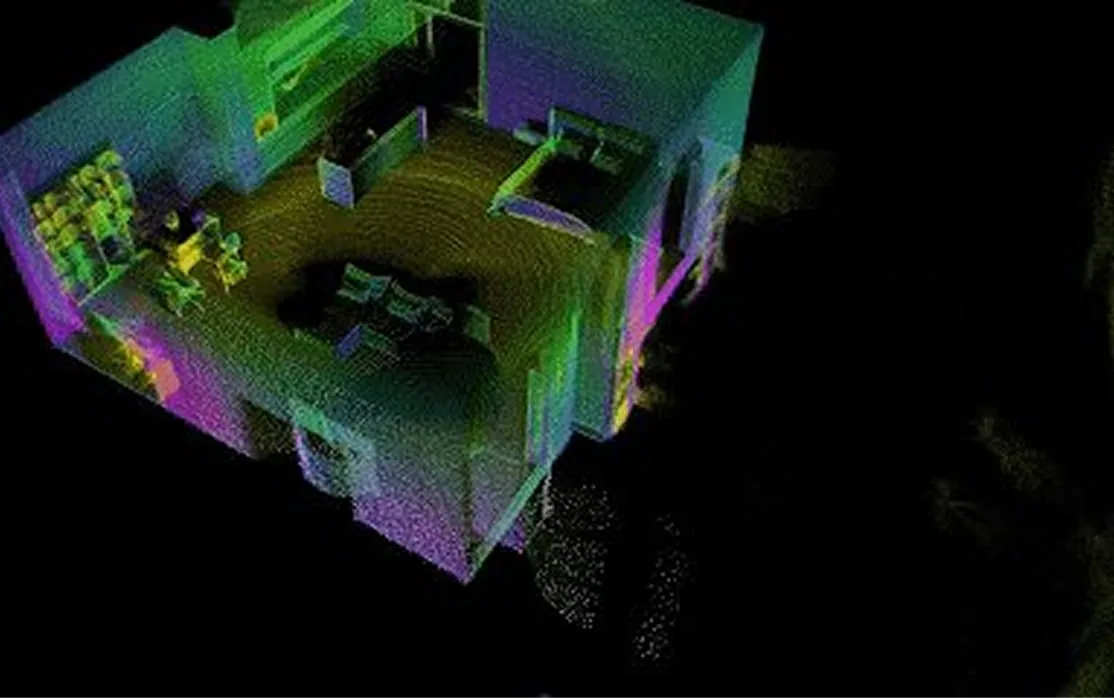
The E1R delivers up to 260,000 points per second in 144-beam neatly structured point clouds, at an angular resolution of 0.625°. That resolves dynamic and static small obstacles precisely, and it reconstructs environments — roads, courtyards, warehouses, ports — accurately enough to map from.
“Neatly structured” is doing real work in that sentence. A regular, predictable point distribution is what registration, segmentation and tracking algorithms are built to consume; an irregular cloud of the same density costs more compute and converges less reliably.
SLAM in large outdoor areas and confined indoor spaces alike, generating high-precision 3D models.
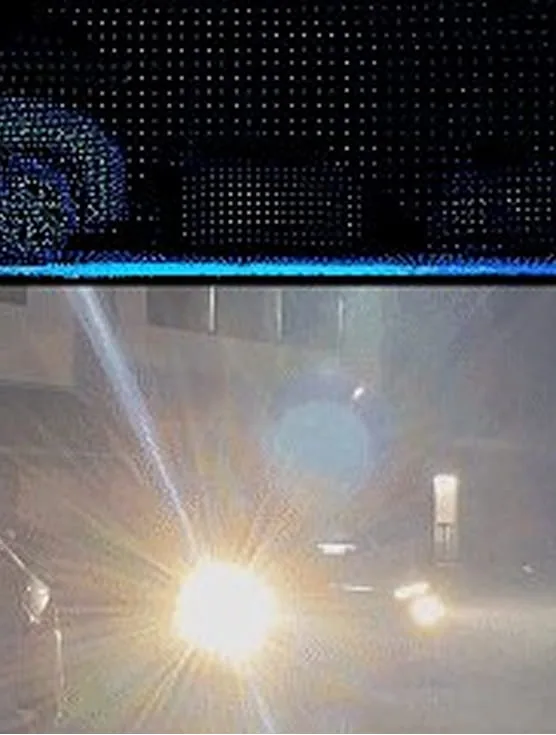
Strong light, darkness and high-contrast transitions handled without a change in behaviour.
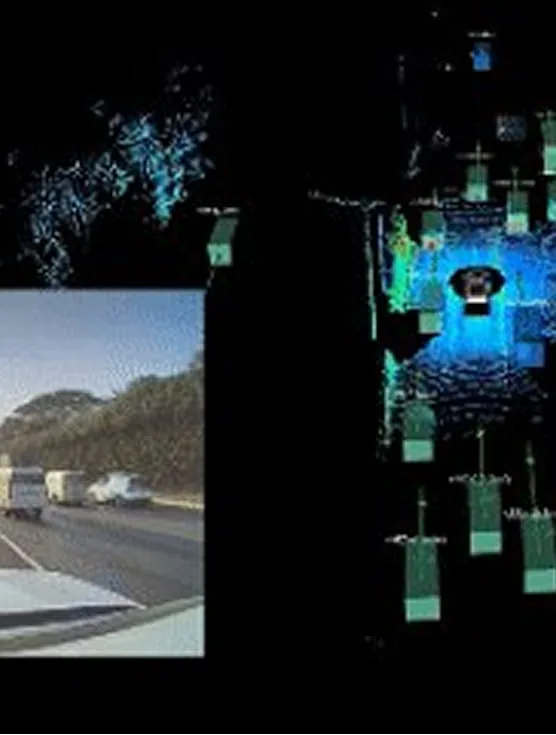
Pedestrians, large and small vehicles, traffic cones and bollards, static or moving.
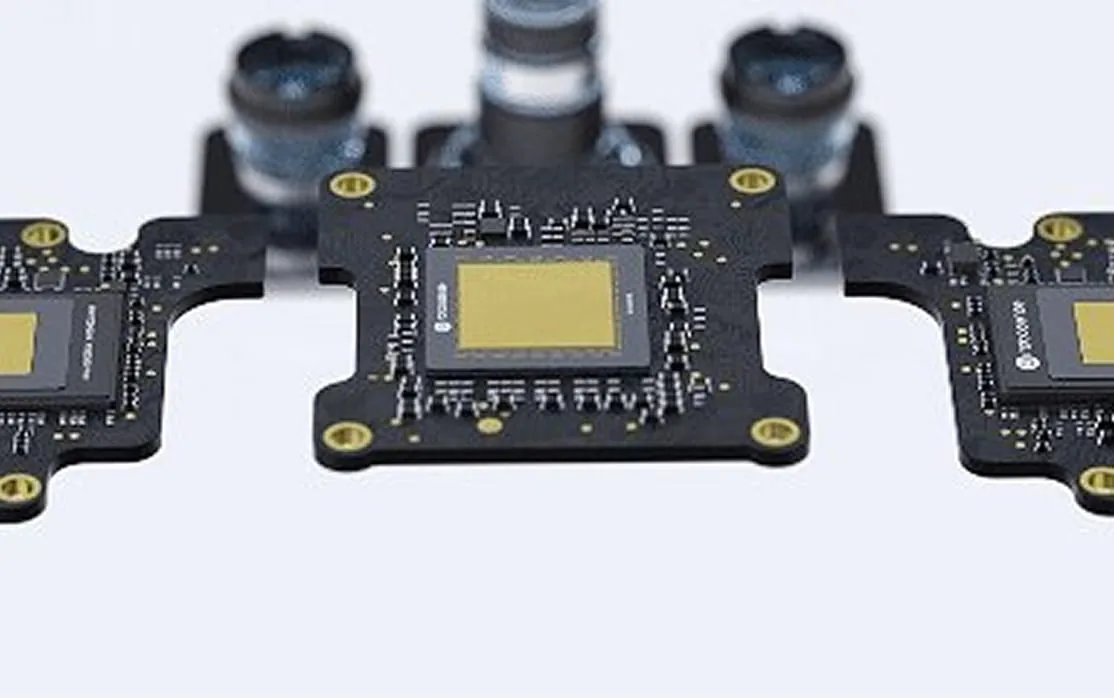
Nothing protrudes, nothing rotates — a flat surface with no internal moving parts.
RoboSense is the only company in the industry to have matured and mass-produced this technology.
The E1R carries RoboSense's self-developed, world-first digital SPAD-SoC together with 2D VCSEL chips. Because the signal processing and transmission pathway is digital and streamlined, the sensor preserves lossless echo information and outputs a high-quality point cloud. Its fully chip-based solid-state design eliminates all moving parts — a breakthrough in performance and reliability at the same time, because the two usually trade against each other.
The SPAD-SoC carries more than 250,000 pixels — 2.5 times the industry benchmark — and uses a fully digital architecture to raise both angular resolution and precision. Pixel count on the receive side is the ceiling on angular resolution: no amount of downstream processing recovers detail the detector never resolved. Multiplying it by 2.5 is what lets a solid-state sensor with no scanner reach 144 beams of structured output.
The emitter is a 2D addressable VCSEL array, supporting flexible electronic scanning modes. Two consequences follow: it suppresses point cloud blooming on highly reflective objects, and it extends detection range. Being able to address the emitter array selectively is what stops one bright target from corrupting its neighbourhood.
A minimalistic electronic scanning architecture with no internal moving parts balances performance, cost efficiency and reliability. A mechanical scanner buys resolution with a bearing that wears and a calibration that drifts; electronic scanning removes both liabilities from the bill — which is why the same sensor can carry an automotive vibration and temperature specification into a robotics price bracket.
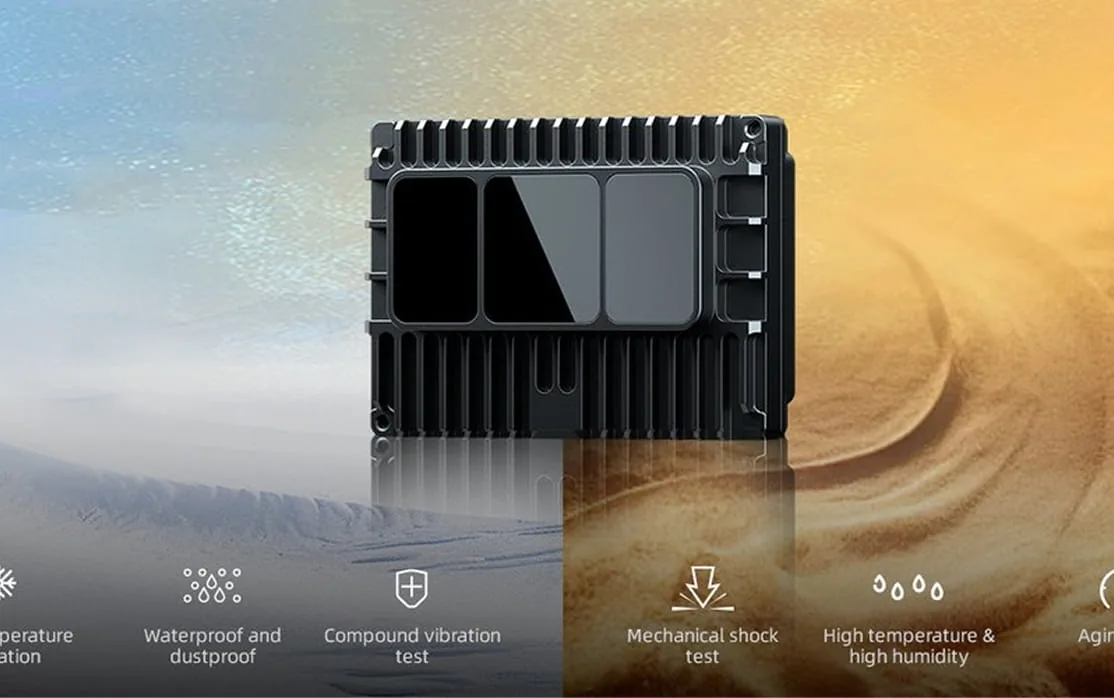
Built on the mass-production automotive-grade LiDAR E platform and custom-designed for robotic applications. It has passed over 60 rigorous reliability tests, operates from −40 °C to +85 °C and endures vibration shocks of up to 50 G — significantly exceeding robotics-industry standards.
IP67 covers dust ingress and temporary immersion; IP6K9K adds close-range high-pressure, high-temperature water jets — the rating written for vehicles that get steam-cleaned. For a robot that is washed down, works outdoors in rain, or operates in dust, that is the difference between a sensor that survives the duty cycle and one that is consumable.


The six platform types RoboSense builds the E1R for.
Kerbs, cones and pedestrians resolved at 75 m — early enough to plan around.
A flush window that survives contact, plus IP6K9K for the pressure jet.
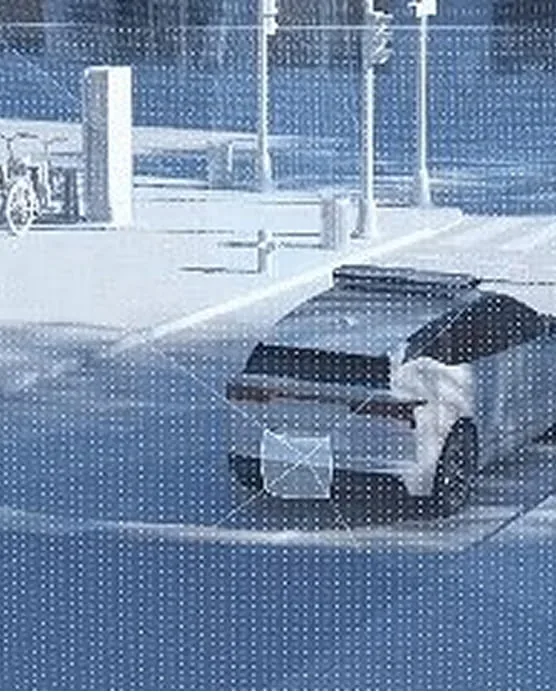
Automotive-grade qualification on the near-field blind spot.
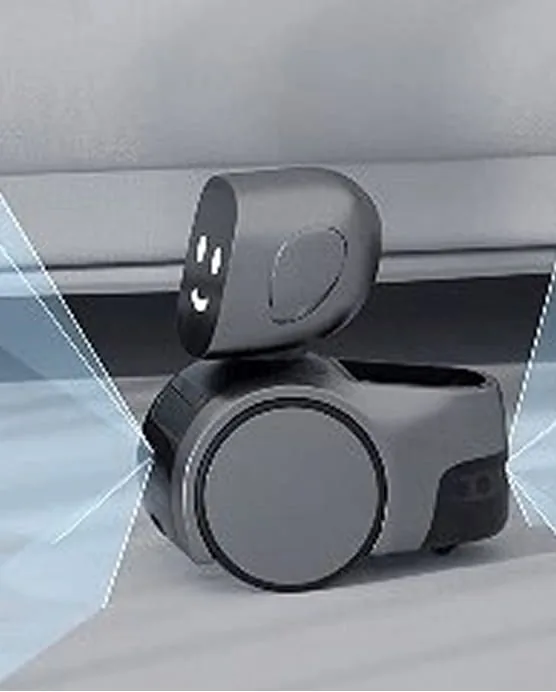
Close-range precision and wide-area detection from one flush-mounted sensor.
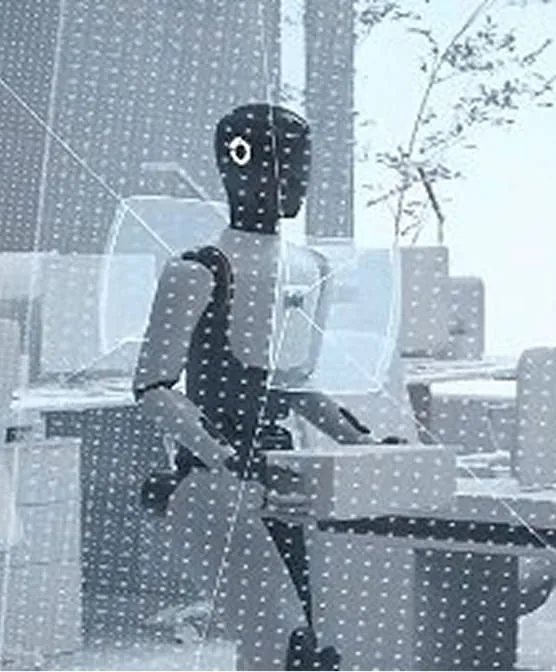
No protrusions to catch, mountable in a chest or head panel.
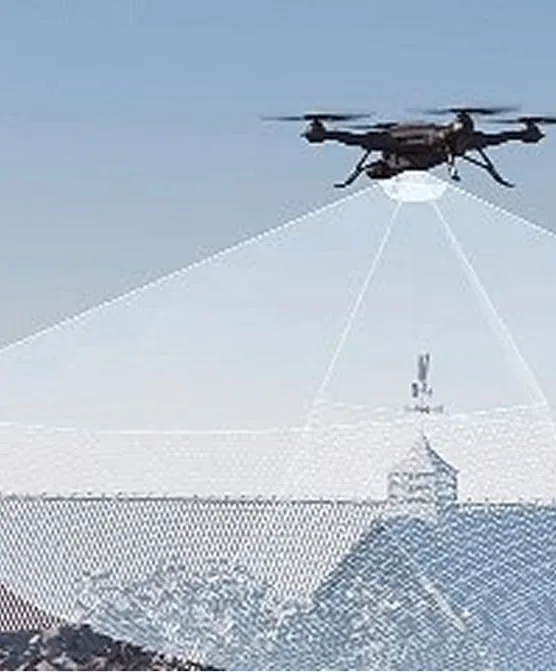
50 G tolerance and a −40 to +85 °C span cover altitude and hard landings alike.
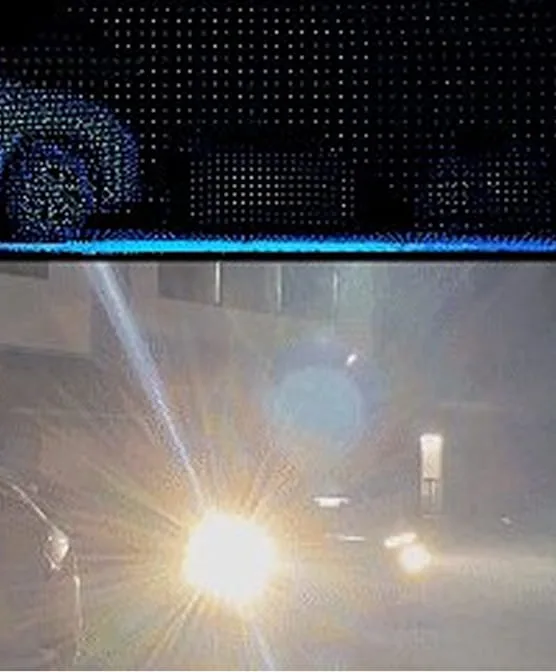
Strong light, darkness and contrast transitions leave the measurement unchanged.
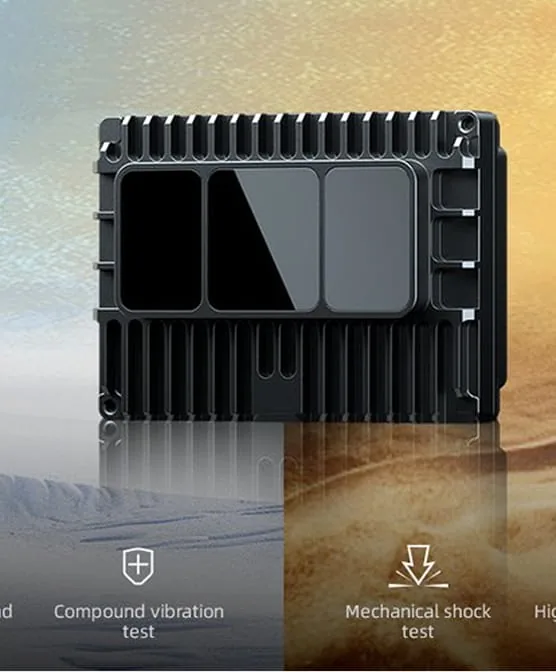
Rain, dust and extreme temperature, on an automotive qualification basis.
As published by RoboSense. Parameters not disclosed publicly are marked “—”; contact us for the controlled datasheet under NDA.
RoboSense publishes this measurement under the heading “Flat window”. Whether it describes the optical window alone or the overall envelope is not stated on the product page — ask us for the structural drawing before designing a mounting interface around it.
0.625° is the figure listed by RoboSense's own store for this model. With a 120° × 90° field of view and 144 beams, it is consistent with the published point rate.
Published parameters are typical values obtained under specific test conditions. Actual performance varies reasonably with batch, version and operating environment; the factory inspection certificate is the definitive standard.
Specifications are subject to change. Please confirm against the current RoboSense datasheet before design-in.
GET IN TOUCH
One of our experts will be communicating with you shortly. We are committed to understanding your application and providing support, tailored to your specific requirements.
Receive Quote
One of our experts will be communicating with you shortly. We are committed to understanding your application and providing support, tailored to your specific requirements.