



Written by
Founder and CEO, CRATUS Technology, Inc.
Zeki founded CRATUS in 2013 and leads the San Jose team building LiDAR volume measurement systems, IoT sensing platforms, and energy and industrial automation hardware.
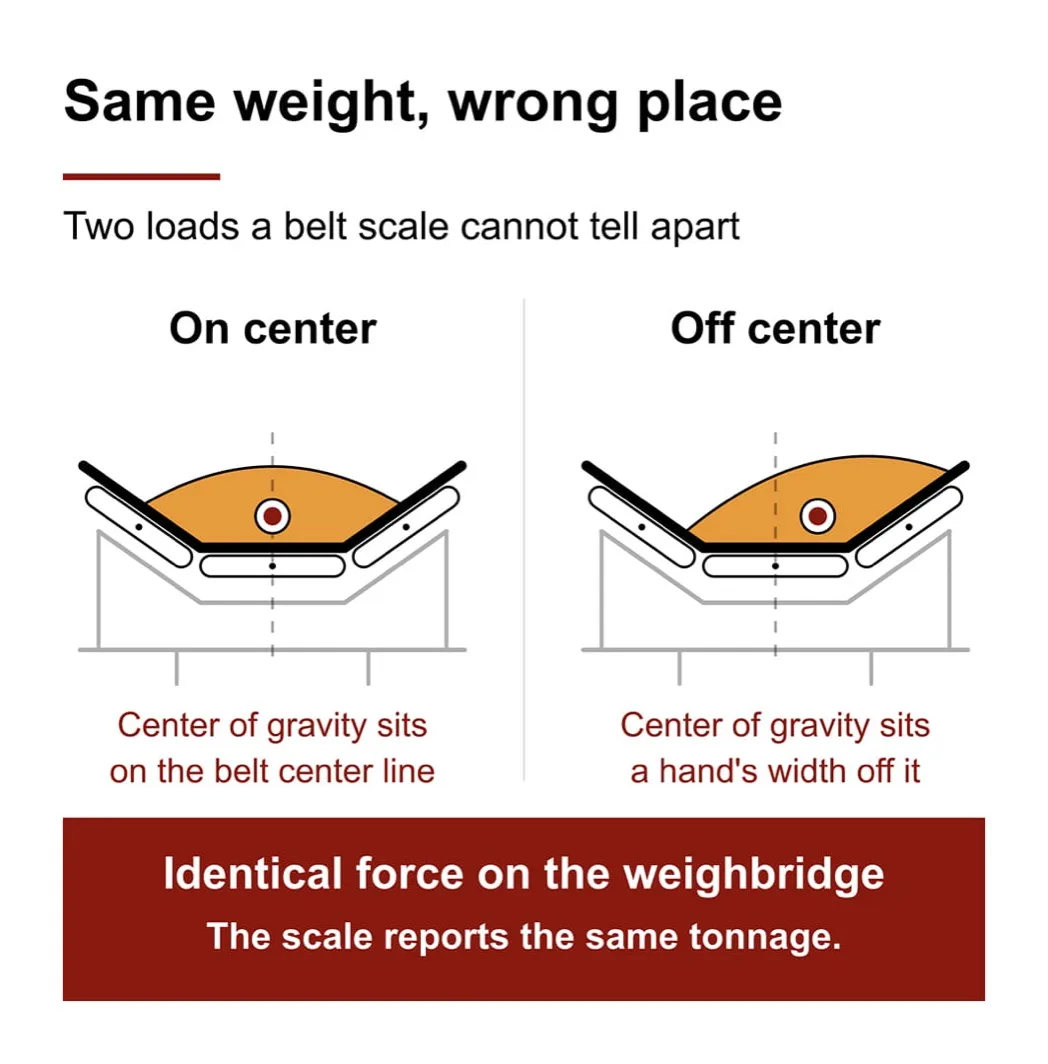
Full profileLinkedInSomebody sweeps up under your conveyor. Maybe every shift, maybe every week, and the pile is always in roughly the same stretch of the run. Meanwhile the belt scale reports tonnage that looks fine, because from where that instrument sits, the tonnage is fine. A belt scale measures force on a weighbridge and integrates it over belt travel. Take the same load and push it a hand’s width toward one edge and the force is identical. The scale is doing exactly what it was built to do. What it hands you has nothing at all to say about where the material is sitting.
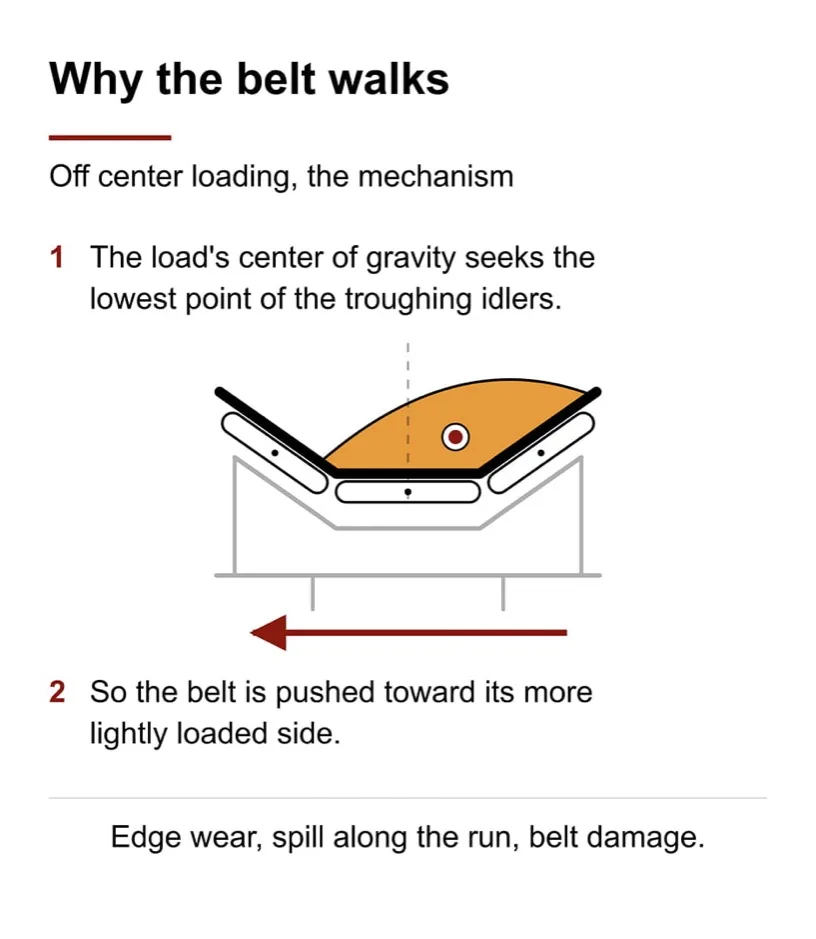
That position is the thing doing the damage. Martin Engineering puts the mechanism plainly: the load’s center of gravity seeks the lowest point of the troughing idlers, so a belt that is not center loaded gets pushed toward its more lightly loaded side. From there you get edge wear, material coming off along the run, and belt damage that costs more than everything you spilled. Off center loading sits among the primary causes of mistracking, next to a misaligned tail pulley and a worn splice. The difference is that the other two announce themselves. This one hides behind a tonnage number that reads correct all the way to the point where you are replacing belt.
None of this is a complaint about belt scales, which are good at the job they were built for. NIST Handbook 44 defines two accuracy classes for legal for trade belt conveyor scales, 0.25 and 0.1, and manufacturers rate their best multi idler systems to around 0.125 percent. Thayer Scale’s own engineering guide is refreshingly honest about what holds that up: belt tension variation, idler misalignment, material building on the weighbridge, belt stretch with temperature. Their phrase for it is that accuracy is not static. Even running perfectly, the instrument is telling you about mass, and most of what stops a line is geometric.
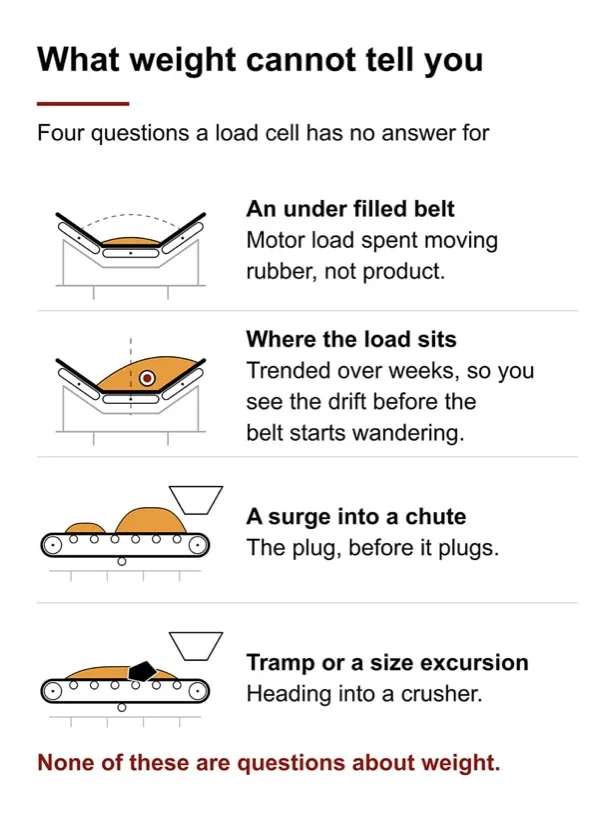
So think about what you would actually want on the screen instead. Whether the belt is running well under its design cross section, which is motor load spent moving rubber rather than product. Where the load sits across the belt, trending over weeks, so you see the drift before the belt starts wandering. A surge building ahead of a transfer chute that is about to plug. A tramp item or a size excursion heading into a crusher. A load cell cannot answer any of these, because none of them are questions about weight.
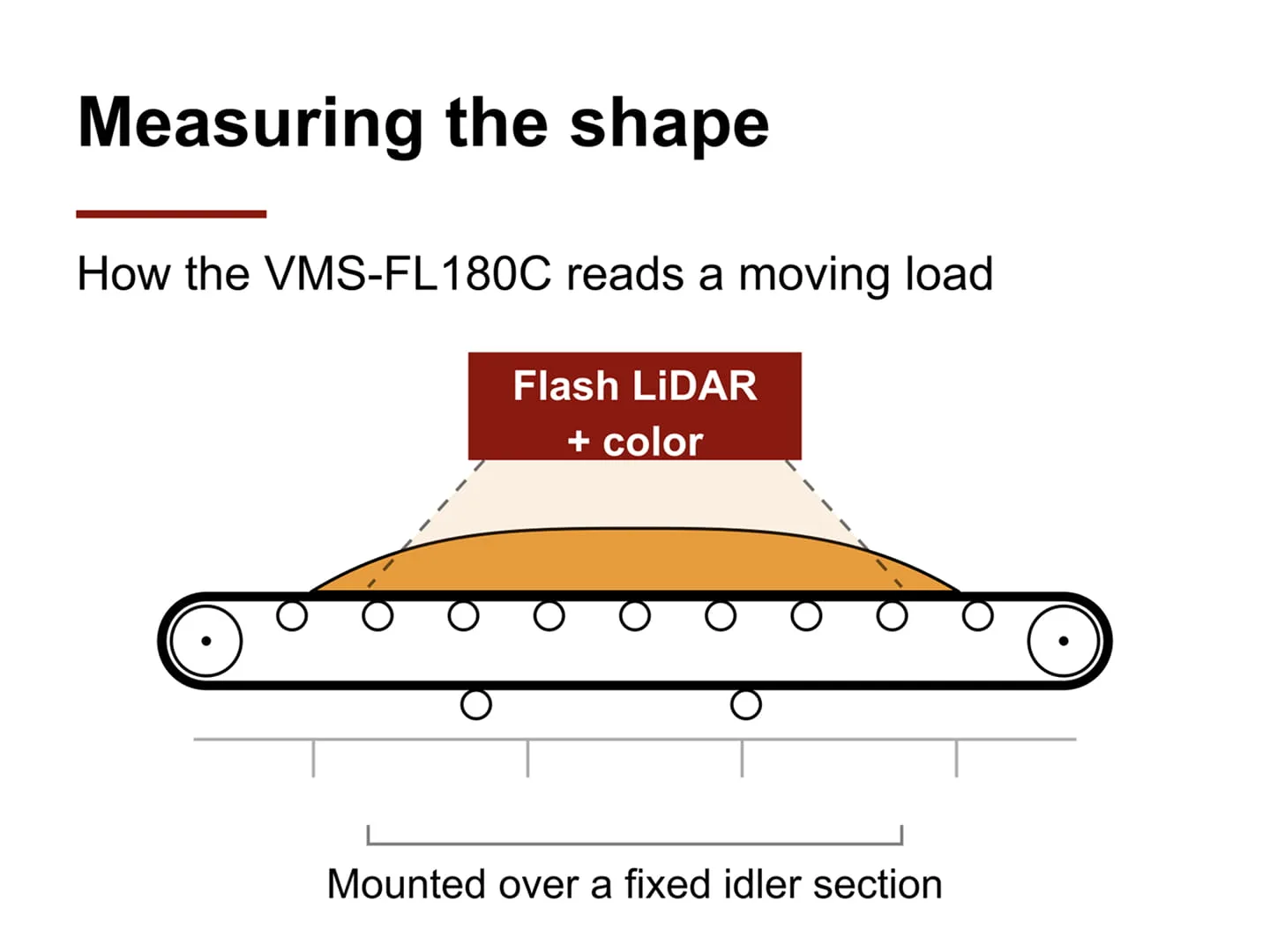
The CRATUS VMS-FL180C was built to answer them. A solid state flash LiDAR looks down at the belt over a fixed idler section and returns the full cross section of the load at up to 10 Hz, with color imaging from the same field of view. Fill level warnings and material flags come out of the box, and because the whole profile is there every frame, where the load sits across the belt is arithmetic on data the sensor already has. Volume integrates from measured belt displacement rather than assumed belt speed, and if the encoder stalls or reports something implausible the totalizers hold rather than drift. The digital outputs already cover belt run permissive, alarm, and watchdog, so this closes a loop instead of adding one more dashboard for somebody to ignore. Your belt scale goes on owning the tonnage. This owns the shape of what is riding on the belt, which is where the maintenance budget actually goes.
Zeki founded CRATUS in 2013 and leads the San Jose team building LiDAR volume measurement systems, IoT sensing platforms, and energy and industrial automation hardware.
Full profileLinkedInShare
Interested?
Interested ?
We would be pleased to send you detailed information about our products or services.
Simply enter your details in the contact form below and we will get in touch with shortly.
CRATUS respects your personal information and keeps it safe. By sending this form, you consent to allow CRATUS to store and process your personal information as stated in our Privacy Policy.
GET IN TOUCH
One of our experts will be communicating with you shortly. We are committed to understanding your application and providing support, tailored to your specific requirements.