

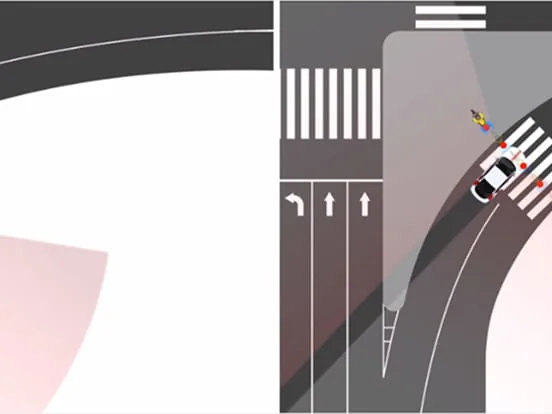
Right turn
Cyclists and pedestrians in the near-side sweep remain inside the cone throughout the manoeuvre.
Solid-state directional flash LiDAR with proprietary chips and a 120° × 90° ultra-wide field of view that scans the near-field blind spot in automotive, robotics and industrial automation applications requiring near-field detection for safety and access monitoring.
END MARKETS
CONTACT US
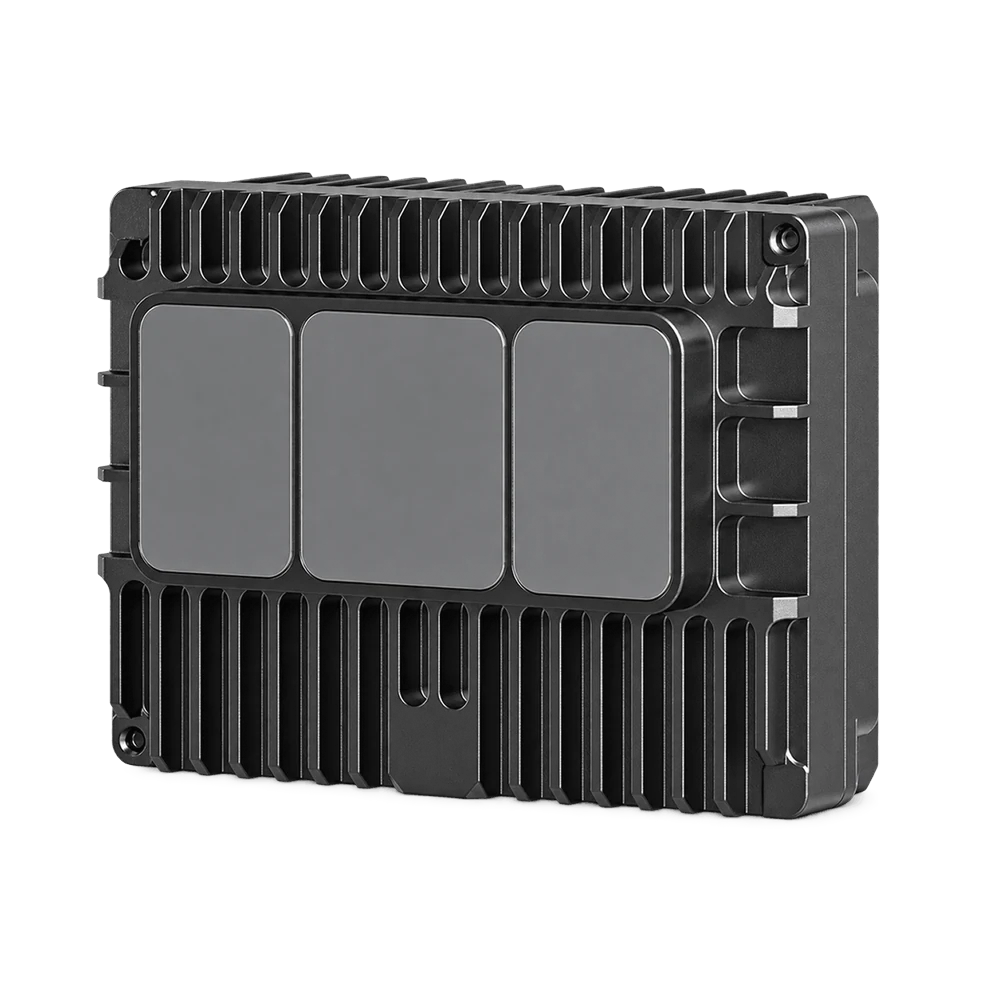
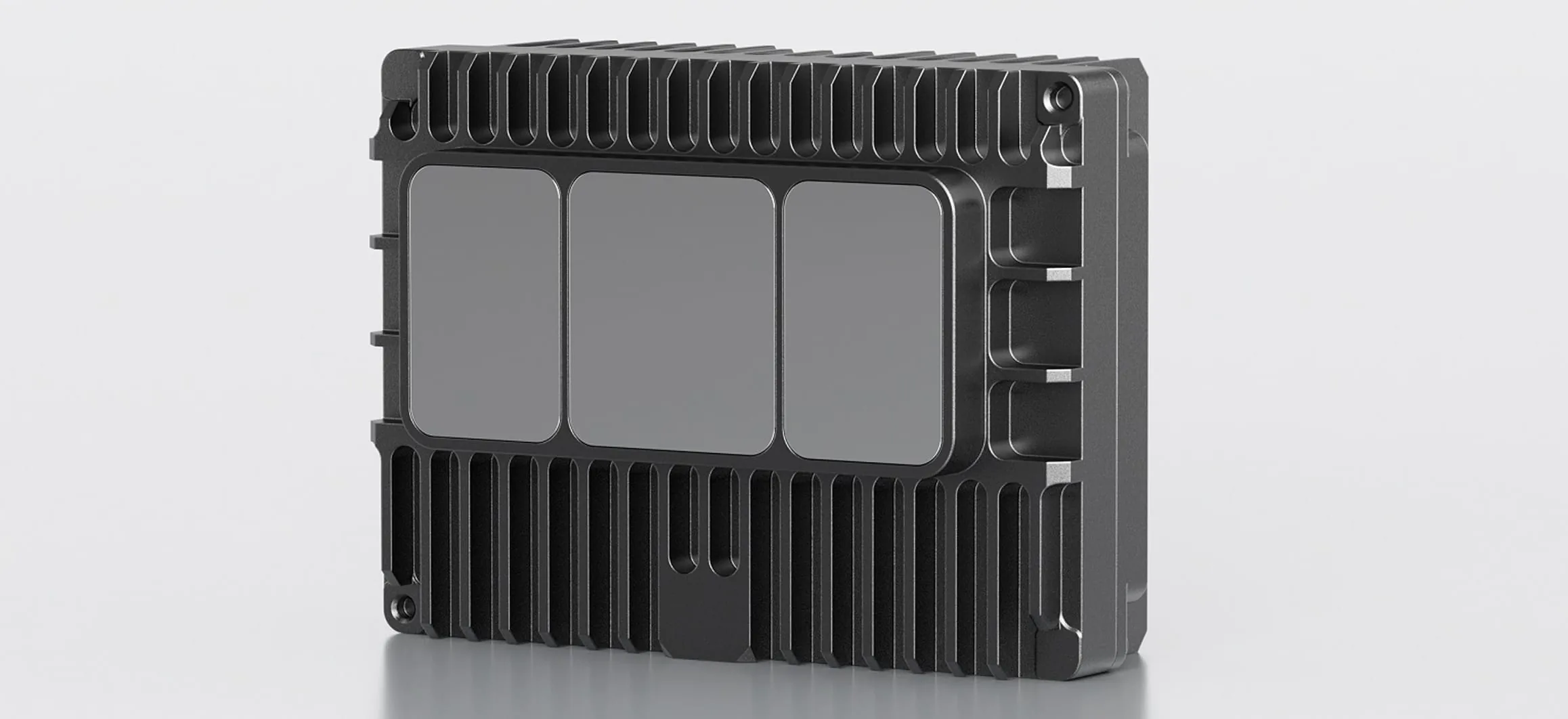
The E1 is an automotive grade, fully solid state flash LiDAR designed to eliminate near field blind spots. Its 120° × 90° field of view generates precise point cloud data around the vehicle, supporting safer autonomous perception and navigation.
With no moving parts and compact digital architecture, the same sensing approach also supports close range perception needs across robotics and humanoid applications.
Every number here is a deliberate trade against a specific near-field failure case.
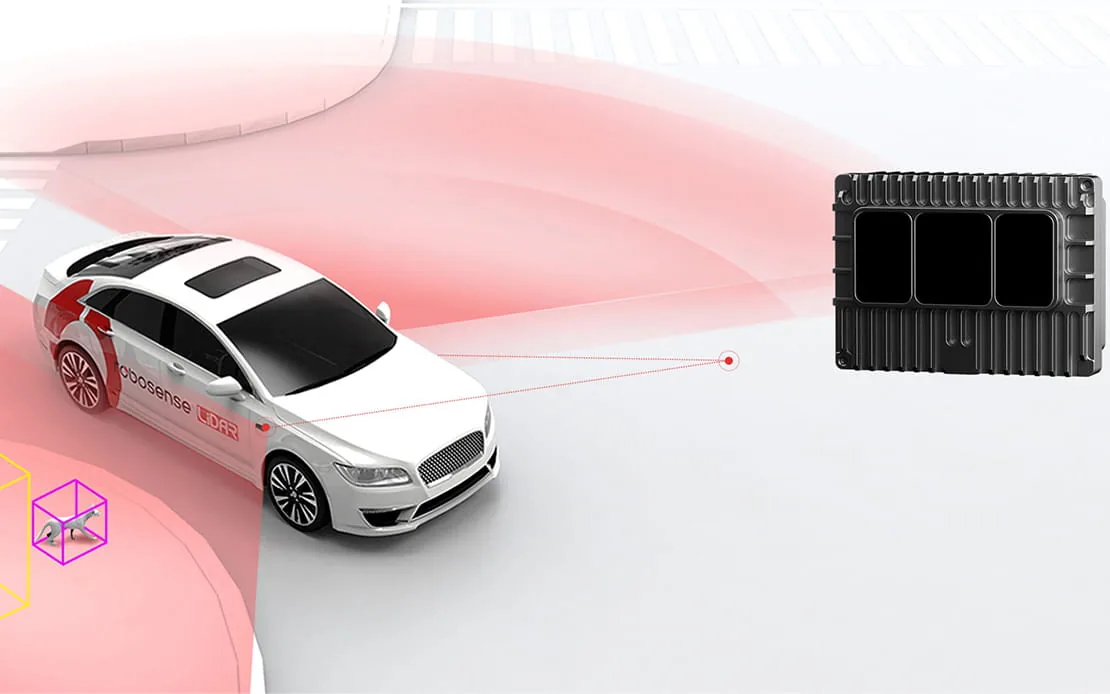
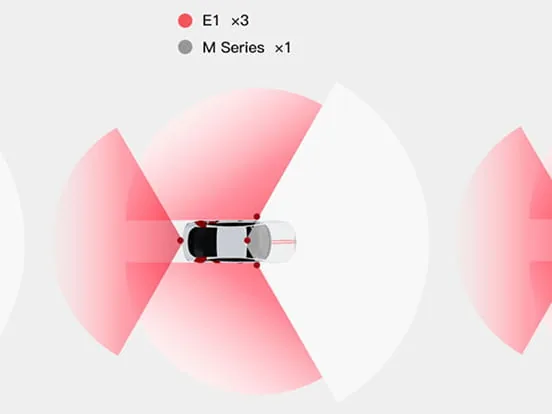
The E1's 120° horizontal field of view matches the horizontal coverage used in RoboSense's forward-looking M series products. Mounted at the vehicle's corners or flanks, a set of E1 units tiles into continuous coverage that eliminates blind areas in all scenarios.
Wide coverage from a fixed unit is the specific advantage of flash architecture: the entire scene is illuminated and read at once, so there is no scanning pattern to leave gaps between.
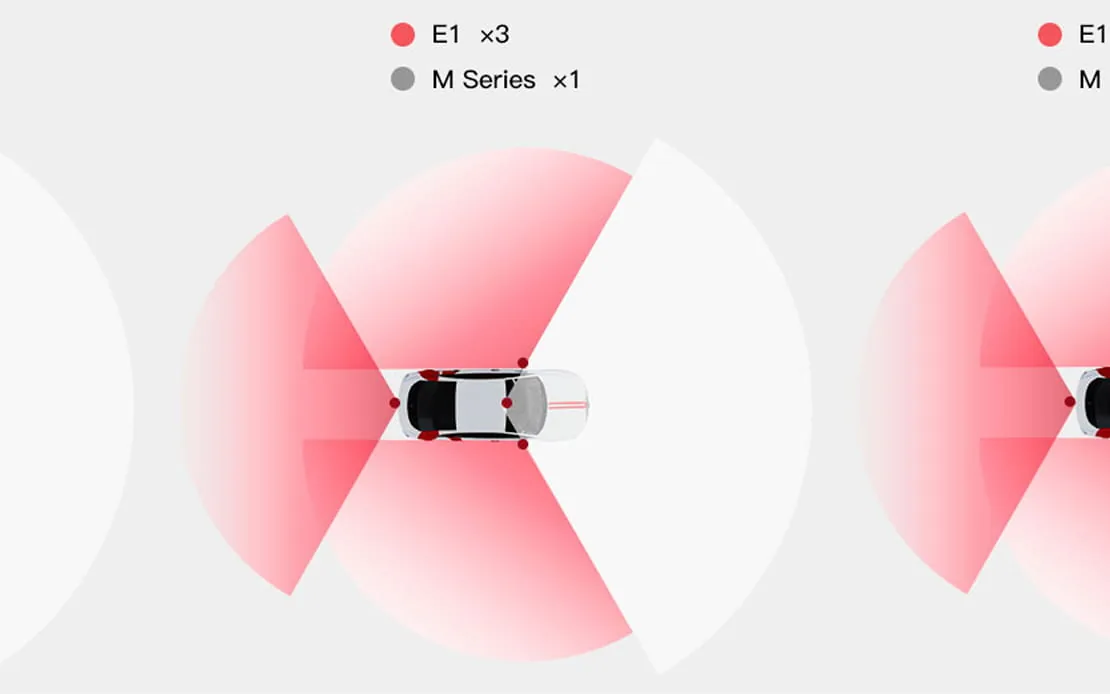
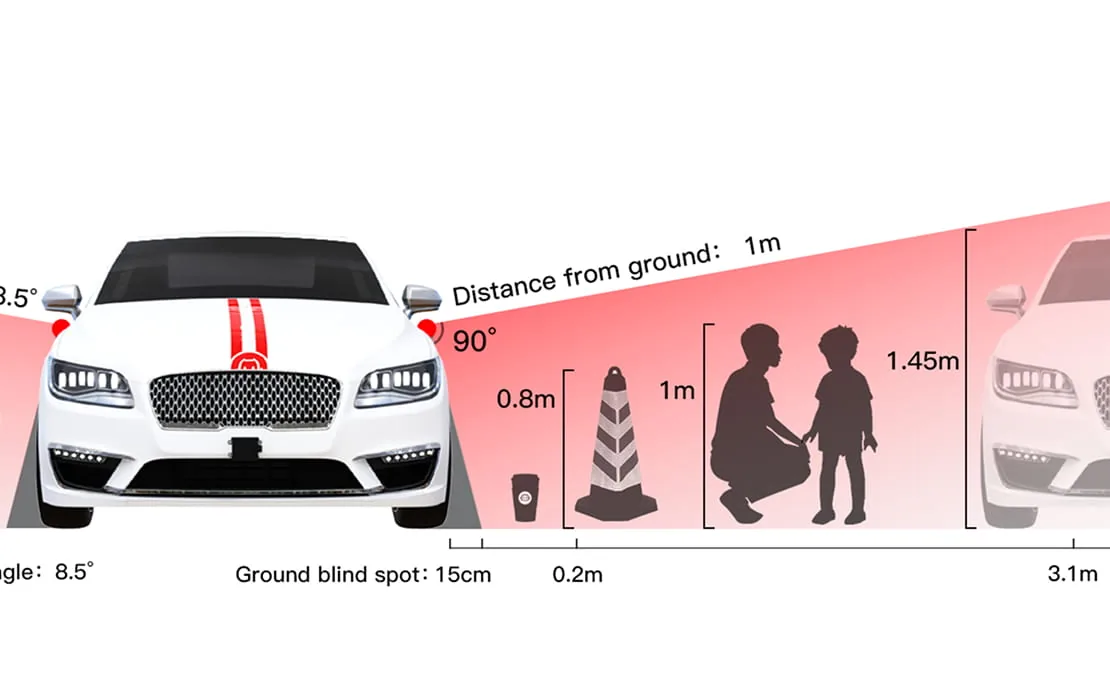
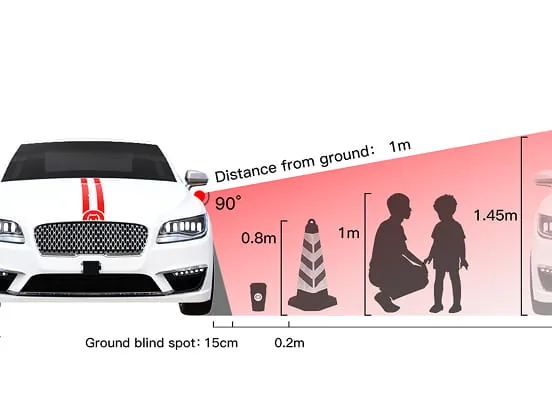
A 90° vertical field of view is the E1's defining specification, and it resolves a genuine tension. Aim the coverage down and you see the kerb but lose the space above the door line; aim it out and the reverse happens.
The E1 takes both: a ground blind area of 15 cm or less at the bottom of the span, and 8.5° of upward capability at the top for panoramic side perception. Low obstacles, kerbs and small children are inside the cone, and so is the torso of an adult standing alongside.
The E1 supports an ultra-high frame rate of 10 to 30 Hz, with 10 Hz minimum and 25 Hz or better achievable in the scenarios that demand it.
Near-field events are fast by definition — the closer an object is, the less angular distance it needs to cross before it becomes a collision. A high refresh rate is what allows the vehicle to navigate smoothly through harsh operating conditions instead of braking defensively at every ambiguity.
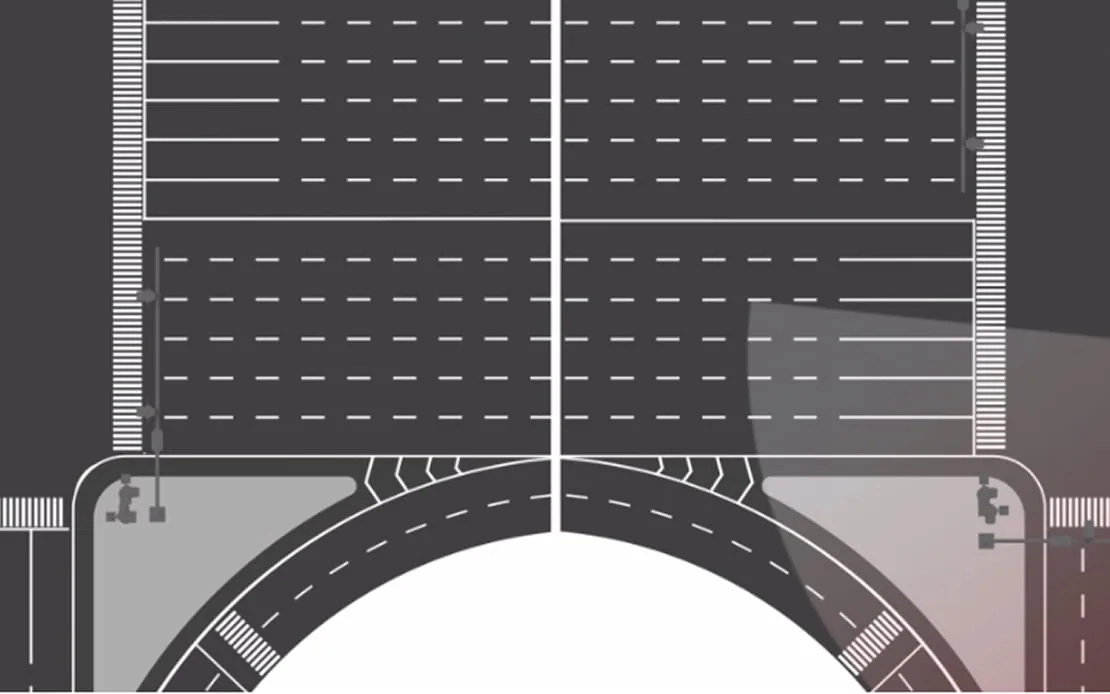
The E1 offers 30 m detection at 10% reflectivity — deliberately matched to its role. This is not a sensor competing on range; it is a sensor that must resolve dark, poorly reflective objects at close quarters with certainty.
Thirty metres provides sufficient response time for high-speed vehicles approaching from either side and from the rear, the scenario that most often defeats narrow-field sensors. In an unprotected left turn the left-side figure is quoted at 20 m @10%.
Near-field cases where a forward LiDAR alone leaves the vehicle exposed.
Cyclists and pedestrians in the near-side sweep remain inside the cone throughout the manoeuvre.
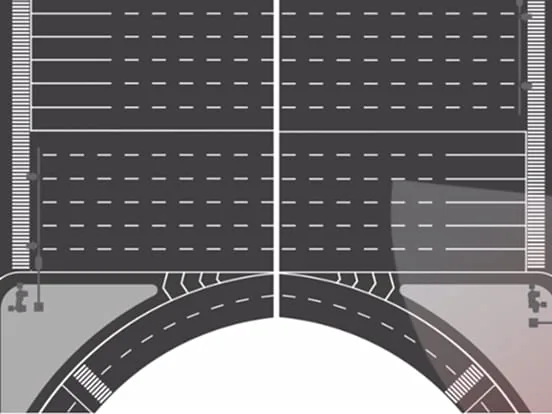
Cross traffic from either side and the rear detected at 20 m @10% on the left side.
Kerbs, low obstacles and small children stay in view at the bottom of the vertical span.
Refresh rate that keeps fast near-field events inside the response window.
Flash architecture illuminates and reads the whole scene at once. Nothing rotates or oscillates, so there is no bearing to wear, no motor to fail and no scan pattern to drift out of calibration under vibration.
A 0.27 megapixel direct time-of-flight single-photon avalanche diode array on a 9.8 µm pixel pitch, giving single-photon sensitivity across the full 120° × 90° field.
RoboSense designs the chips rather than assembling discrete components — the basis for the cost position that makes near-field LiDAR viable at fleet scale.
Developed to automotive reliability expectations and rated IP67 for dust ingress and temporary immersion.
With no rotating assembly the unit is flat and small enough to sit in a bumper, sill or corner panel without a raised housing.
Designed to pair with the 120° forward-looking M series so the two fields tile into genuine panoramic coverage.
As published by RoboSense. This model has a comparatively small public specification set — parameters not disclosed are marked “—”; contact us for the controlled datasheet under NDA.
The 30 m @10% figure is the general specification. RoboSense separately quotes 20 m @10% on the left side in the unprotected left turn scenario; use the lower figure when sizing that manoeuvre.
Published as an ultra-high frame rate of 10 to 30 Hz, with 10 Hz as the minimum and 25 Hz or better attainable in certain scenarios. Confirm the achievable rate for your configuration.
Dimensions, weight, power consumption, operating voltage, operating temperature, wavelength and interface are not published on RoboSense's public product page for the E1. We can supply these from the controlled datasheet.
The E1R is the robotics-oriented member of the same E platform, sharing the 120° × 90° ultra-wide FOV. Ask us if a robotics variant is the better fit for your platform.
Specifications are subject to change. Please confirm against the current RoboSense datasheet before design-in.
GET IN TOUCH
One of our experts will be communicating with you shortly. We are committed to understanding your application and providing support, tailored to your specific requirements.
Receive Quote
One of our experts will be communicating with you shortly. We are committed to understanding your application and providing support, tailored to your specific requirements.