

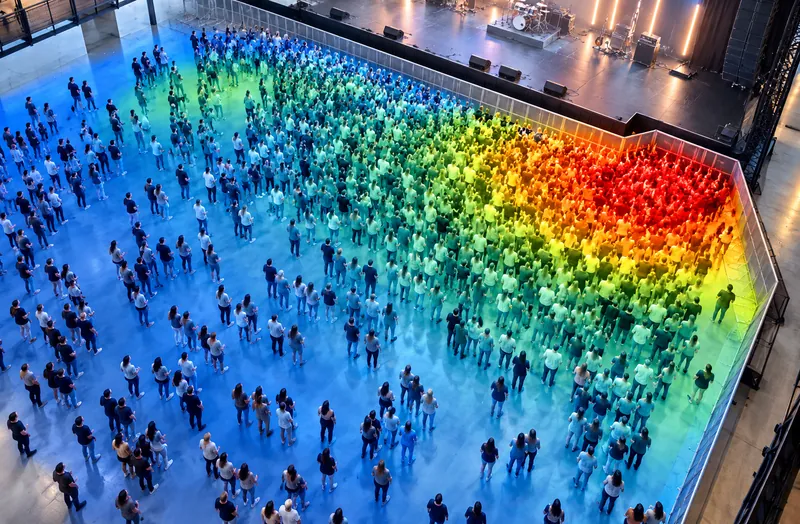
Averages hide the corner that hurts people
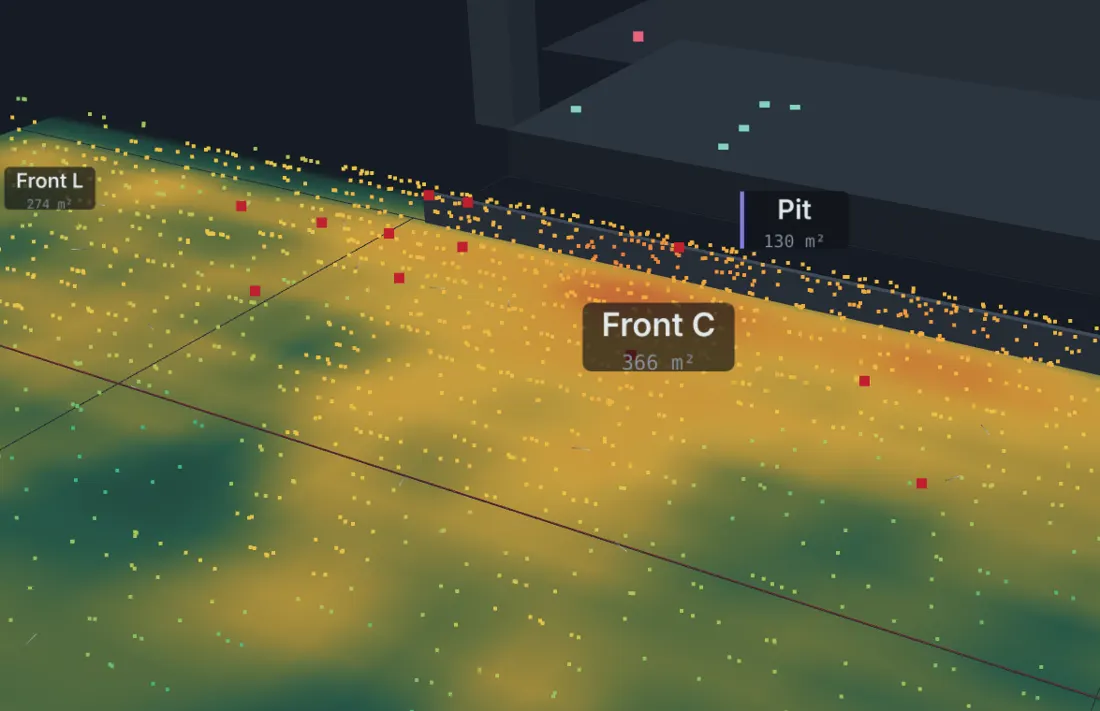
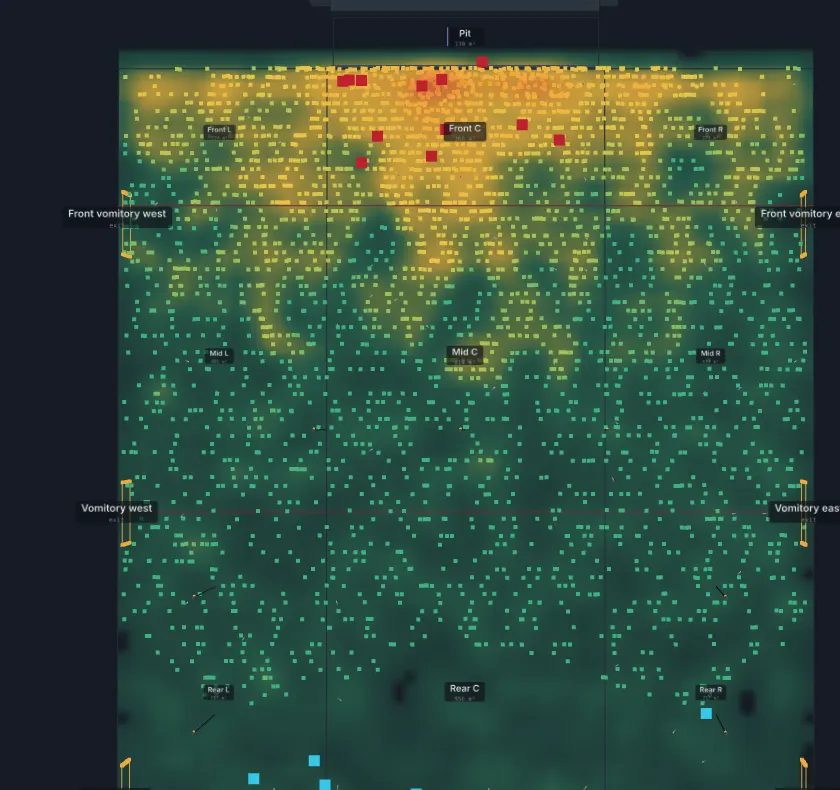
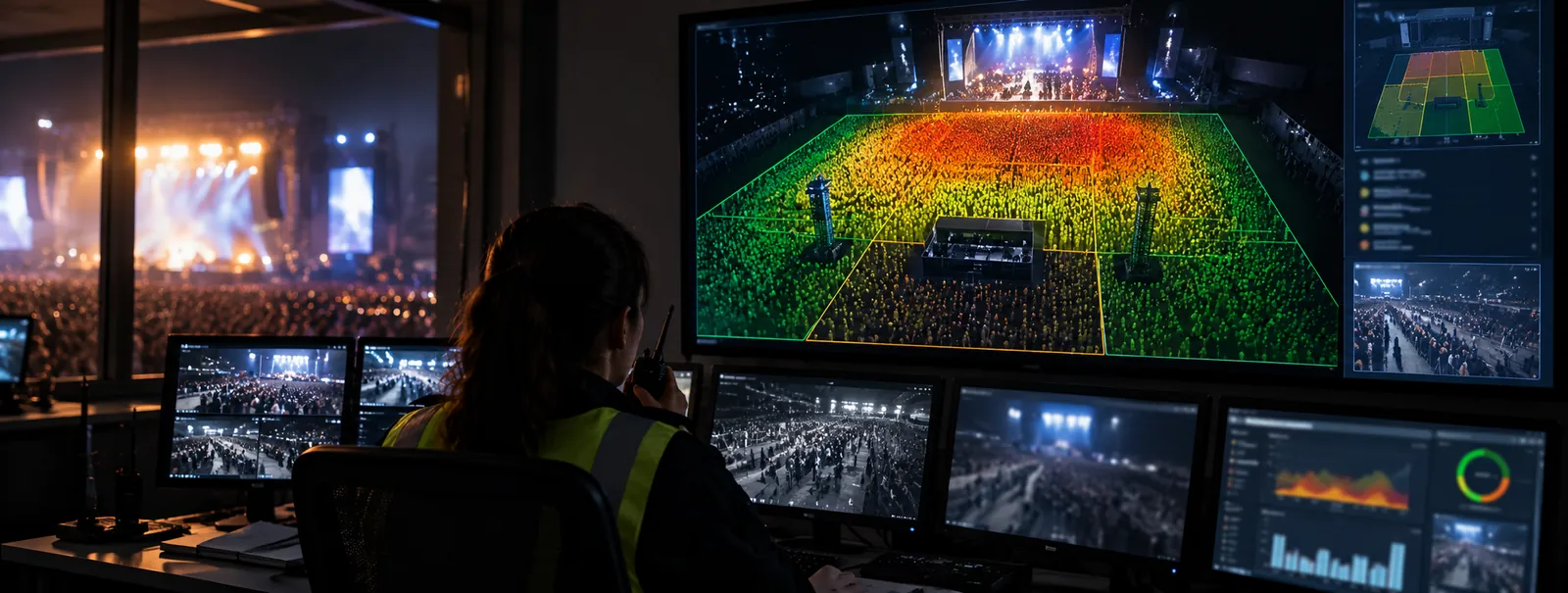
A floor that is comfortable on average can be critical in one block against the barrier. Density has to be measured zone by zone, not as one number for the floor.
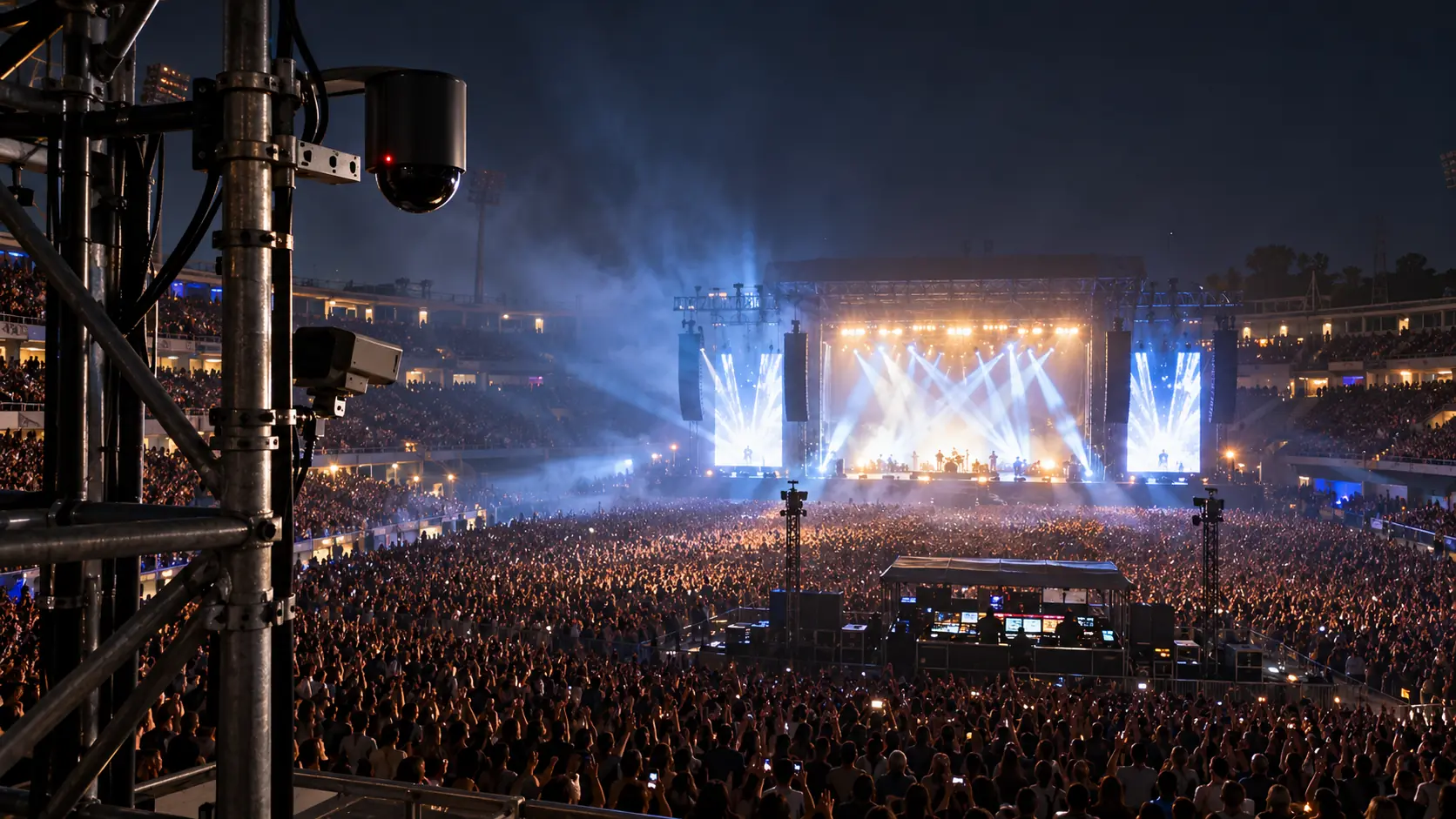
Density is what the license is written against. Flow is what sees a crush coming.
ASSET-RxCx gives concert venues and stadiums live crowd analytics: density, flow, crowd pressure and occupancy for every zone of the floor, plus the location of credentialed people such as VIPs, crew and security. LiDAR, cameras and wireless sensors are integrated into one system, and every alarm is logged for the post-event review.
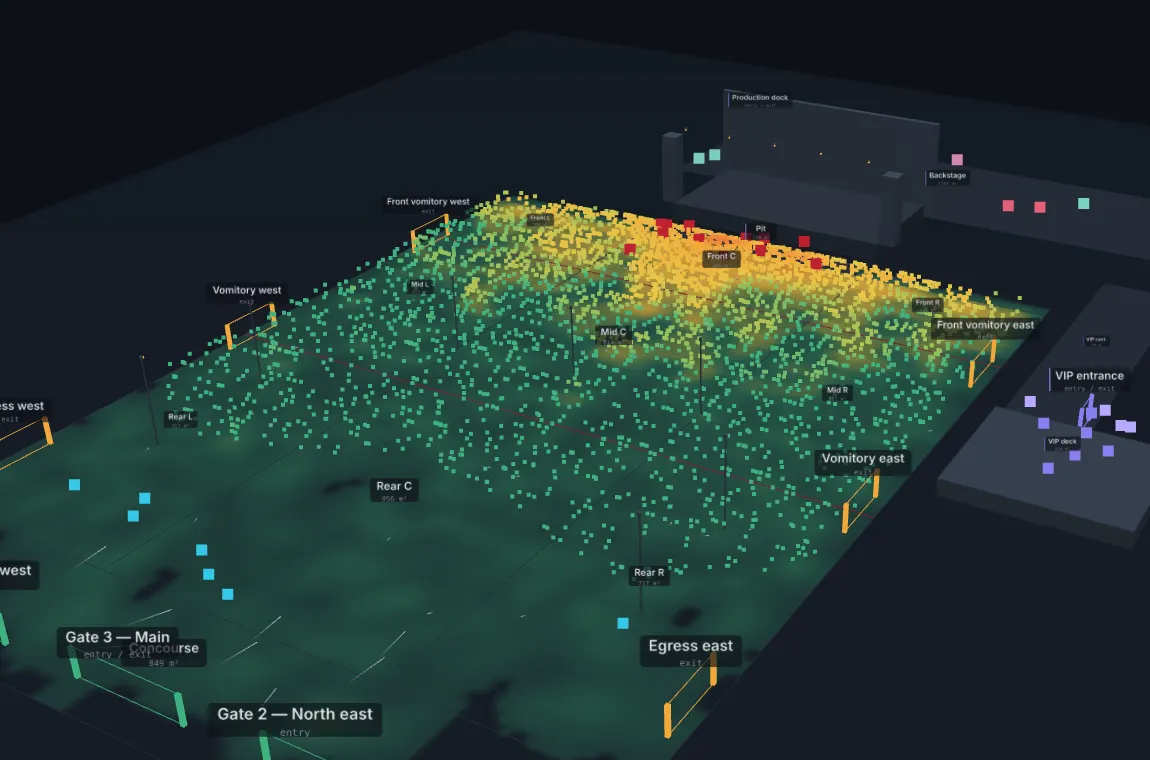 SIMULATION
The challenge
A ticket scan tells you how many people came in. It does not tell you where they are standing, how tightly, or whether the crowd is starting to move as one.
A floor that is comfortable on average can be critical in one block against the barrier. Density has to be measured zone by zone, not as one number for the floor.
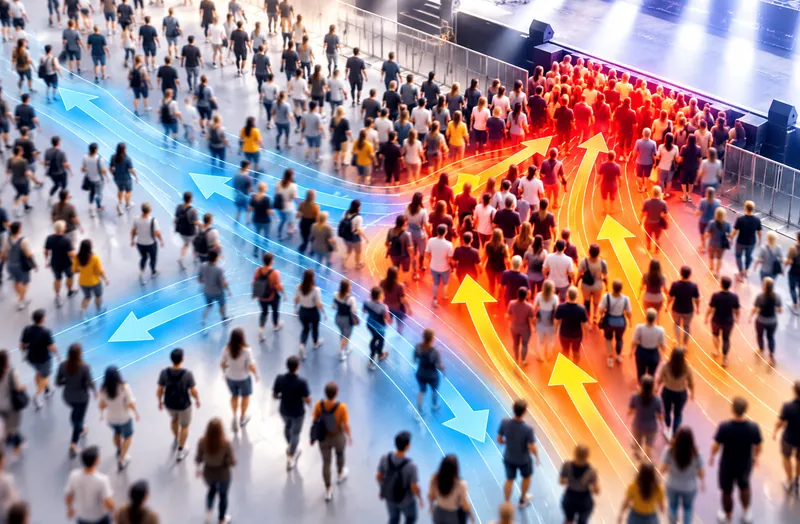
Density alone does not injure people; density with movement in it does. Stop-and-go waves and counter-flow come before a crush, and they only show up in flow data.
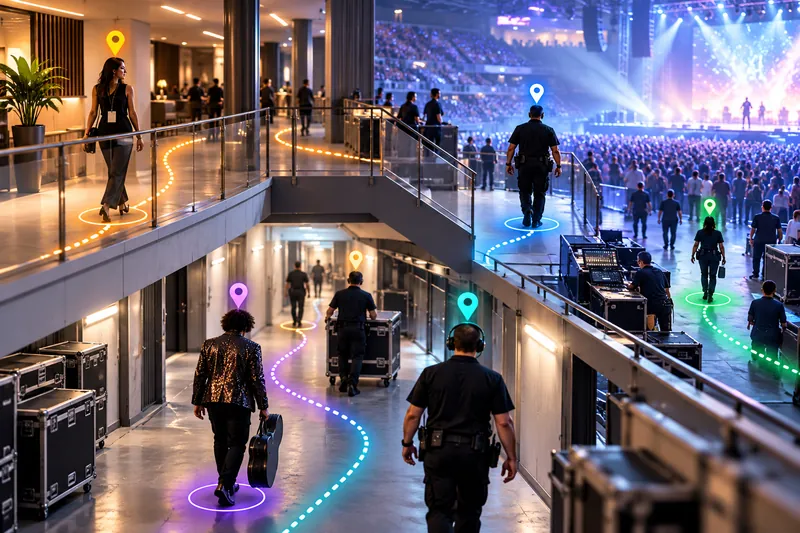
VIPs, artists, crew and security move between the deck, backstage and the floor. Knowing a badge was scanned at a door is not knowing where that person is now.
ASSET-RxCx measures density and flow for every zone and locates credentialed people, in one live view.
See the approachFrom the ASSET-RxCx simulator
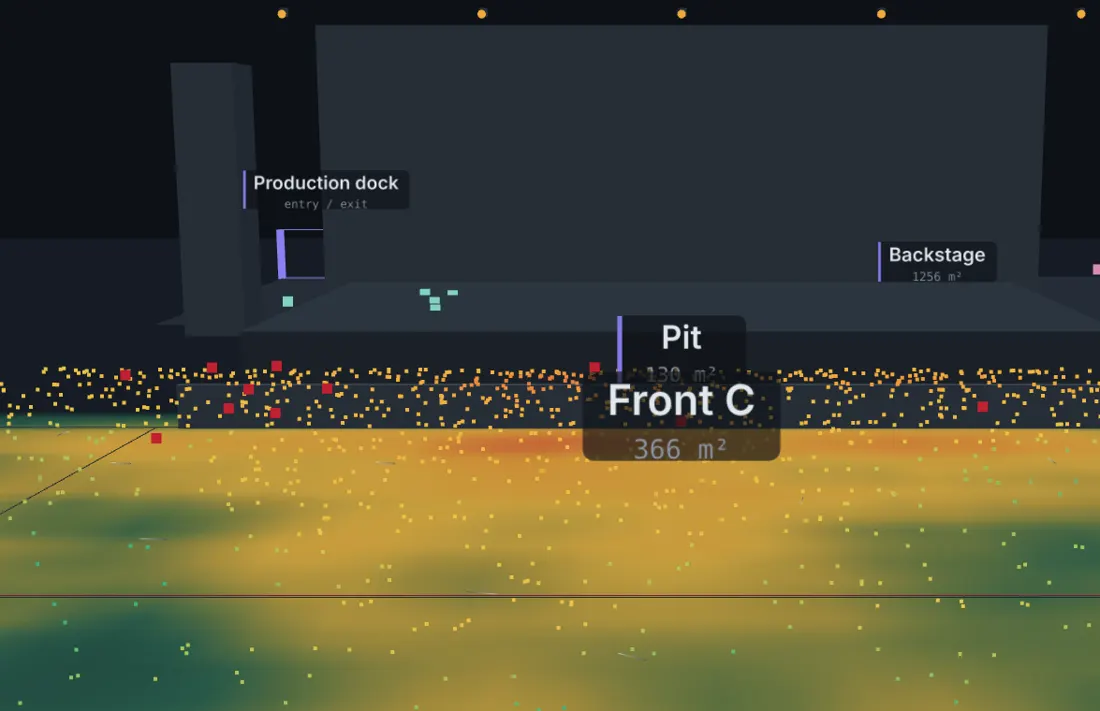
CRATUS models each venue before installation. The same views are used live during the event.
 SIMULATION
 SIMULATION
 SIMULATION
Simulation with illustrative values. Live installations show measured values for your venue.
What the venue team sees
Each reading is available live, as a trend and in the incident log.
Our approach
ASSET-RxCx integrates LiDAR, cameras and wireless sensors with edge computing, software and AI, engineered as one system by one team.
Sensing
LiDAR measures the crowd as anonymous 3D points and keeps working in the dark and under show lighting. Cameras extend coverage where they help, and wireless sensors locate credentialed people. All of them feed one picture.
Edge computing
An edge computer at the site merges every sensor into one live picture and computes the analytics locally, so results, not raw sensor streams, leave the site over Ethernet, Wi-Fi or cellular.
Software & dashboards
One live view of the floor for the safety officer and control room: zone readings, alarms, door counts, restricted areas and personnel, with automatic incident logging and export.
AI
AI combines density, pressure, stop-and-go waves and counter-flow into a risk index, names the leading driver and estimates time to critical, so staff act before a zone reaches its limit.
What we deliver
From one standing floor to a full stadium.
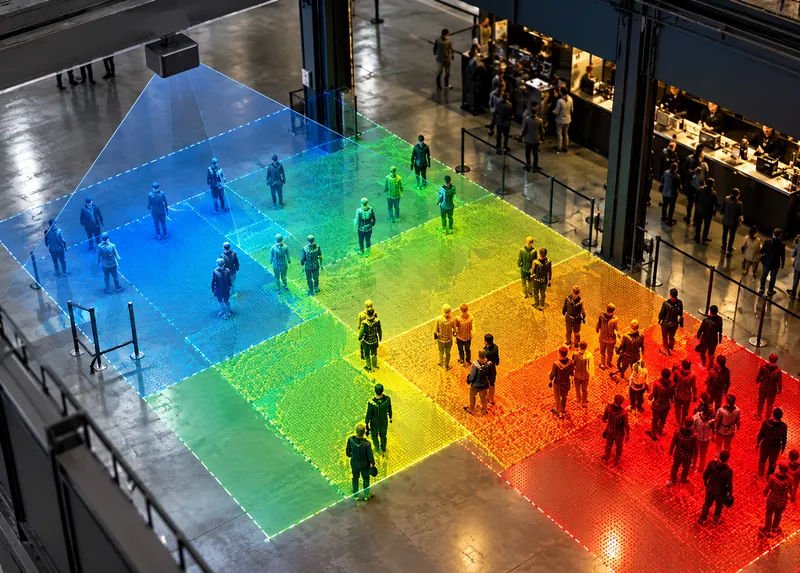
Density and level of service for every zone of the floor, not an average for the venue.
Sensing · Software
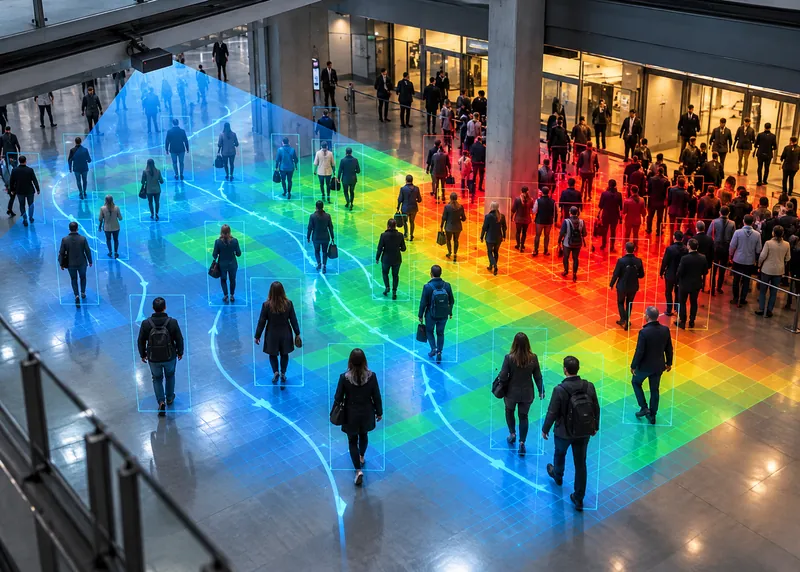
Movement in the crowd measured alongside density, with pressure alarms before density alone would trip.
Sensing · AI
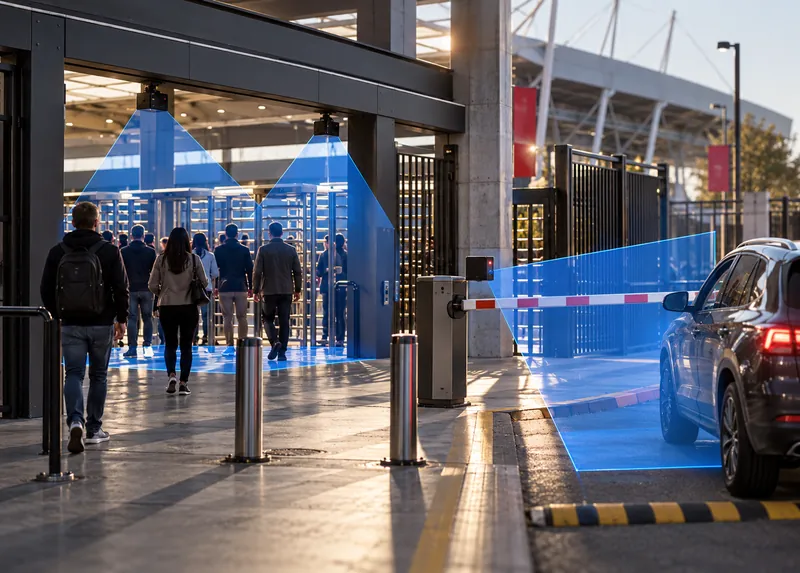
In, out and net per door, and bodies compared with credentials at controlled entrances.
Sensing · Software
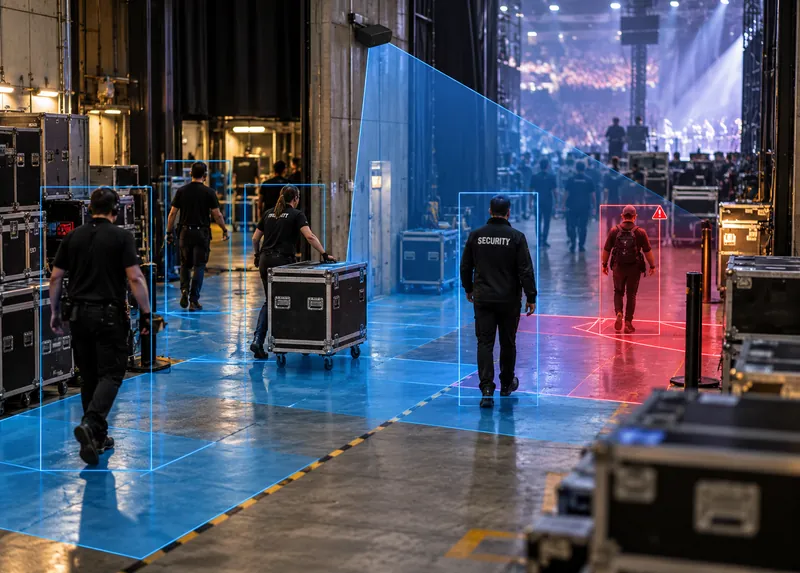
VIPs, artists, crew and security located across the venue, with alarms for anyone unlocated or in the wrong zone.
Sensing · Software
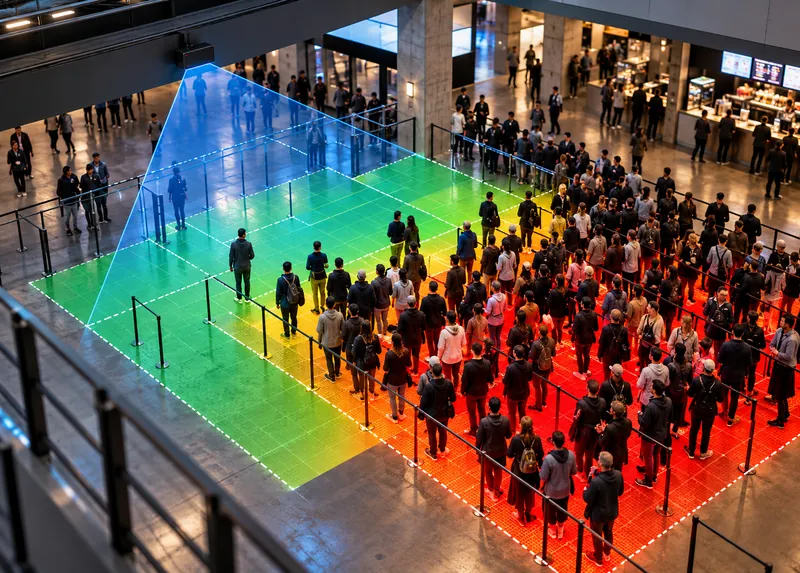
People on the floor against licensed capacity, area over the limit and modeled clearance time.
Software
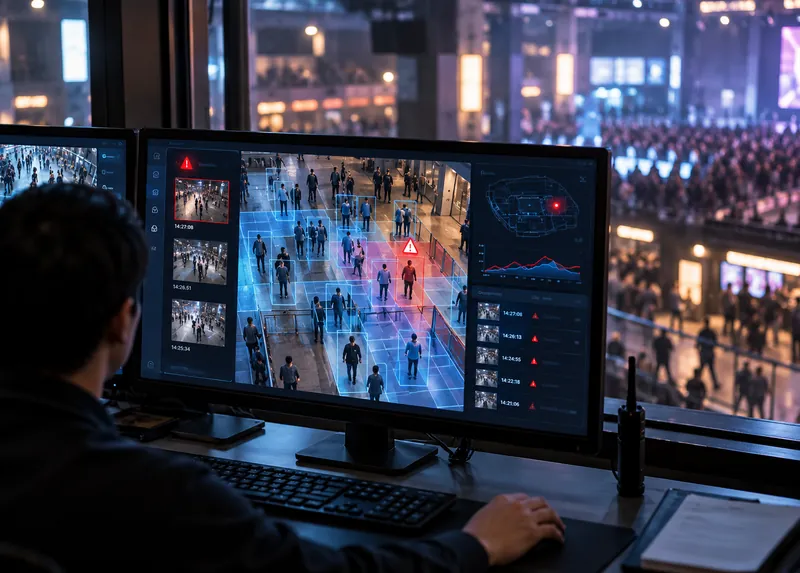
Every alarm captured with zone readings, door counts and positions, exported for the post-event review.
Software
The ASSET-RxCx system
Sensors are placed by viewpoint, not by count: stage, front of house and delay towers see the floor from different angles.
Stage, FOH and towers
Measures the crowd from several viewpoints so the front, middle and rear of the floor are all covered.
Optional, integrated
Added where they extend coverage or let staff see what an alarm is about.
For credentialed people
Locate credentialed people continuously across the venue, including backstage and the VIP deck.
ASSET-Rx EDGE
Fuses every sensor into one picture of the floor and computes the analytics at the venue.
Control room and mobile
The live floor view, alarms and readings for the safety officer and control room.
Automatic capture
Records the whole picture when an alarm fires and exports it for the post-event review.
One system
CRATUS models the venue, places the sensors, runs the software and supports the event team. One point of contact from the first floor plan to the post-event review.
All CRATUS productsThese details let CRATUS model your venue before anything is installed.
How we work
Every venue is modeled with its layout, capacity and show profile before installation, so sensor positions and thresholds are set with evidence.
Floor plan, capacity, doors, stage, rigging and restricted areas.
CRATUS simulates your venue at full house to place sensors and set zones and thresholds.
Permanent installation or event rigging at stage, front of house and towers.
Zones, licensed limits, alarms and personnel groups set up and tested.
Live monitoring during the event, then the incident log and trends for the review.
Standards & practices
ASSET-RxCx reports against the crowd safety references venues and authorities use.
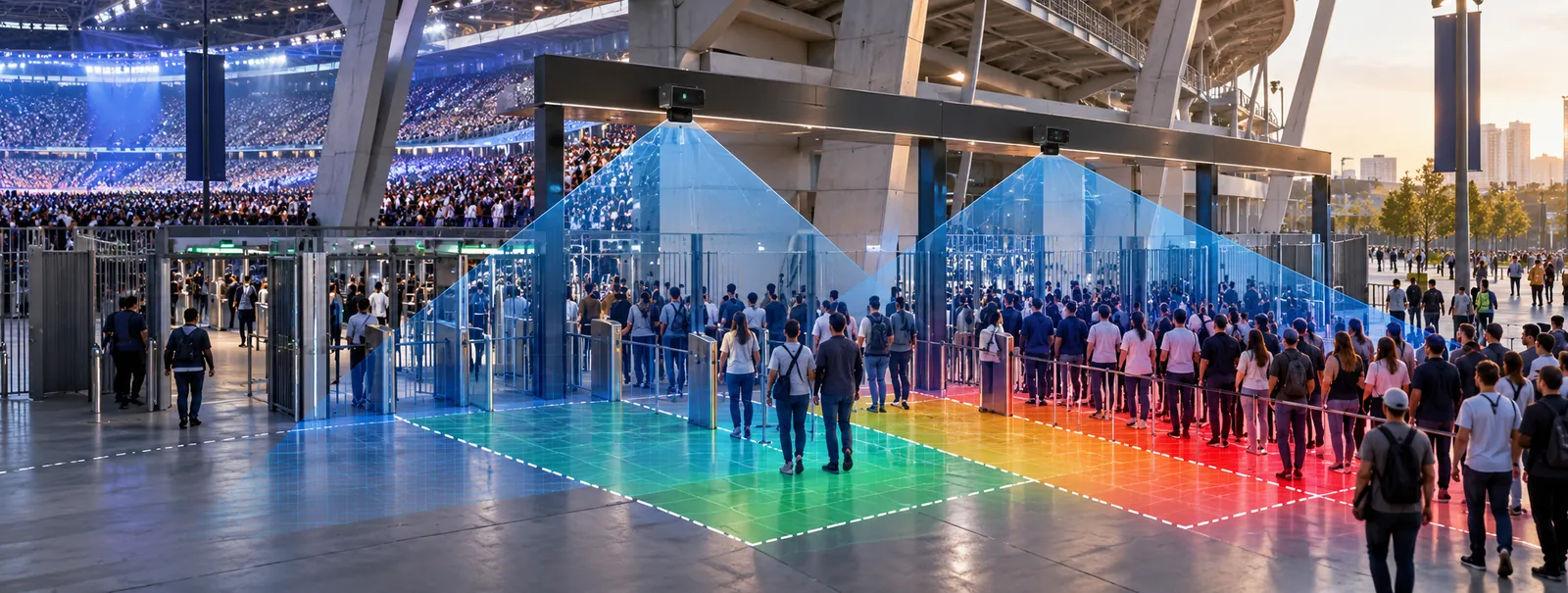
Licensed limits are set by the venue license and the authority having jurisdiction. ASSET-RxCx measures against them and documents events; it does not set or certify limits.
Live measurement of where people are and how they move. ASSET-RxCx reports density, flow, crowd pressure and occupancy for every zone of the floor, plus door counts and the location of credentialed people.
Because density with movement in it is what injures people. Stop-and-go waves and counter-flow appear before a crush, so crowd pressure alarms can fire before density alone reaches its limit.
No. The general crowd is measured anonymously, as density and flow. Only credentialed people who carry a venue-issued sensor, such as VIPs, crew and security, are located individually.
LiDAR, cameras and wireless sensors, integrated into one system. LiDAR measures the crowd, cameras extend coverage and give visual verification, and wireless sensors locate credentialed people.
Yes. LiDAR supplies its own light, so darkness and show lighting do not stop the measurement. Cameras are used where lighting allows.
Different viewpoints see different parts of the floor. Sensors on one trim share the same sight lines and occlusions; spreading them out covers more of the crowd than adding more in one place.
The zone, the leading driver and the suggested action are shown to the operator, and the incident log captures the full picture: zone readings, traces before and after, door counts and personnel positions.
Yes. The system can be installed permanently or rigged for an event, and each venue is modeled before installation.
Yes. CRATUS simulates your venue with its layout, capacity and show profile, so you can see coverage and alarms before installation.
Send us the site layout, what you need to measure and how the space is used. A CRATUS engineer replies with questions, a sensor layout and a phased plan.
Yes. CRATUS works directly with operations teams, system integrators and IT departments, and provides network requirements, installation instructions and remote support during commissioning.
Talk to a CRATUS engineer
Send us the venue plan and capacity. A CRATUS engineer will reply with a simulation of your floor and a sensor plan.
Keep exploring
GET IN TOUCH
One of our experts will be communicating with you shortly. We are committed to understanding your application and providing support, tailored to your specific requirements.