


The Blind Spot in Your Supply Chain: Why Real-Time Bulk Solid Measurement is Non-Negotiable for Enterprise Survival
If you are managing a multi-zone bulk storage facility and relying on manual audits, historic logs, or estimated weight-to-volume calculations, your operations are bleeding capital. In high-velocity supply chains, guesswork is a liability you cannot afford.
Modern enterprise logistics demands absolute visibility. Yet, thousands of industrial operations remain functionally blind to their actual inventory levels inside bulk solid storage bunkers. Materials cycle in and out at breakneck speeds, multiple zones host rapidly shifting material profiles, and the constant physical movement makes accurate tracking a logistics nightmare.
To survive in an era defined by Just-In-Time (JIT) manufacturing and highly optimized packaging-to-distribution networks, global enterprises must convert physical mass into real-time digital truth. That is exactly what CRATUS delivers.
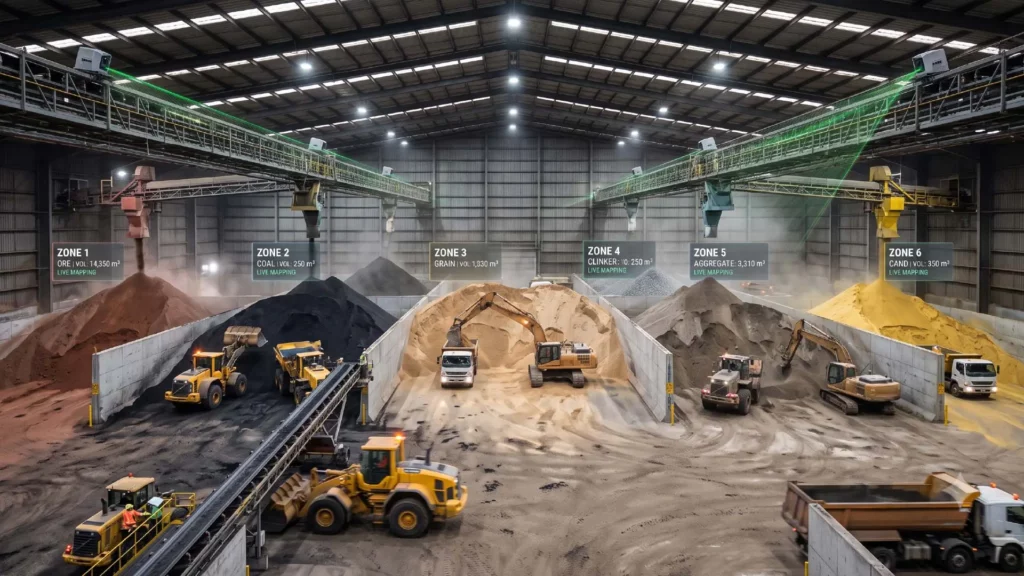
The High-Velocity Multi-Zone Nightmare
Industrial storage facilities are no longer static warehouses; they are dynamic, chaotic transit hubs. On any given day, a single multi-zone facility is handling a complex matrix of logistics variables:
- Dynamic Material Swaps: Different bulk materials constantly cycle through the same zones, altering density assumptions and invalidating outdated weight models.
- Aggressive Flow Velocity: Raw bulk inventory moves in and out at aggressive speeds to fuel synchronous packaging lines and multi-channel distribution networks.
When materials move this fast, legacy measurement practices collapse. If your data lags by even a single hour, you are running your operation on a fiction. This informational blindness directly translates into two catastrophic failure points: shortages and overfills.
The Operational Friction of Inaccuracy:
- Material Shortages: An unexpected drop in material instantly halts your high-output packaging lines. Downstream distribution freezes, delivery contracts face steep penalties, and logistics teams scramble in firefighting mode. Every minute of idleness shaves hundreds of thousands from your bottom line.
- Material Overfills: Blindly pushing inventory into an already maxed-out zone leads to physical overfills. The consequences? Facility damage, immediate environmental safety hazards, emergency operational shutdowns, and millions wasted in labor to manually remediate the spill.
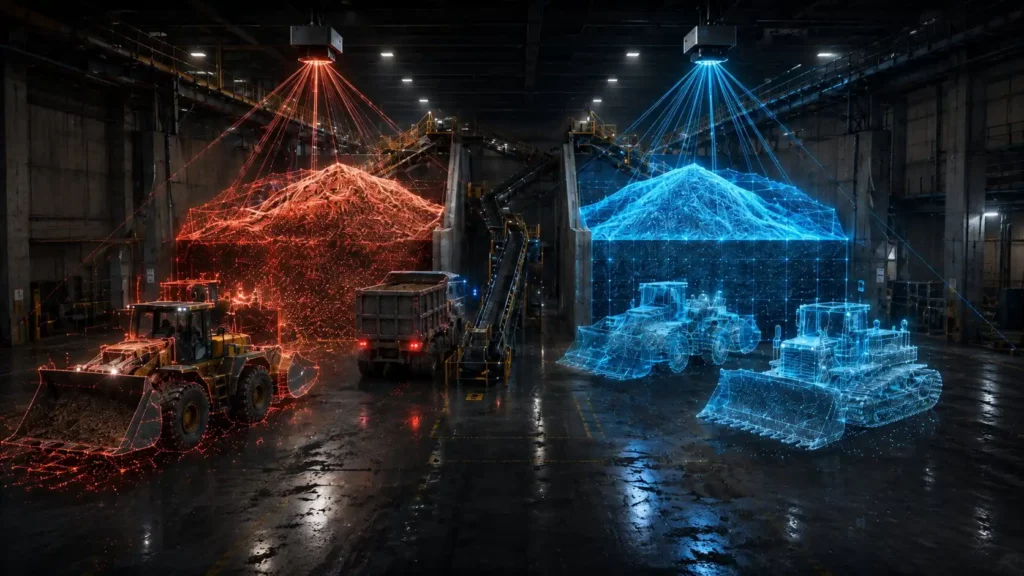
Cutting Through the Noise: Heavy Equipment Rejection Algorithms
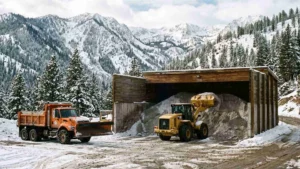
Many operational managers recognize the need for automation, but they hesitate because traditional sensors fail in real-world environments. They ask: “How can an automated scanner accurately measure volume when front-end loaders, bulldozers, and heavy trucks are constantly rolling in and out of the bunkers?”
It is a valid objection. Standard measurement systems capture everything in their field of view, treating a 20-ton loader as a sudden, massive spike in raw material inventory. This creates highly erratic data loops, triggers false alarms, and disrupts automated supply chains.
CRATUS solves this natively. Our proprietary Heavy Equipment Rejection Algorithms completely isolate and eliminate physical machinery noise from the volumetric equation.
How It Works: Digital Displacement
Our advanced algorithms identify the distinct physical profiles and kinetic signatures of heavy machinery in real-time. Instead of letting this equipment distort your data, the CRATUS platform instantly filters it out—effectively rendering loaders and trucks invisible to the final volumetric count. You receive pure, unadulterated bulk solid material data, no matter how chaotic the floor operations are.
LIDAR: On-Demand Precision Tailored to Your Architecture
At the core of the CRATUS system is state-of-the-art Industrial LiDAR technology. Unlike spot sensors or single-point radar that map a single peak and guess the rest, CRATUS LiDAR arrays generate highly accurate, high-density 3D spatial surfaces of your bulk material piles.
But data is only valuable if it matches your operational cadence. CRATUS gives you absolute control over how and when this visibility is deployed:
- On-Demand: Pull instantaneous, live volumetric data at a click of a button during critical operational decision-making windows.
- Scheduled: Program automated, systematic scans to map material consumption patterns at specific shift changes or end-of-day financial intervals.
- SCADA-Driven: Fully embed the measurement architecture into your existing supervisory systems. Let your industrial machinery trigger scans automatically based on line speeds, valve openings, or conveyor triggers.
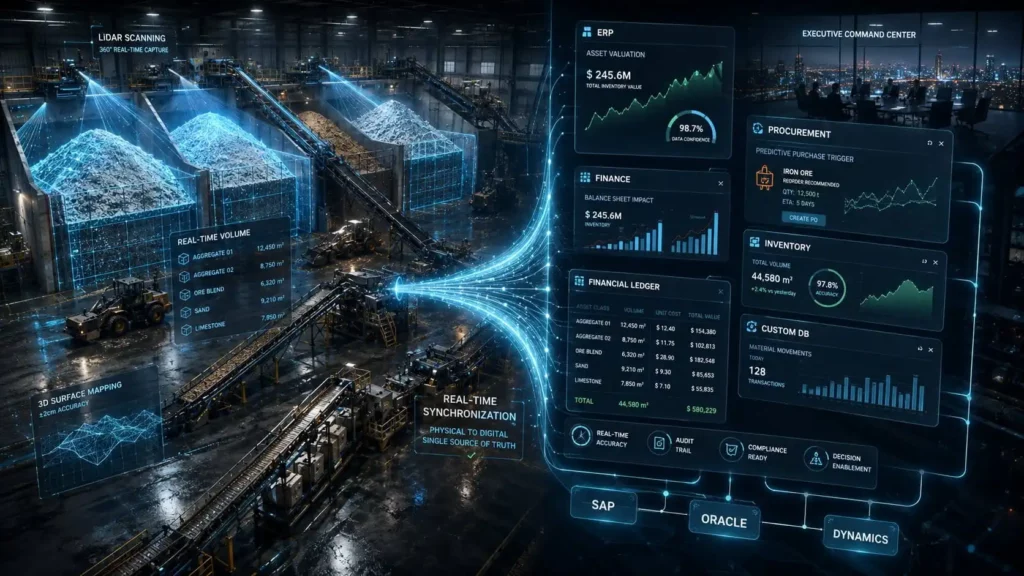
Synchronizing the Physical Floor to the Financial Ledger
Isolated operational data is a legacy trap. To extract maximum value, your physical volume measurements must communicate directly with executive decision-making frameworks. CRATUS synchronizes your raw physical floor directly to the strategic operations of large-scale corporate structures.
We do not just hand you a localized dashboard. CRATUS provides seamless, bulletproof implementation to ANY enterprise resource planning (ERP) and financial accounting system on the market. > ### Universal Enterprise Interoperability
Whether your organization runs on SAP, Oracle, Microsoft Dynamics, or bespoke financial databases, the CRATUS integration engine translates physical cubic meters of bulk solids into real-time asset valuation, predictive purchasing triggers, and flawless financial balance sheets instantly.
When your financial ledger is perfectly synchronized with your actual bulk material volume, your procurement team stops over-purchasing raw assets, your distribution networks align flawlessly with packaging outputs, and your C-suite makes capital allocations based on exact data, not vague approximations.
The Directive Is Clear: Eliminate the Guesswork
Continuing to operate a multi-zone bulk storage facility without real-time, algorithmic volume tracking is an expensive choice. The disruptions caused by a single major overfill or an unexpected shortage can cost more than deploying a comprehensive CRATUS solution across your entire infrastructure.
Stop tolerating data lag. Stop letting heavy machinery distort your inventory audits. Take absolute control of your JIT supply chain, protect your packaging and distribution networks, and bridge the gap between your physical operations and financial systems.
Command Ultimate Operational Control
Do not let another shift pass under the cloud of inventory estimation. Contact a CRATUS Enterprise Automation Specialist today to schedule an architectural assessment of your multi-zone storage facilities and unlock flawless ERP-integrated precision.

Written by
Founder and CEO, CRATUS Technology, Inc.
Zeki founded CRATUS in 2013 and leads the San Jose team building LiDAR volume measurement systems, IoT sensing platforms, and energy and industrial automation hardware.
Full profileLinkedIn

Interested ?
We would be pleased to send you detailed information about our products or services.
Simply enter your details in the contact form below and we will get in touch with shortly.
CRATUS respects your personal information and keeps it safe. By sending this form, you consent to allow CRATUS to store and process your personal information as stated in our Privacy Policy.