

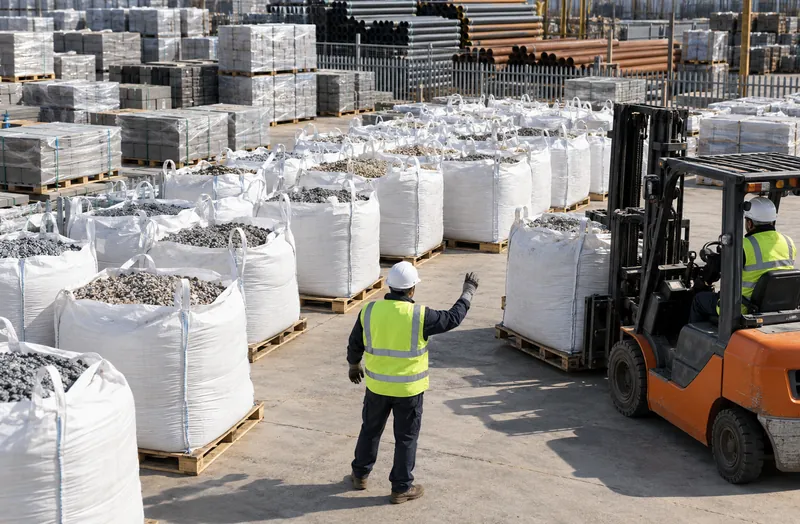
Search and re-handling
Operators move several items to reach the one they need. Each extra move costs time and adds risk.
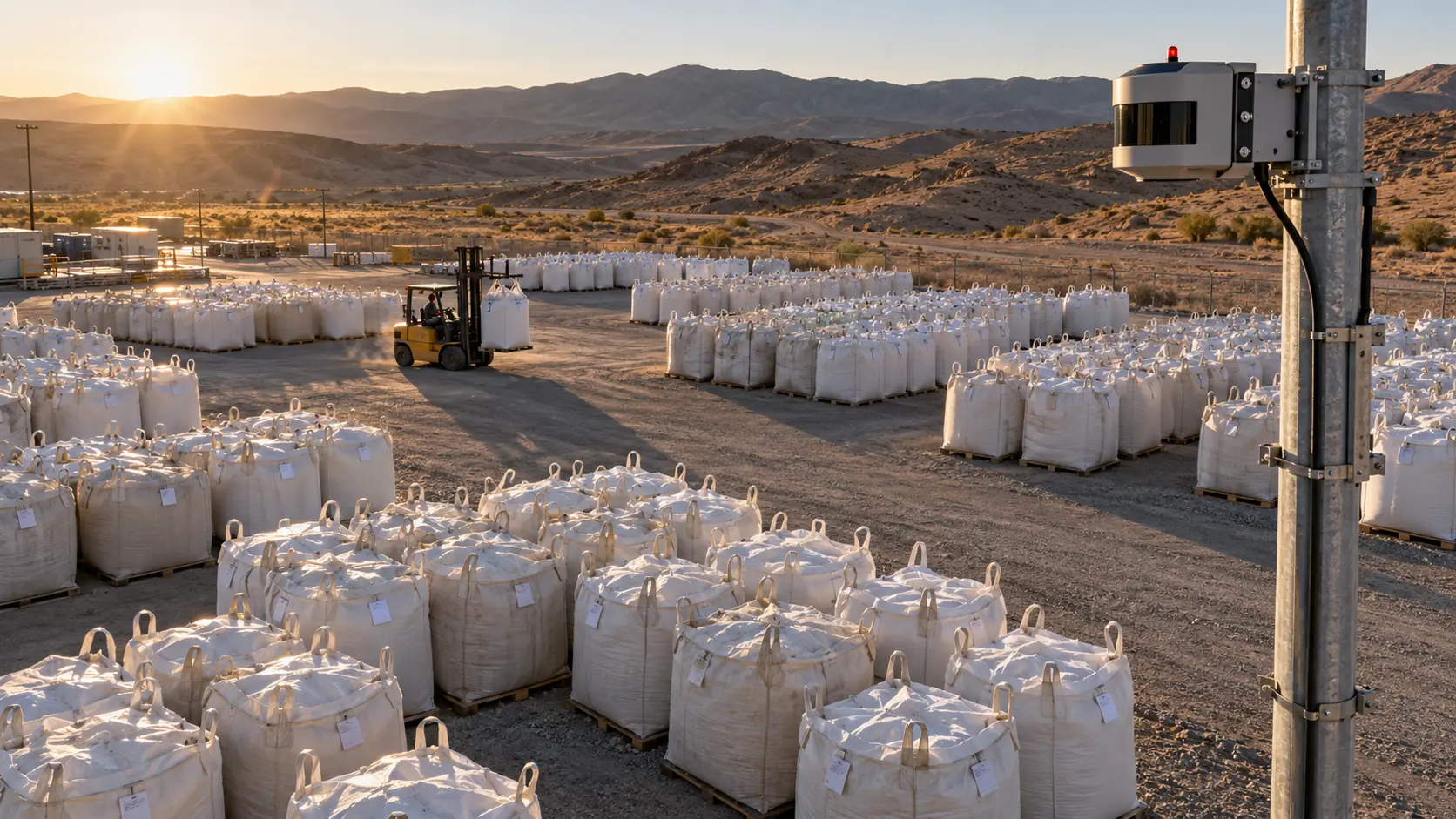
Every asset has a place. ASSET-Rx knows it, and what is in it.
CRATUS tracks equipment and industrial assets, including mobile equipment, tools, containers, totes and bagged material, with the ASSET-Rx platform. Tags identify each asset, placement records tie it to a lot and a location, and LiDAR confirms what is physically there. Search by asset, lot or work order and get the location, the history and a route to it.
The challenge
Assets are not lost in one event. They drift through small moves nobody records.
Operators move several items to reach the one they need. Each extra move costs time and adds risk.
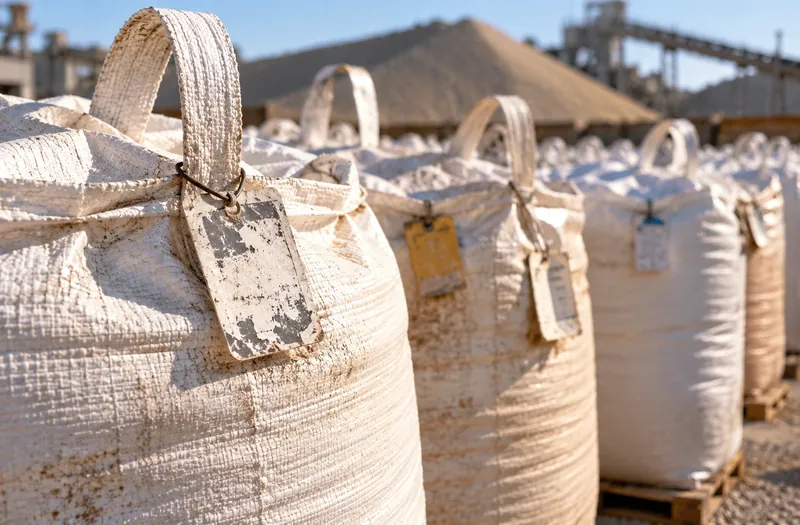
Painted marks and paper labels wear out outdoors. Items from one lot get stored next to another.
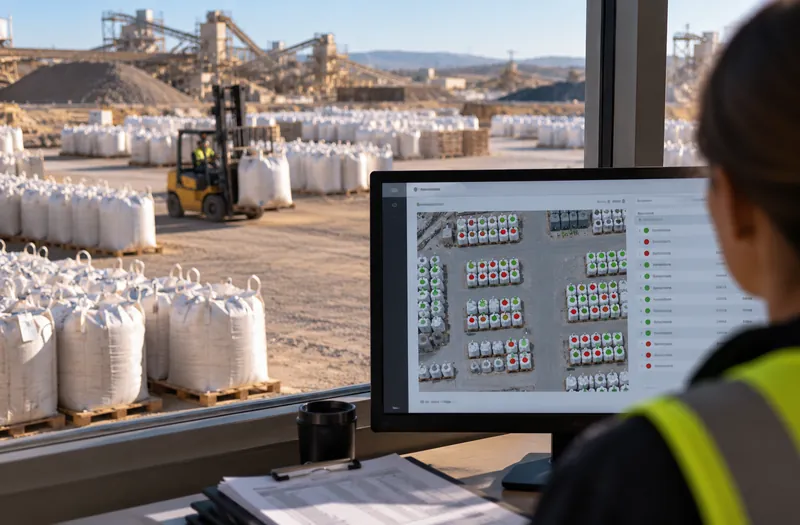
The ERP says it is there; the yard says otherwise. Year-end audits and write-offs follow.
ASSET-Rx ties each asset to its lot and location when it is placed, updates the record when it moves, and checks the yard with LiDAR so differences show up the same day.
See the approachWhere it is used
Each site gets the tag mix and capture method that matches its assets.
Side by side
ASSET-Rx combines identity from tags with confirmation from LiDAR.
| Barcode or paper | Passive RFID portals | ASSET-Rx | |
|---|---|---|---|
| Identity | Read by hand | Read at portals | Tag read at placement and on demand |
| Location | Last scan point | Last portal passed | Position from placement records and RTLS |
| Outdoor durability | Labels fade | Tag dependent | UV-rated tags with a printed backup code |
| Physical confirmation | Manual count | No | LiDAR scan of the yard |
| Missing or stray items | Found at audit | Not detected | Flagged the same day |
| ERP update | Typed in | Interface | Automatic post of lot, bin and position |
General characteristics of each method. Tag types, capture methods and update frequency are selected per site.
Our approach
Tags, positioning, LiDAR, software and AI, engineered as one system by one team.
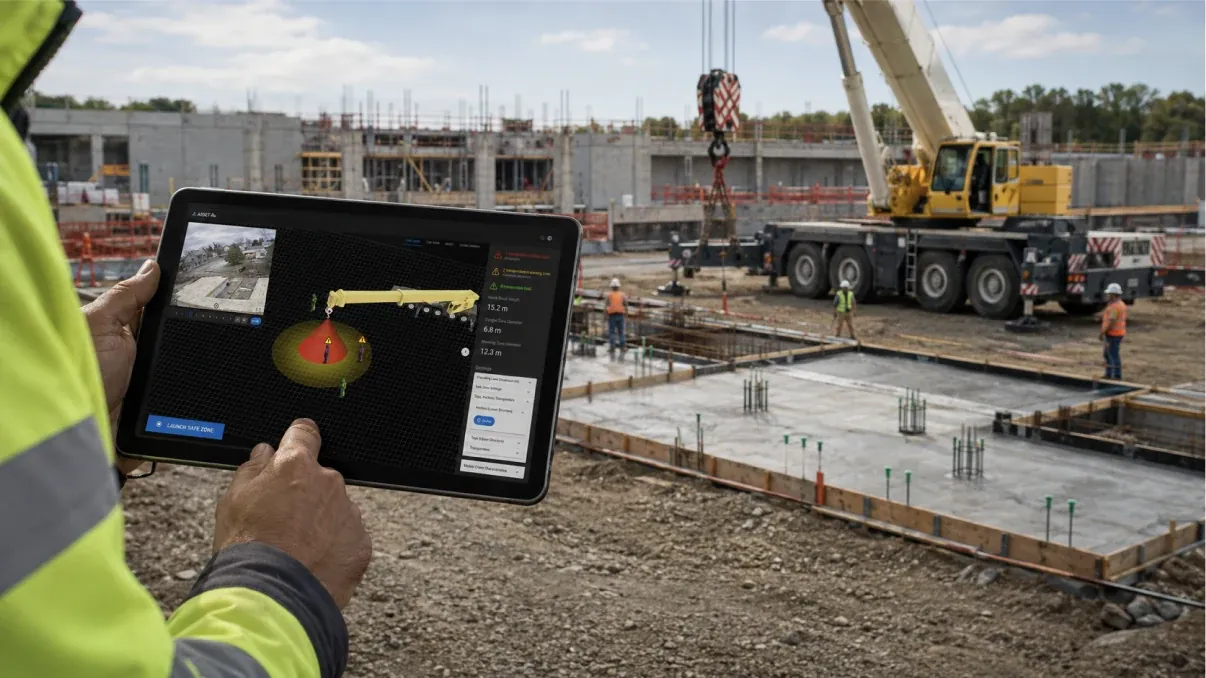
Identity
UWB and BLE tags on equipment that moves on its own schedule; UV-rated RFID tags with a printed 2D code on bags, totes and containers. The code is a backup when a tag cannot be read.
Positioning
UWB anchors locate tagged equipment in real time. Forklifts and loaders carry positioning so each placement is recorded where it happens, outdoors with GNSS and indoors with UWB.
LiDAR & edge
Fixed LiDAR masts, drone flights or mobile scans measure the yard. ASSET-Rx EDGE matches each object to its record by position and flags missing items, strays and untagged ones.
AI
AI compares records with what is physically there, ranks exceptions, plans pick and audit routes and predicts where items are likely to have been moved.
What we deliver
From one storage yard to every plant and warehouse you run.
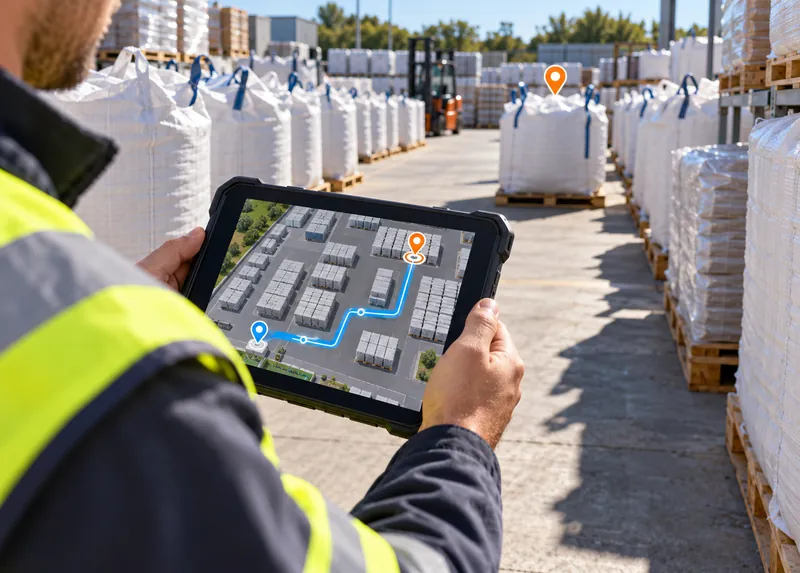
Location, last move and a route to the item from one search.
Software
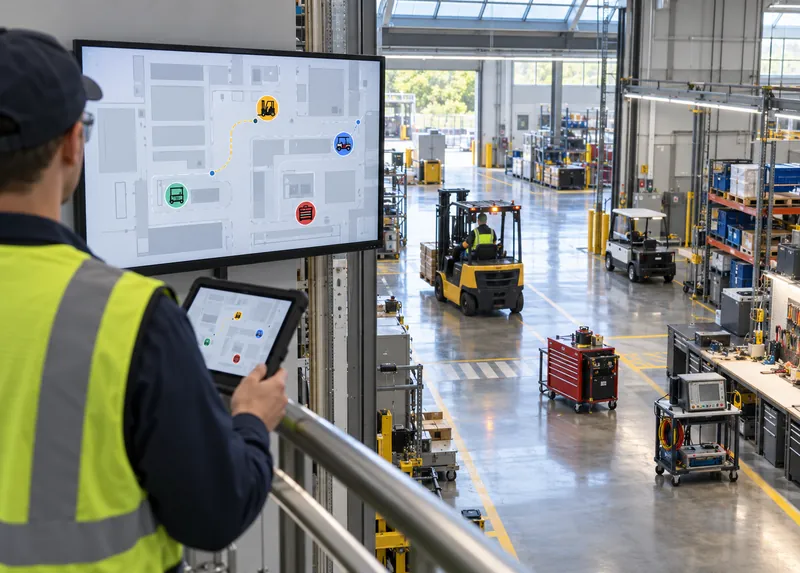
Forklifts, carts, tools and test equipment on a live map.
Tags · Software
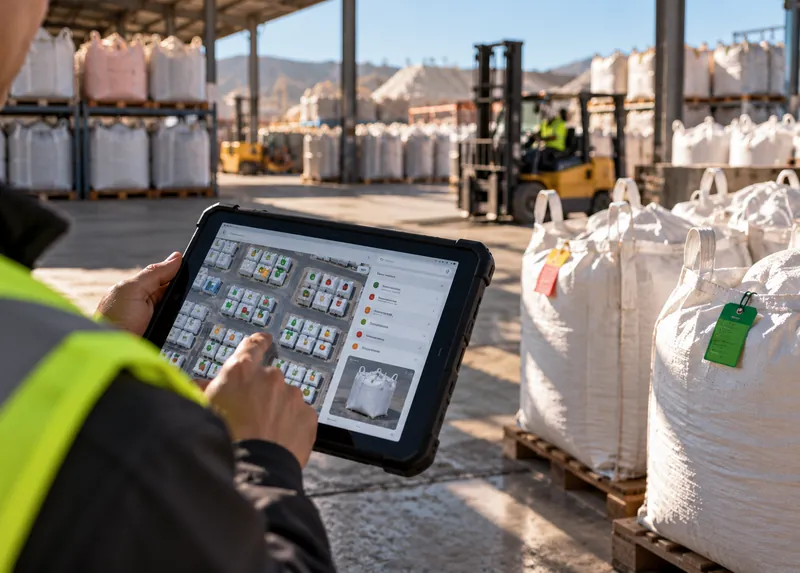
Every item linked to its lot, so a lot can be found or held as one.
Software
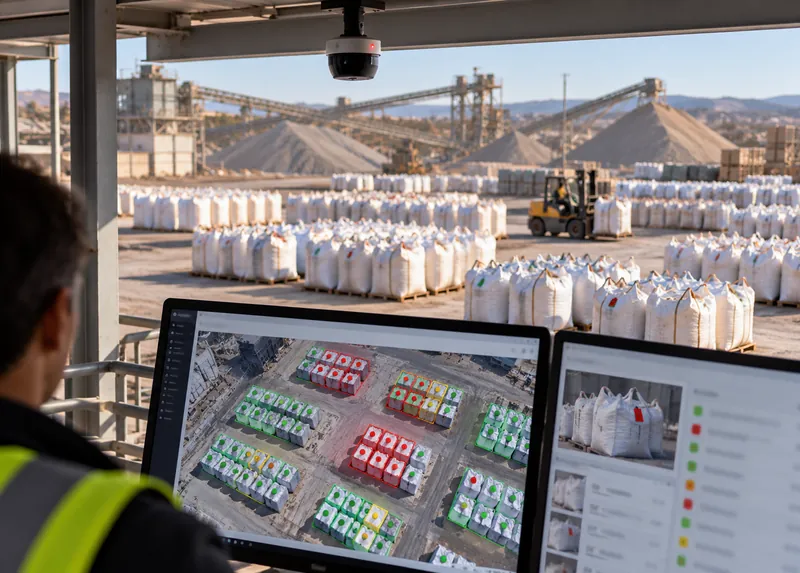
LiDAR checks the yard against the records and flags differences.
LiDAR · AI
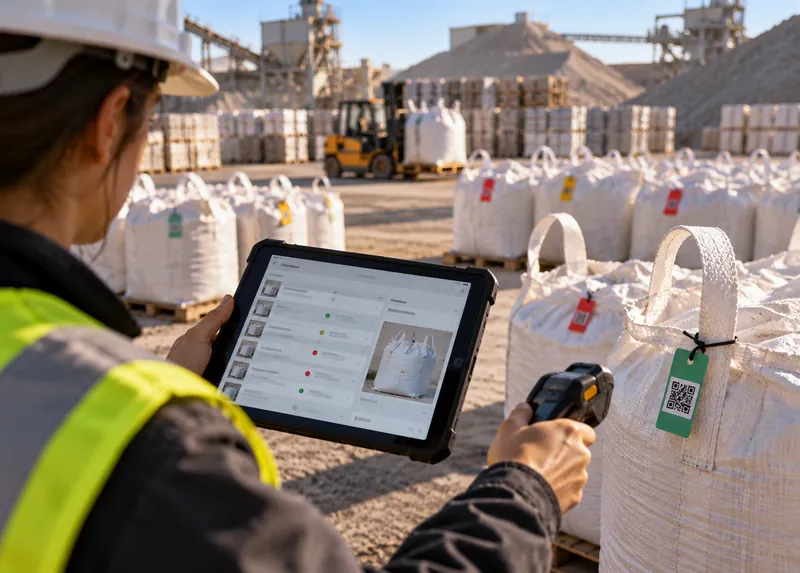
Random samples, planned routes, handheld confirmation and an exception report.
Software
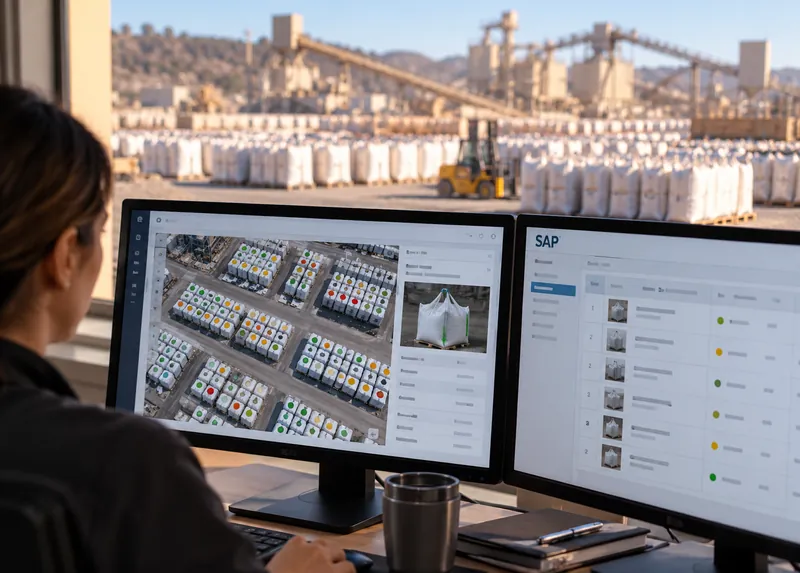
Lot, bin and position posted automatically to SAP and other systems.
Software
The full list of ASSET-Rx use cases is on the ASSET-Rx Use Cases page.
Example
A CRATUS 3D digital twin modeled an outdoor yard of bulk bags stored in clusters by lot. The method applies to any bagged, palletized or containerized material.
Each bag gets a UV-rated RFID tag with a printed 2D code when it is filled. The lot is written to the tag and the record.
When the forklift sets the bag down, its position is captured and lot, bin and coordinates post to the ERP. Nobody types a lot number in the field.
LiDAR masts, drone flights or a mobile scan measure every bag in the yard and match each one to its record by position.
Type a lot number and every bag in it lights up, including strays stored away from the rest, with storage bin, coordinates and a pick route.
The auditor draws a random sample from the ERP. The twin plans the route, a handheld read confirms each bag and exceptions are reported.
No. LiDAR measures shape and reflectance, so it sees each bag and the tag on it but cannot read a number. The lot comes from the tag and the placement record, and LiDAR confirms that a bag is physically where the record says it is.
Start with a proof of concept on one cluster, then scale.
The ASSET-Rx system
Tag type and capture method follow the asset: real-time for equipment, placement and scan for material.
ARX-UWB-Ax / Tx
For equipment that moves on its own schedule.
ARX-BLE-Ax / Tx
For tools, carts, totes and returnables.
Material identity
Applied at fill or receipt; carries the lot.
Masts, drone or mobile
Confirms what is physically in the yard.
ASSET-Rx EDGE
Matches scanned objects to records.
SW-01x / SW-03x / SW-04x
Search, audit, custody and workflows on 2D and 3D maps.
One platform
CRATUS surveys the site, plans coverage, supplies the hardware, sets up zones, rules and integrations, and supports the system after commissioning. ASSET-Rx is hardware-agnostic and works with compatible off-the-shelf components.
ASSET-Rx platformThese details let CRATUS plan tags, sensors and coverage for your site.
How we work
Every site is planned from its asset mix and storage layout, and proven on one area before rollout.
Assets, storage layout, current process and the system of record.
Tag types, capture method and LiDAR coverage chosen for the site.
One cluster, line or building tagged and tracked end to end.
ERP, WMS or EAM connection, roles and reports set up.
More areas and sites added, with remote support and updates.
Standards & practices
Installations follow the safety, asset management, radio and cybersecurity requirements that apply to the site.
Compliance decisions rest with the site owner and the applicable authority. CRATUS designs and documents installations to support your programs and audits; we don’t self-certify.
Knowing what each asset is, where it is and what happened to it. ASSET-Rx uses tags for identity, real-time location or placement records for position, and LiDAR to confirm what is physically there.
Mobile equipment, tools, test equipment, molds and dies, carts, containers, totes, drums, pallets and bagged material such as 1-ton bulk bags.
No. LiDAR measures shape and reflectance. The lot comes from the tag and the placement record, and LiDAR confirms that the item is physically where the record says it is.
UWB for equipment that must be located in real time, BLE for zone-level tracking of many small items, and UV-rated RFID with a printed 2D code for material that is placed and stored.
The printed code on the tag is a backup that any camera or handheld can read, and the item can still be matched to its record by position.
Not to start. Sites can begin with tags and handheld readers, add position capture on forklifts, then drone or mobile scans, and move to fixed masts where continuous confirmation pays back.
Yes. Lot, storage bin and position post to SAP and other ERP, WMS or EAM systems through standard interfaces, so the system of record stays current.
The auditor samples records from the ERP, the system plans the route, a handheld read confirms each item and exceptions are reported in one file.
Send us the asset types and counts, the storage layout and how items are identified today. A CRATUS engineer replies with questions, a tag and capture plan and a proof of concept scope.
Yes. CRATUS builds 3D simulations of a site with synthetic data before deployment, so teams can see the workflow and agree on the scope.
Talk to a CRATUS engineer
Send us the asset list and the storage layout. A CRATUS engineer will reply with a tag and capture plan.
Keep exploring
Illustrations are not to scale. Specifications subject to change without notice.
GET IN TOUCH
One of our experts will be communicating with you shortly. We are committed to understanding your application and providing support, tailored to your specific requirements.