

HESAI QT128 Precision L-4 Safety Rated High Performance Ground Truth Lidar Sensor
128-Channel Ultra-Wide View Short-Range Lidar
Automotive Grade, 105° Vertical FOV
$7,750.00
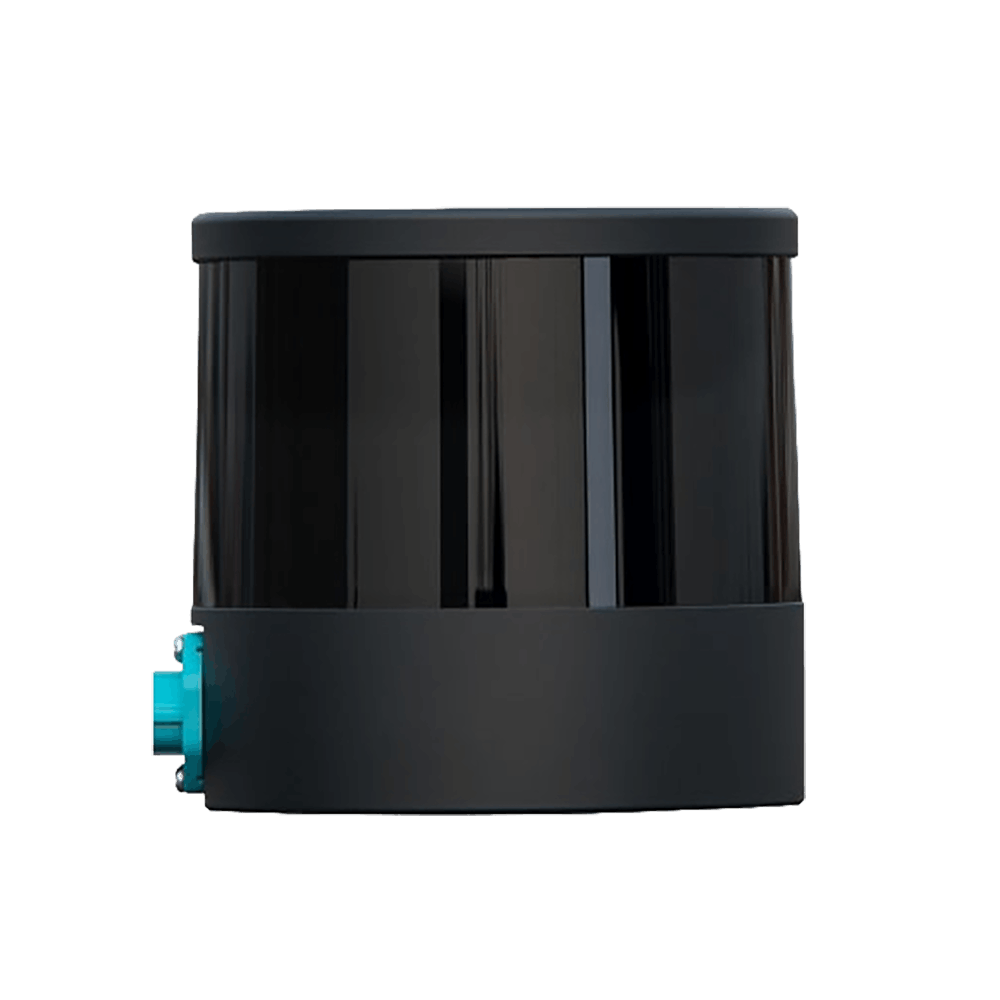
Key Specifications
Vertical FOV
Vertical Resolution
Range
Range Accuracy
Working Temperature
Power Consumption
Horizontal FOV
Horizontal Resolution
Range Capability
Range Precision
Point Rate
Size (Top / Bottom x Height)
Designed for Automotive-Grade and Mass-Produced
More than 50 design validation (DV) tests, conducted according to internationally recognized OEM standards such as electrical, mechanical, climatic, sealing, material, and EMC tests.

UV Aging

IP6KX Dust Resistance

High-Temperature Operation
Low-Temperature Wakeup

Humid Heat Cyclic

Mechanical Shock

Salt Spray

IPX7&IPX9K Water Resistance

Thermal Shock with Water Splash

Vibration with Thermal Cycling
High-Quality Reflectivity
Provides accurate reflectivity information to enhance object recognition
Light and Compact
83 mm tall, 700 g in weight
HESAI Lidar Sensor Selection Guide
| JT16 | JT32 | JT64P | JT128 | FTX140/180 | FT120 | ATX | AT128 | AT360 | ETXP | XT16 | XT32 XT32M1X |
XT32M XT32m2X |
QT128 | OT128 | Pandar128 | |
|---|---|---|---|---|---|---|---|---|---|---|---|---|---|---|---|---|
| Object Detection | ● | ● | ● | ● | ● | ● | ● | ● | ● | ● | ● | ● | ● | ● | ● | ● |
| Mapping | ● | ● | ● | ● | ● | ● | ||||||||||
| Object Identification | ● | ● | ● | ● | ● | ● | ● | ● | ● | ● | ● | |||||
| Automotive Grade | ● | ● | ● | ● | ● | ● | ● | ● | ● | |||||||
| Channels | 16 | 32 | 64 | 128 | 192x256 | 120x160 | 256 | 128 | 360 | 1080/2160/4320 | 16/32 | 32 | 32 | 128 | 128 | 128 |
| Field of View | 360° X 40° | 360° X 40° | 360° X 189° | 360° X 99° | 140° X 105° / 180° X 140° | 100° X 75° | 140° x 20° | 120° X 25.4° | 18° X 120° | 120° × 20° | 360° X 31° | 360° X 31° | 360° X 40.3° | 360° X 105.2° | 360° X 40° | 360° x 40° |
| Range | 30m @ 10% Reflectivity | 30m @ 10% Reflectivity | 40m @ 10% Reflectivity | 20m @ 10% Reflectivity | 30m @ 10% Reflectivity | 22m @ 10% Reflectivity | 200 m @ 10% Reflectivity | 210m @ 10% Reflectivity | 250m | 300 m @ 10% Reflectivity | 80m @ 10% Reflectivity | 80m @ 10% Reflectivity | 80m @ 10% Reflectivity | 20m @ 10% Reflectivity | 200m @ 10% Reflectivity | 200 m @10% Reflectivity |
| Min Range | 0m | 0m | 0m | 0m | 0.1m | 1m | 0.05m | 0.05m | 0.5m | 0.05m | 0.3m | 0.3m | ||||
| Weight | 0.199kg | 0.199kg | 0.22kg | 0.22kg | 0.2kg | 0.7 kg | 0.36 kg | 0.94 kg | 950g | 0.6 kg | 0.8 kg | 0.8kg | 0.49 kg | 0.7 kg | 2.2 kg | 1.63 kg |
| Accuracy | 3cm | 5 cm | 5 cm | 5 cm | 5cm | 1 cm | 1cm | 1 cm | 3 cm | 3 cm | 5cm | |||||
| Max Range | 100m | 100m | 25m | 25m | 50m | 300m | 260m | 300m | 120m | 120m | 300m | 50m | 230m | 200m | ||
| Resolution Horizontal | 0.6° | 0.6° | 0.4° | 0.45° | 0.56° | 0.625° | 0.08° | 0.1° - 0.2° | 0.06° - 0.12° | 0.06° | 0.09° - 0.36° | 0.09° - 0.36° | 0.09° - 0.36° | 0.4° - 1.6° | 0.1° - 0.4° | 0.1° |
| Resolution Vertical | 2.67° | 1.29° | 1.5° | 0.8° | 0.56° | 0.625° | 0.1° | 0.2° - 0.8° | 0.05° - 0.1° | 0.055° | 1°/ 2° | 1° | 1.3° | 0.4° - 1.6° | 0.125° - 1.72° | 0.125° |
| Availability | Phasing Out | Taking Orders | Taking Orders | Now | Sampling Now. Production June 2026 | Phasing Out | Now | Now | Now | Sampling Now. Production 2027 | Now | Now | Now | Now | Now | Phasing Out |
Frequently Asked Questions
What is the HESAI QT128 LiDAR used for?
The HESAI QT128 is an automotive grade 128 channel 360° ultra wide view short range LiDAR designed for close range perception, blind spot coverage, robotaxi, robotrucking, stationary applications, warehousing, and logistics. It is especially useful where vehicles or machines need to detect objects extremely close to the sensor.
Why is it important for blind spot detection?
360° horizontal coverage with about a 105° vertical field of view lets it clearly detect cars, pedestrians, and small animals at extremely close range — well suited for near field safety perception around autonomous platforms.
Is this a long range or short range LiDAR?
It is a short range LiDAR. Range spans approximately 0.05 m to 50 m, with around 20 m detection at 10 percent reflectivity, making it ideal for ultra wide view short range perception.
What makes the 105° vertical field of view useful?
It lets the sensor see both high and low objects around it, not only objects at bumper or floor level — helping cover near field blind spots in robotaxi, robotrucking, warehouse, and stationary safety environments.
Can it detect objects very close to the sensor?
Yes. With a minimum detection range of around 0.05 m, it detects nearby pedestrians, vehicles, road cones, small animals, pallets, forklifts, and other obstacles that may be too close for long range LiDAR sensors to capture effectively.
Why is the HESAI QT128 useful for robotaxi and robotrucking?
It fills the close range perception gap around autonomous vehicles. Long range LiDAR detects distant objects, while the QT128 provides ultra wide near field awareness around the vehicle body.
Is it suitable for warehouse and logistics automation?
Yes. Compact design, high vertical coverage, and 360° sensing make it relevant for close range object detection around automated vehicles, loading zones, docks, industrial corridors, and stationary monitoring points.
How compact is the design?
Dimensions are around Φ87 mm in diameter and 83.9 mm in height, with a weight of approximately 700 g depending on configuration — compact for a 128 channel 360° ultra wide LiDAR.
Is it automotive grade?
Yes. It is designed for automotive grade and mass production use, with extensive validation including UV aging, high temperature, IP6K7 and IP6K9K protection, mechanical shock, salt spray, thermal shock with water splash, low temperature wakeup, humid heat cycling, vibration with thermal cycling, and electrical and electronic testing.
When should a team choose the HESAI QT128?
Choose the QT128 when you need 360° close range perception, wide vertical blind spot coverage, compact automotive grade design, and reliable near field object detection — most relevant for robotaxi, robotrucking, stationary monitoring, warehouse automation, and logistics use cases where detecting close objects matters more than ultra long distance sensing.